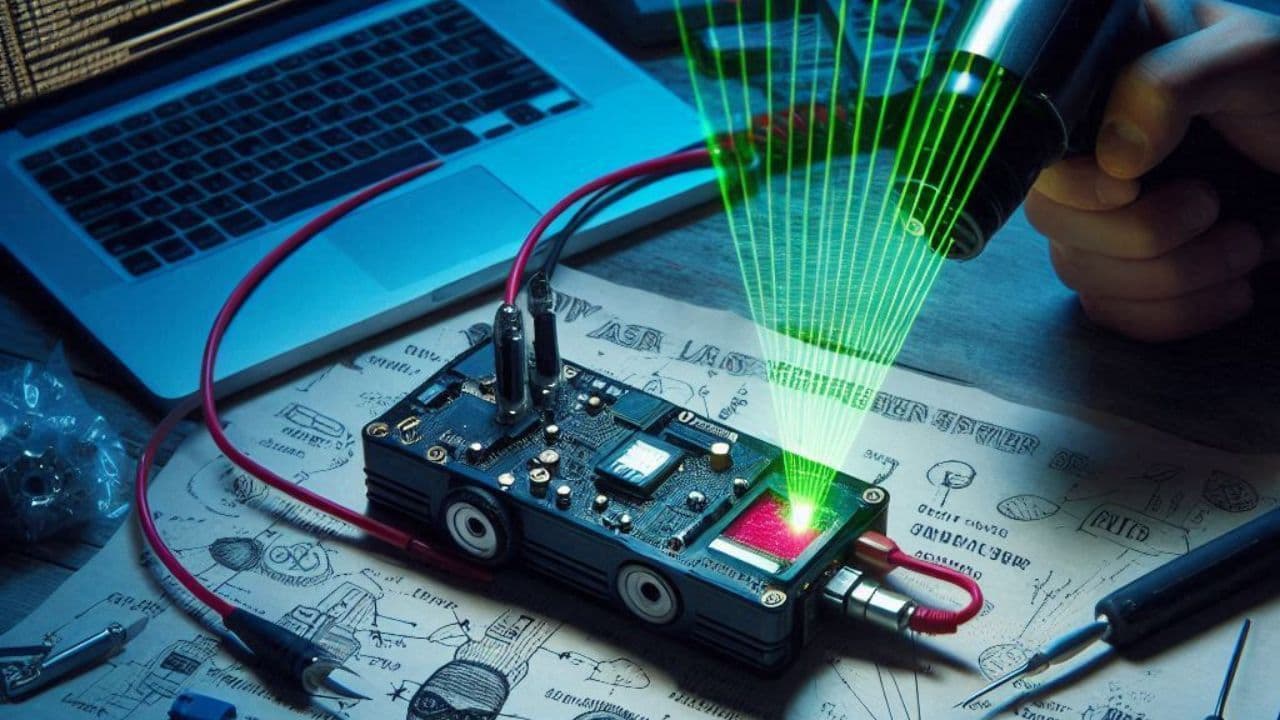
In an era where digital security is paramount, the concept of laser hacking might sound like a plot from a high-tech thriller. Yet, this futuristic idea has been made startlingly accessible thanks to the ingenuity of two cybersecurity experts from NetSPI, who have introduced a groundbreaking tool called RayV Lite. Their invention was highlighted at the recent Black Hat cybersecurity conference in Las Vegas, capturing the attention of both hobbyists and professionals.
What is RayV Lite?
RayV Lite is a 3D printed device that leverages a $20 laser pointer to perform sophisticated laser fault injection—a technique that disrupts the operations of microchips by knocking electrons out of place. Traditionally, such feats required expensive equipment, but RayV Lite's creators, Sam Beaumont and Larry "Patch" Trowell, have democratized this advanced technology with a build cost of just $500. This device is constructed using common components like a Raspberry Pi and parts from an open-source 3D printed microscope, making advanced hacking techniques more accessible and affordable than ever.
The Goal Behind RayV Lite
The primary aim behind developing RayV Lite is to raise awareness about the vulnerabilities of modern microchips and to push manufacturers to enhance their security against such laser-based attacks. Historically, companies have overlooked these vulnerabilities due to the high costs associated with laser fault injections. By proving that such attacks can be executed inexpensively, Beaumont and Trowell hope to influence hardware manufacturers to prioritize and fortify their security measures.
How Does It Work?
Image credit: EThamPhoto via Getty Images
RayV Lite uses precise, timed laser pulses to cause glitches in chip operations, allowing hackers to bypass hardware security and access protected information. This method has proven effective in various tests, including one where the device bypassed automotive chip security checks and another that compromised a cryptocurrency wallet by simulating the entry of a correct PIN.
Potential Implications and Ethical Considerations
While the introduction of RayV Lite opens up new possibilities for DIY enthusiasts and researchers to explore chip vulnerabilities, it also poses significant security concerns. The ability to manipulate chip functions can lead to unauthorized access to sensitive data, highlighting the need for improved protective measures in chip manufacturing.
Future Developments
The creators of RayV Lite plan to enhance their tool further by incorporating laser logic state imaging in future versions. This sophisticated technique will allow users to monitor and map a chip's architecture and activity in real-time, providing deeper insights into internal data flows and exposing new vulnerabilities.
Conclusion
As we advance further into a technology-driven world, the unveiling of RayV Lite at the Black Hat Conference serves as a reminder of the ongoing cat-and-mouse game between cybersecurity professionals and potential intruders. By making laser fault injection affordable and accessible, RayV Lite not only promotes greater understanding and research into chip security but also challenges manufacturers to escalate their defenses against these modern hacking techniques. Whether this tool will lead to a safer digital environment or open a Pandora’s box of vulnerabilities remains to be seen.