Steam just dropped a flood of new releases for the weekend of August 7, giving PC players an unusually stacked slate of options across fighting games, co-op adventures, and farming sims. The headliner is Marvel Tōkon: Fighting Souls, a tag-team fighter that arrives with a healthy roster of Marvel heroes and a flashy presentation that immediately catches the eye. For fighting game fans who have watched long-running franchises like Mortal Kombat 1 struggle to reshape the genre year after year, this newcomer feels like a genuine contender — provided its post-launch support holds up.
The release window matters because August has quietly become nearly as crowded as September, with developers rushing to avoid Grand Theft Auto 6's November launch. That congestion means players have no shortage of fresh titles to try, but it also means standout games can get buried quickly. This weekend's crop spans enough variety that most players will find at least one game matching their mood, whether that's competitive tag-team battles or a chill island walk with friends.
Marvel Tōkon: Fighting Souls
Marvel Tōkon: Fighting Souls enters the fighting game space with tag-team action at its core, letting players swap between heroes mid-combo for extended pressure and creative setups. The roster pulls from across Marvel's lineup, and the game's visual style pops with comic-book energy that makes every clash feel like a panel come to life. For players, this means matches reward showmanship as much as execution — flashy battles beg you to show off, and the tag mechanics give you the tools to do it.
The long-term question hangs on post-launch support, which will determine whether the community sticks around or drifts back to established titles. Blade stands out as a personal highlight; the daywalker is playable here at a time when his big-screen future remains uncertain, giving fans a rare chance to pilot the character in a modern fighter. If the developers keep the balance patches and content drops coming, this could become a mainstay in the tournament rotation rather than a weekend novelty.
Big Walk
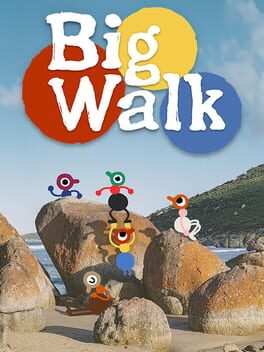
Big Walk looks like another lo-fi multiplayer game in the vein of Peak, but it quickly reveals itself as something more deliberate and emotionally resonant. Up to twelve players explore an island together, solving puzzles that demand genuine communication — not just pinging locations, but actually talking through solutions. The chilled-out vibes carry the experience, but the final challenge lands with unexpected weight, sticking in memory weeks after the credits roll.
Developer House House built this around the experience of working together rather than simply coexisting in a shared space. Even with just one friend, the adventure feels distinct from the usual co-op fare because the puzzles force collaboration instead of parallel play. For groups tired of survival games where cooperation amounts to dividing resource-gathering duties, Big Walk offers a refreshing alternative that centers on shared problem-solving.
Ambrosia Sky
Ambrosia Sky combines the sci-fi exploration structure of Metroid Prime with the satisfying cleanup loop of Powerwash Simulator, tasking players with scrubbing fungal infection from derelict spaceships. Part one released last year as a tantalizing but incomplete tease; part two's arrival finally delivers the full vision. As you clean, you discover the bodies of crew members who succumbed to the sickness, piecing together a thoughtful narrative about loss and tragedy.
The genre mashup works because both halves reinforce each other — exploration open ups new areas to clean, and cleaning reveals the story beats that give context to the exploration. For players who found Powerwash Simulator relaxing but narratively thin, or Metroid Prime compelling but combat-heavy, Ambrosia Sky carves out a unique middle ground that's emotionally effective without sacrificing either hook.
Beast of Reincarnation
Game Freak's Beast of Reincarnation swings for the fences with a visually spectacular action RPG that draws tonal inspiration from Nier: Automata. A young woman and her dog traverse a poisoned world, battling towering monsters with fierce combat and deep RPG customization systems. The battles against massive creatures deliver genuine thrills, and the dog companion adds both mechanical utility and emotional grounding.
The storytelling proves hit-and-miss, with chilly voice acting that won't connect with every player. Those who click with the moody atmosphere will find a worthwhile journey; others may feel the narrative ambition outpaces the execution. At minimum, the combat encounters against screen-filling beasts justify the price of admission for action RPG fans looking for a fresh challenge outside the FromSoftware mold.
Fields of Mistria
Fields of Mistria hit its 1.0 launch this week after a prolonged early access period, emerging as the most serious challenger to Stardew Valley's decade-long dominance of the farming sim genre. It checks every expected box — farming, fishing, romance, mining — while infusing the formula with fairy-tale magic that gives it a distinct personality. The 1.0 milestone means players finally have the complete experience without early access caveats.
For anyone who has exhausted Stardew Valley's content and bounced off lesser imitators, Fields of Mistria offers a refreshing option that understands why the genre works while adding its own flavor. The fairy magic element isn't just cosmetic; it shapes progression and world-building in ways that feel cohesive rather than tacked on. This is a feel-good game built for hundreds of hours, and the 1.0 launch is the ideal entry point.
What This Means for Players
This weekend's releases reflect a broader trend: August has become a legitimate launch window rather than a graveyard, and the variety on display means players can be selective. Fighting game enthusiasts get a Marvel-tagged contender with real mechanical depth, co-op groups get a communication-focused puzzle adventure, sci-fi fans get a genre hybrid with narrative weight, action RPG players get a Game Freak swing with massive boss fights, and farming sim devotees get a Stardew alternative that actually respects their time.
The common thread across these five titles is that each understands its genre well enough to iterate rather than imitate. Marvel Tōkon's tag mechanics, Big Walk's puzzle design, Ambrosia Sky's cleanup-exploration loop, Beast of Reincarnation's monster encounters, and Fields of Mistria's fairy-tale systems all feel like deliberate design choices rather than checklist features. That's a stronger signal than any individual review score.
Key Takeaways
- Marvel Tōkon: Fighting Souls launches with tag-team combat, a full Marvel roster, and Blade as a playable character
- Big Walk supports up to 12 players in communication-heavy co-op puzzles on a shared island
- Ambrosia Sky combines Metroid Prime-style exploration with Powerwash Simulator cleaning mechanics
- Fields of Mistria reaches 1.0 as a complete Stardew Valley alternative with fairy-tale magic systems
With September's release flood looming and Grand Theft Auto 6 still targeting November, this August window may be the last breathing room players get before the year's biggest titles consume all the oxygen. The smart move is picking one or two of these that match your group's tastes and diving in now — before the next wave buries them.