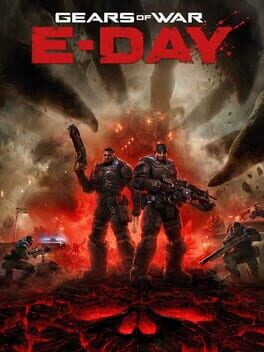

Gears of War: E-Day has a distinct advantage over most new additions to the service: a near-perfect opening hour that refuses to play by the series' established rules. Developed by The Coalition, this prequel chronicles the Locust's initial attack on Sera — Emergence Day itself — but spends its first act deliberately withholding the chainsaw bayonets and bombastic set pieces that define the franchise. Instead, players experience the apocalypse through the eyes of ordinary COG soldiers scrambling to survive an incomprehensible threat. For a subscription service where first impressions determine whether a title gets played or passed over, this calculated subversion of expectations works as an exceptionally effective hook.
The significance extends beyond mere pacing. In a catalog crowded with established franchises and day-one releases competing for limited player attention, Gears of War: E-Day demonstrates that The Coalition understands exactly how Game Pass consumption habits work. Players browse, sample, and abandon quickly if the opening fails to respect their time. By front-loading its most distinctive material — a horror-infused investigation sequence that feels closer to survival horror than military shooter — the game earns the investment required to push through the more conventional combat that follows. This is not accidental design; it is a deliberate strategy tailored to the platform's economics.
Here's a thinking process:
Act 1 opens not with Marcus or Dom, but with a worker investigating a subterranean disturbance hours before Emergence Day officially begins. The sequence establishes stakes through absence — we witness the first Locust kill from a victim's perspective, hours before the iconic duo enters the frame. When Marcus and Dom finally appear, they are not the super-soldiers players remember from the mainline trilogy. They are patrons in a bar, caught off-guard by earthquakes that shatter the city and force them into an improvised first-responder role. The narrative framing is deliberate: Dom's COG career was effectively ending before the Locust emerged, adding personal stakes to a catastrophe that will redefine his life.
This perspective shift fundamentally alters how combat feels during the opening hour. Without immediate access to the Lancer or its chainsaw attachment, Marcus scavenges improvised weapons — a pipe for whacking smaller enemies, whatever firearms can be found in the chaos. Each new weapon acquisition feels like genuine relief rather than routine loadout management. The scarcity creates tension that the series' power fantasy typically eliminates within minutes. Enemy introductions carry weight because both the characters and the player are discovering the Locust threat in real time, uncertain what each new variant signifies for survival.
A Resident Evil 2-Style Police Station Sequence Anchors the Horror Tone
The horror influence peaks during a decimated police station investigation that explicitly recalls Resident Evil 2's RPD sequence. Marcus and his squad navigate corridors designed for dread rather than cover-to-cover advancement, encountering the standard Locust grunts that will populate the rest of the campaign for the first time. The environmental storytelling — barricades, civilian remains, desperate messages — reinforces that this is a civilization collapsing in real time, not a battlefield the COG controls. The squad helps civilians take shelter at the police station, unaware that this moment marks the beginning of a decades-long war.
From there, the action escalates through City Hall, where survivors have gathered under false security. One character gets the idea to use a chainsaw against the Locust. The act concludes with a Brumak boss fight in front of City Hall — the first moment where Gears of War: E-Day fully embraces its lineage. The transition feels earned: the player has been conditioned to fear the Locust through scarcity and vulnerability, making the arrival of heavy weaponry feel like a turning point rather than a default state.
Here's a thinking process:
The Coalition appears aware of this structural imbalance. Once the Brumak falls and Act 1 concludes, Gears of War: E-Day settles into the repetitive shootouts that define the series' core loop. New enemy types appear occasionally to disrupt the rhythm, but the gameplay variety and narrative heft of the opening hour never return. This is not a condemnation — the cover shooting remains competent and the production values stay high — but the contrast is stark. The horror pacing, the scavenging progression, the first-responder vulnerability: all are replaced by the familiar rhythm of flank, flush, execute.
For players accessing the game through Game Pass Ultimate, this creates a clear decision point. The opening act stands alone as one of the strongest opening hours of the year — a self-contained experience that justifies the download and the evening required to complete it. Whether the subsequent acts warrant continued investment depends entirely on appetite for traditional Gears combat. The subscription model removes the sunk-cost pressure of a full-price purchase; players can experience the standout sequence and move on without guilt, or stay for the competent but familiar campaign that follows.
Here's a thinking process:
Subscription services amplify the importance of first impressions. A player scrolling the Game Pass library makes split-second decisions based on the first thirty minutes — sometimes less. Titles that front-load their strongest, most distinctive material earn completion rates that back-loaded games never achieve. The Coalition has engineered Act 1 as a showcase: it teaches mechanics through diegetic scarcity, establishes character stakes through personal loss rather than exposition, and delivers a tonal shift from horror to action that feels like a narrative reward. This is onboarding as art direction.
The strategy also serves the franchise's long-term health on the service. Players who bounce after Act 1 still experienced a memorable, high-quality sequence that reinforces Gears as a premium first-party brand. Players who continue become invested in a narrative foundation that the horror opening built more effectively than any codex entry or cutscene montage could. In either case, the opening hour performs its function as a retention tool and a brand statement simultaneously. Few games on the service demonstrate this level of platform awareness.
Here's a thinking process:
Key Takeaways
- Act 1 uses horror pacing, weapon scarcity, and a first-responder perspective to subvert standard Gears of War expectations
- A Resident Evil 2-style police station investigation anchors the opening's survival-horror tone
- The campaign shifts to repetitive cover-shooter combat after the Brumak boss fight at City Hall
- Game Pass Ultimate subscribers are recommended to play through Act 1 as one of the year's best opening hours
The broader lesson extends beyond a single title. As first-party developers increasingly design for subscription ecosystems, the games that thrive will be those that respect the platform's unique consumption patterns — front-loaded distinctiveness, clear identity signals, and respect for the player's option to leave. Gears of War: E-Day succeeds on those terms, even if its latter acts revert to type. The opening hour alone makes the download worthwhile, and on Game Pass, that is often the only metric that matters.