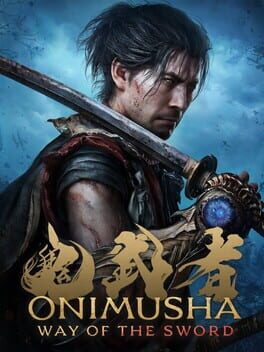
Capcom delivered a triple strike of news for Onimusha: Way of the Sword this week, confirming a September 4 launch on PlayStation 5 alongside a fresh trailer, a demo update that adds a towering new boss, and a deep-dive interview with the development leads. For series veterans, the return of Musashi's Oni powers and the signature Issen counter system feel like home; for newcomers, the team has deliberately severed all direct storyline ties to previous entries so anyone can jump in cold. The stakes are clear: early Edo-period Kyoto is under siege by Genma pouring through hellish portals, and only the Oni — and Musashi — can push them back.
Quick Facts — Onimusha: Way of the Sword
| Developer | Capcom |
|---|---|
| Platform(s) | PS5 |
| Release Date | September 4 |
| Genre | Action RPG |
The significance extends beyond a simple release date confirmation. Producer Akihito Kadowaki and director Satoru Nihei laid out a world-building philosophy grounded in historical Kyoto, down to the exact pillar count at Kiyomizu-dera Temple, while simultaneously embracing creative license by including the Twin Dragons ceiling painting at Kennin-ji despite its anachronism. That tension between archaeological fidelity and player spectacle defines the project's ambition. If the demo's new Daidara fight is any indication, the combat systems — Dynamic Dismemberment, Break Issen, and Oni Awakening — are being stress-tested against enemies designed to demand every tool in Musashi's arsenal.
Onimusha’s New Trailer: 5 Key Improvements
Trailer 6 dropped at Gamescom 2026 and cuts straight to the action Musashi is up against. The clip shuffles through brutal duels with fresh foes before zooming in on the real showstopper. Musashi kicks into full force by unleashing his hidden Oni power—Oni Awakening—and turning the tide. That switch feels like a new gear the series teased, but this time the FX and environment react on a whole fresh level. The teaser also takes its time with Kyoto, showing lantern‑lit lanes, temple thresholds, and the looming Rokudo Chinno‑ji Temple. Nihei wants us to believe that wandering those historic streets and soaking up local myths is pure world
What matters for players is how these sequences translate to moment-to-moment gameplay. Oni Awakening appears to function as a limited-duration power state that amplifies damage and alters move properties, a mechanic that could serve as both a comeback tool against bosses like Daidara and a crowd-control option during Genma swarms. The trailer's editing suggests the transformation triggers at specific narrative beats as well as player discretion, though the exact resource cost — whether it draws from a meter, soul count, or cooldown — remains unconfirmed. The visual language of "releasing inner Oni strength" implies a risk-reward dynamic: unleash too early and you lack the duration for a multi-phase boss; hold too long and you waste the window entirely.
<strong>Daidara Boss Fight: Your PS5 Demo Just Got Harder</strong>
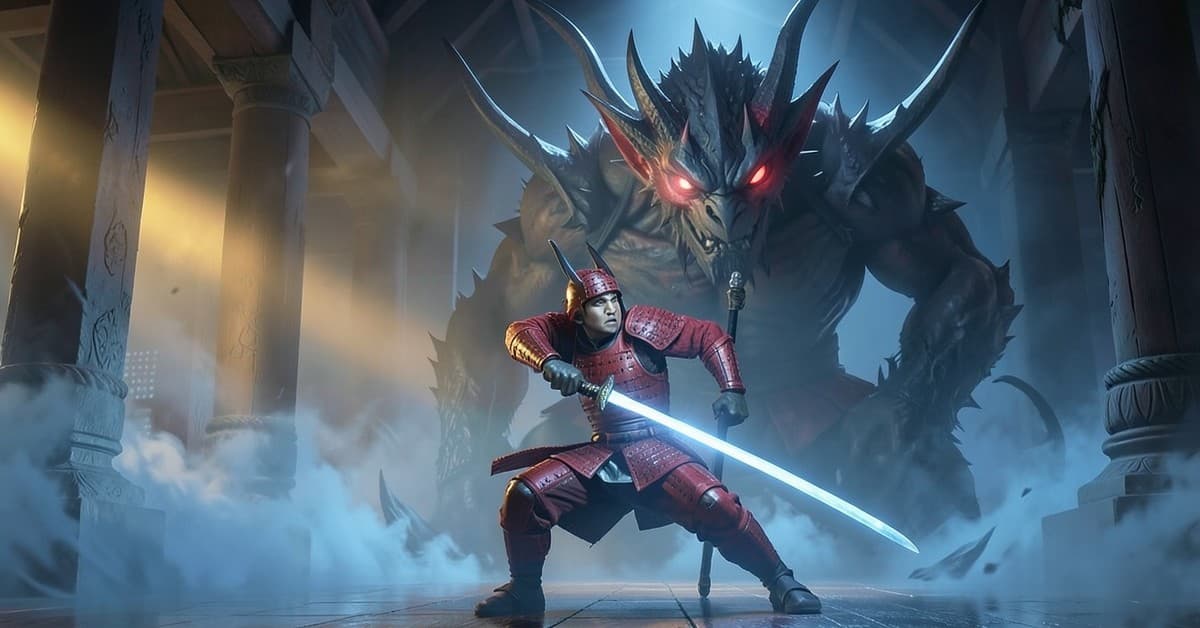
The PlayStation Store demo received a content update that expands playable areas and introduces Daidara, a massive new boss encounter designed to test the combat systems showcased in the trailer. Daidara's scale directly ties into the haptic feedback system Nihei described — the controller conveys "the overwhelming scale of massive Genma" through vibration data optimized from audio waveforms. For players, this means the fight isn't just a visual spectacle; the DualSense will physically communicate the boss's weight, attack wind-ups, and impact force through the triggers and haptics, creating a sensory feedback loop that could make pattern recognition more intuitive.
Carrying demo save data into the full game opens the “Kubi Akari” charm and lifts Musashi’s stats. That’s a big reason to play early. The exact influence of the charm stays vague, but the boost can smooth out the rough spots that players hit when learning how to time Break Issen or line up Dynamic Dismemberment angles. Progress stays locked instead of being erased, offering
<strong>The Samurai Reboot Nobody Asked For</strong>
"We rebuilt the universe from the ground up so that first-time players can jump right in without any knowledge of the previous titles. We wanted to redefine the core concepts: What are the Oni? What is Genma? So there are no direct storyline connections to earlier games in the franchise."
Satoru Nihei, Director
Genma live in hell and, when Malice swells, leak into the human world through portals. The Oni keep watch over those gateways, blasting any Genma that tries to slip across. This simple structure—hell, portals, Malice as the trigger, Oni as guardians—lets newcomers instantly grasp the mythos without digging through heavy wiki lore. Because the mechanics are straightforward, players can focus on combat instead of memorizing complex hieroglyphs. And also, the developers wrapped these concepts into a clean, intuitive UI, making the learning curve gentle.
Kyoto’s real streets shape more than just a backdrop for the game; they form the backbone of its world. The title hones in on the actual Rokudo Chinno‑ji Temple, and developer Nihei says the city’s winding alleys, local myths, and hidden corners drive the side‑quests and exploration. From the City of Kyoto partnership, the team nailed details with surgical precision: Kiyomizu‑dera’s level matches the exact count of wooden pillars found in the temple’s architecture. At the same time, the Twin Dragons ceiling painting at Kennin‑ji Temple, which never existed in the Edo era, is purposely anachronistic. Nihei argued that the goal was to let players feel the same awe that pilgrims feel today, even if the art is modern. That choice sums up the project’s core belief: exact historical texture must first spark player wonder, then immerse them in a living, breathing setting.
Toshiro Mifune's Facial Capture Confirmed
"Since he is no longer with us, sourcing reference material and not being able to conduct 3D facial scans presented some challenges. But thanks to the generous support of Mifune Productions, we are confident that we have recreated his iconic presence with utmost fidelity."
Satoru Nihei, Director
Kadowaki explained how the approval chain worked: Mifune Productions checked our facial animation and cutscene work several times. When they finally said, “It looks so spot‑on, we feel like we don’t even need to review it anymore,” the whole crew felt a huge
Onimusha's Blade Physics Get Nasty
"the pure satisfaction of cutting through an opponent."
Satoru Nihei, Director
Dynamic Dismemberment realizes this by allowing enemies to be sliced cleanly along the exact trajectory of the player's blade. This isn't pre-baked gore — it's procedural geometry separation that respects swing angle, velocity, and impact point. In practice, a horizontal slash across a Genma's torso separates differently than a vertical descending cut, and the resulting physics pieces react to the force vector. For combat depth, this means targeting specific limbs to disable attacks — severing a charging arm, hamstringing a lunging leg — becomes a viable tactical layer beyond health depletion.
"On top of that, we introduced Break Issen, an attack you can trigger once you completely deplete an enemy's Stamina Gauge. Traditionally, Issen required strict frame-perfect timing, but this new system allows players to experience those iconic attacks across a much wider variety of combat scenarios."
Satoru Nihei, Director
Issen cranks out from a straight reflex drill into a mini‑strategy exercise: squeeze the foe, keep an eye on your stamina, sap theirs, and then ride the big finish. That change lets anyone who enjoys the flashy finish but can’t hand‑count frames get a taste. Still, the brutal, perfect‑parry path stays intact for the grind‑heavy players aiming at mastery.
PS5 Immersion: Haptics, Triggers, and Temple Audio
"For haptic feedback, we optimized vibration data generated directly from audio waveforms, creating haptic responses that sync with cutscene visuals and sound. We also use haptics to physically convey the overwhelming scale of massive Genma, the sensation of absorbing souls, and the impact of weapon strikes."
Satoru Nihei, Director
This means every clang, footfall, and spectral whisper has a corresponding tactile signature — the controller becomes a transducer for the game's audio mix.
The Bad Gamer Take
Capcom will deliver a thrilling Onimusha experience because their attention to historical detail and creative license has created a unique world. Capcom's focus on stress-testing the combat systems against demanding enemies will result in a polished gameplay experience. WATCH the upcoming demo updates for a glimpse into the game's intense boss battles and Musashi's Oni powers.
Adaptive triggers serve two distinct functions. "Drawing the bowstring increases physical resistance on the trigger" — a familiar but effective bow simulation. More uniquely, "when sealing the demonic portals known as 'Rift' from which Genma emerge, players must physically squeeze the trigger all the way down to absorb them." This maps a narrative action (closing a hell portal) to a sustained physical input, creating somatic tension that mirrors Musashi's exertion. The 3D audio system completes the triangle: "We recorded Impulse Response audio directly inside real Japanese temples and historic residences. By implementing multi-channel IR data, including height channels, we accurately reproduced the unique acoustics of traditional Japanese architecture." Vertical sound positioning handles flying Genma and collapsing structures. The DualSense speaker outputs soul absorption effects and voices echoing from the Oni Gauntlet, localizing supernatural audio to the player's hands rather than the TV speakers.