Survival games have dominated Steam charts and Twitch directories for years, yet I've bounced off every major entry after a handful of hours. The pattern is always the same: I spawn on a beach or in a forest, punch a few trees, craft a pickaxe, and then stare at a wiki trying to figure out which of the forty crafting stations I actually need next. Palworld 1.0 broke that cycle for me, and it did so by doing something most survival games treat as an afterthought — it taught me how to play.
I'm glad I came in at the 1.0 mark, because I've heard Palworld had a much steeper learning curve out of the gate. The version that launched with the 1.0 update greets new players with a structured mission chain that walks through every core system in sequence. You start by punching trees for wood to build a crafting bench. That bench lets you make a club. The club lets you knock out Pals for wool. The wool becomes clothing. Clothing enables survival in harsher biomes. Each step open ups the next, and the game never leaves you guessing what comes after the current objective.
What Is Palworld?
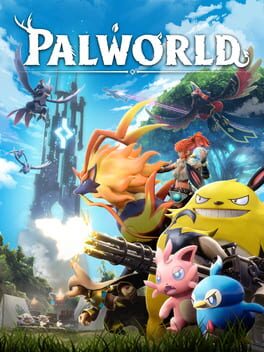
Palworld is a survival game that blends creature collection, base building, and third-person action combat. The premise drops you on an island populated by "Pals" — creature companions you can catch, befriend, and put to work. You build bases, automate resource gathering, ride Pals across the map, and take on tower bosses that gate progression. For players who have bounced off survival games before, the 1.0 version's onboarding overhaul is the single most important reason to give this one a look.
The genre's typical approach — dumping players into a sandbox with a recipe book and a prayer — creates a barrier that feels intentional. Palworld 1.0 treats onboarding as a design pillar rather than a tutorial checkbox. The mission system doesn't just teach mechanics; it teaches the logic connecting them. When the game asks you to build a house after setting up a camp, you understand why: the camp is a respawn point, the house protects you from temperature extremes, and both are prerequisites for the teleporter that opens the wider map. That chain of reasoning is exactly what most survival games leave players to reconstruct from forum posts.
Gameplay and Mechanics
The mission-based tutorial introduces systems in a deliberate order: resource gathering, crafting bench creation, club weapon crafting, wool gathering from Pals, clothing crafting, camp setup, house building, teleporter activation, and then gliding mechanics. Each step builds on the previous one, and the game gates new objectives until you've demonstrated competence with the current one. This prevents the common survival game trap where players open up advanced crafting stations before mastering basic resource loops.
Once the tutorial missions conclude, the game opens into its core loop: catching Pals with spheres, deploying them at camp for automated resource production, riding them for traversal, and bringing them into combat against roaming alpha Pals and tower bosses. The Pal deployment system is where the genre's typical grind transforms into something closer to management simulation. You assign Pals to workstations — a Fire-type Pal runs the furnace, a Water-type handles irrigation, a Grass-type tends crops. Watching a base run itself while you explore is a payoff that feels earned because the tutorial made you build every component by hand first.
Combat leans into action-game fundamentals rather than stat-check abstraction. You dodge, block, and time attacks alongside your deployed Pals, who use active skills on cooldowns. The first boss serves as a gear check — Chris Reed noted he was "nowhere near powerful enough to defeat the first boss solo" — but the game doesn't punish the attempt. You respawn at your camp, reassess your Pal lineup, and return better prepared. That cycle of preparation, attempt, and iteration is the survival genre at its best, and Palworld 1.0 ensures you understand each piece before the game demands you assemble them under pressure.
"Palworld's gradual, newbie-friendly onboarding helped me see what a whole lot of people have loved about survival games all along. Palworld made me a believer."
That quote captures the conversion moment. The genre's appeal — the satisfaction of turning a hostile wilderness into a personalized, automated home — only lands when the systems are legible. Palworld 1.0 makes them legible without dumbing them down. The depth remains; the opacity is gone.
"There's no way I would have stuck with it if it hadn't held my hand and eased me into the systems that make up the game."
Hand-holding gets a bad reputation in certain gaming circles, but Palworld 1.0 demonstrates the difference between hand-holding and obscurity. The game still expects you to manage hunger, temperature, stamina, carry weight, Pal sanity, base defense schedules, and technology tree progression. It just introduces each variable in isolation before combining them. That's not coddling — it's pacing.
Visuals, Audio, and Performance
The art direction strikes a bright, saturated tone that contrasts with the genre's usual muted palettes. Pals animate with personality — they idle, sleep, eat, and react to weather at your base. The Zelda-style gliding mechanic adds verticality to exploration; launching from a cliff and catching an updraft to survey the map below delivers a moment of freedom that feels earned after the grounded early game. Performance on PC scales well across hardware tiers, with the 1.0 build resolving many of the early access frame hitches during large base simulations.
Audio design reinforces the loop: distinct sound cues for Pal work completion, resource deposit, and incoming raids let you manage bases by ear while focused elsewhere. The soundtrack shifts between ambient exploration themes and driving boss tracks without feeling repetitive. Voice acting is limited to Pal vocalizations, which keeps the tone light even during combat encounters.
What Doesn't Work
The mission system, while excellent for onboarding, eventually runs out. Once the structured objectives end, the game reverts to the genre's traditional self-directed format — and that transition can feel abrupt. Players who relied on the mission chain for direction may find themselves checking wikis again for optimal base layouts, Pal breeding chains, and tower boss strategies. The difficulty spike at the first boss is real; solo players without optimized Pal teams will hit a wall that demands either grinding or cooperative play.
Base building controls remain fiddly on controller. Snapping walls, floors, and roofs into alignment requires patience, and the camera fights you in tight interiors. The game lacks a blueprint or template system for replicating efficient base designs across multiple locations, which becomes tedious when expanding to secondary outposts. Multiplayer desync issues still surface during large-scale base raids, though they're less frequent than in early access.
The technology tree open ups linearly, but several mid-game tiers gate critical quality-of-life features — like the improved sphere types that make high-level Pal catching viable — behind arbitrary level requirements. This creates artificial bottlenecks where you're ready for the content but locked out by a number.
Pros
- Mission-based tutorial introduces every core system in logical sequence
- Pal automation transforms resource grinding into base management
- Action combat with dodge/block mechanics rewards player skill over pure stats
- Zelda-style gliding adds satisfying traversal verticality
- Bright, readable art direction with expressive Pal animations
Cons
- Structured missions end abruptly, leaving players without direction
- First boss difficulty spike walls solo players without optimized teams
- Controller base building controls remain imprecise
- No blueprint system for replicating base designs
- Key quality-of-life unlocks gated behind arbitrary level requirements
Palworld 1.0 succeeds because it respects the player's time without respecting the genre's worst habits. The onboarding doesn't strip away complexity — it sequences it. By the time you're gliding off cliffs, catching Pals in spheres, and deploying them to fight tower bosses, you understand every system because you built them one at a time. That's a design lesson the entire survival genre should study. For anyone who's ever quit a survival game because the wiki was more readable than the tutorial, this is the entry point you've been waiting for.