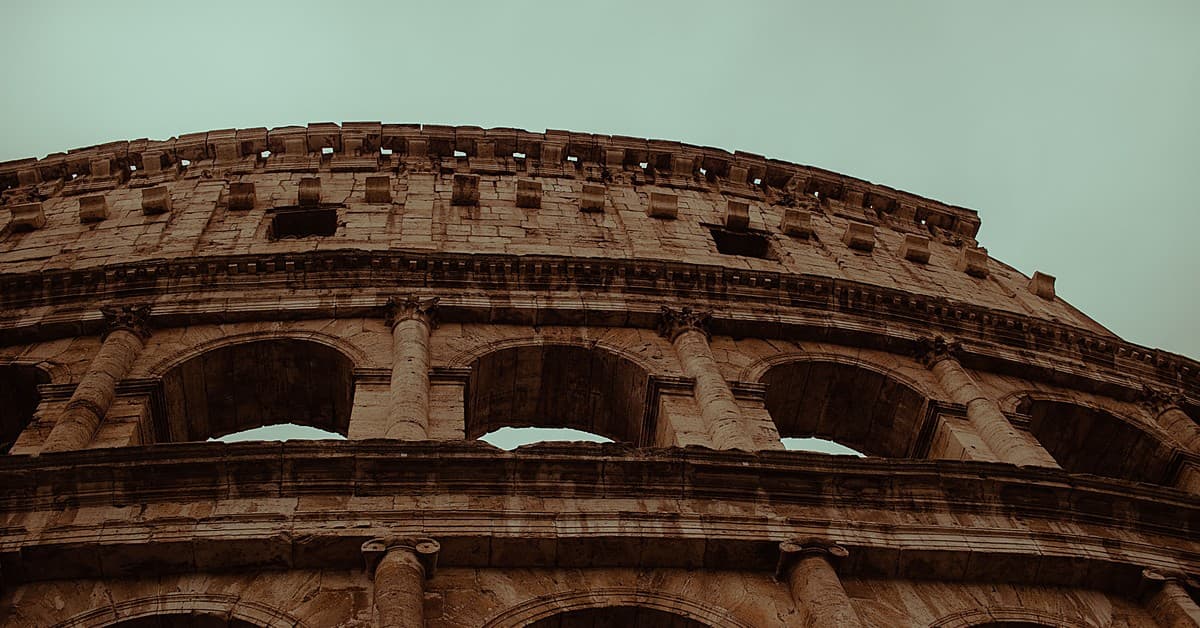
Ryse: Son of Rome, the action-packed Xbox One launch title from Crytek, was more than just a visually stunning game—it was the foundation of a potential franchise designed to rival the likes of Assassin's Creed. With its cinematic gameplay and ambitious plans for expansion, Ryse aimed high but ultimately fell short of its goals. This article looks into the unfulfilled potential of Ryse: Son of Rome, exploring the what-ifs of a series that could have explored the rise and fall of empires across different eras.
Quick Facts — Ryse: Son of Rome
| Developer | Universal Studios Hollywood Hub |
|---|---|
| Publisher | Microsoft Studios |
| Platform(s) | Xbox One |
| Release Date | November 22, 2013 |
| Genre | Action |
The core of Ryse's appeal lay in its cinematic experience, with a campaign that, though short (clocking in at around 6 hours), promised a depth that was unfortunately cut short due to the rush to meet the Xbox One's launch deadline. Former employees reveal that as much as two-thirds of the planned content was sacrificed, leaving a linear, albeit beautifully rendered, gameplay experience. For players, this meant a gameplay experience that felt constrained, with levels that were essentially straight corridors, limiting the exploration and combat dynamics that the game hinted at but never fully delivered.
<strong>Where Ryse Went Wrong Against Creed</strong>
Developed by Crytek and published by Microsoft Studios, Ryse: Son of Rome was released on November 22, 2013, exclusively for the Xbox One. Despite its genre-defying visuals, the game received mixed reviews, largely due to its short length and linear level design. But beneath the surface, the development team had envisioned a much broader canvas for the franchise, one that would have seen Ryse evolve into a historical epic, touching upon various epochs and geographies.
The game's developer, Crytek, had ambitious plans, with Patrick Hanenberger, who was offered the role of the franchise’s art director, at the helm of conceptualizing the future of Ryse. Hanenberger reflects on the enthusiastic response from Microsoft when they pitched the franchise plan, saying,
"They told us it was ‘the most cohesive and well-thought IP pitch they had ever seen’."
Patrick Hanenberger
Ryse's $60 Assassin's Creed Illusion
Central to the planned expansion of the Ryse franchise was the exploration of different historical settings. While the original game was set in ancient Rome, the team considered venturing into the Viking era, Feudal Japan, and even the Ottoman Empire. Peter Gornstein, Ryse’s art director and director of cinematics, expresses his excitement about a potential Viking setting,
"It would have been great to explore a part of history that a lot of people didn’t yet know about."
Peter Gornstein, Art Director and Director of Cinematics
Yannick Boucher, a project manager on the original game, discusses the internal debate about leaving the Roman setting,
"Some felt like we had just set the foundations for this IP, and now we were already diverging a bit."
Yannick Boucher, Project Manager
Despite these debates, the team saw the potential for a thematic arc that could unify disparate settings under the umbrella of empire dynamics. For players, this would have meant a series that not only changed in setting but also in gameplay mechanics, adapting to the unique military tactics and cultural practices of each era.
Ryse's $60 Million Missed Potential
The sequels to Ryse were envisioned with a more open-ended design, akin to the semi-open world of God of War 2018. This would have addressed one of the primary criticisms of the original game—its linearity. Also, the team planned to introduce new mechanics such as vehicle navigation and a PVP multiplayer mode, building upon the co-op PVE experiences of the first game. An anonymous former employee highlights the potential for more dynamic combat, including the ability to freely engage with and disengage from testudo formations, and exploring historical tactics like the Parthian shot.
The aesthetic approach, which aimed for an emotional rather than historical accuracy, would have continued, capturing the awe-inspiring feel of historical locations from the perspective of a common person. Gornstein explains this approach,
"It’s the same sensation as when, in the game, you go to York and Dover,"
Peter Gornstein, Art Director and Director of Cinematics
The supernatural elements, subtly present in the original, would have been mapped onto different mythologies in each sequel.
The $60 Assassin's Creed Also-Ran
The failure of Ryse: Son of Rome to spawn a franchise as envisioned is a missed opportunity for gamers. The planned sequels promised a depth and breadth of historical gaming experience that could have rivaled Assassin's Creed in scope and innovation. For players who enjoyed the cinematic combat and historical setting of Ryse, the sequels would have offered more varied and open gameplay, richer in both narrative and interactive possibilities. The shift towards more open-ended design would have given players more agency, allowing for exploration and strategic combat decisions that the linear original could not.
The reasons for the franchise's stall are twofold: the game's underperformance and a rights dispute between Crytek and Microsoft. Despite the game selling over a million copies, Microsoft's refusal to continue financing without owning the IP, coupled with Crytek's refusal to sell, led to an impasse. The result was a franchise left in limbo, its potential unexplored.
For those involved, the experience was bittersweet, with lessons learned that would go on to influence other titles. But for fans, Ryse: Son of Rome remains a cult classic, a glimpse into what could have been a landmark series in historical gaming. Its legacy, though not in sequels, lies in its influence on subsequent games and the dedicated following it has amassed.
Ryse's Crushingly Average Legacy
Ryse: Son of Rome's story serves as a reminder of the fragility of game development ambitions and the importance of IP ownership in the gaming industry. As the gaming landscape continues to evolve, the concept of Ryse as a potential Assassin's Creed rival remains an intriguing what-if, a sign of the visionary but unfulfilled plans of its creators. For now, fans are left with the original game, a beautiful but brief glimpse into a franchise that could have explored the vast expanse of human history in a deeply immersive way.