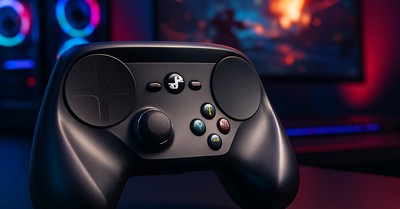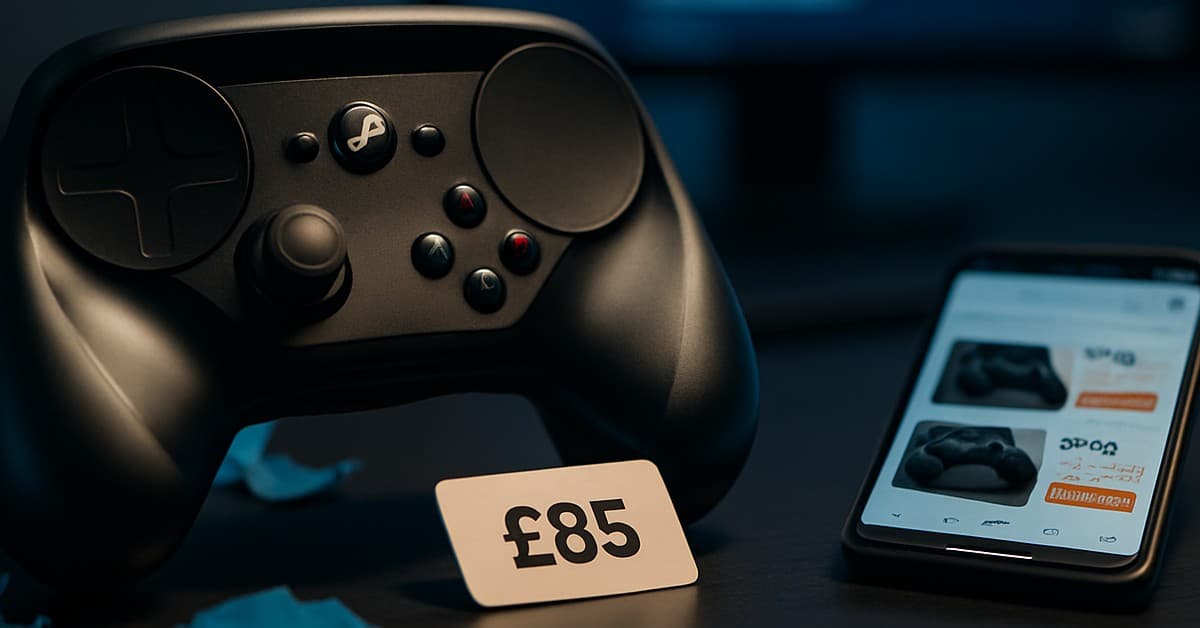
The Steam Controller, Valve's latest hardware venture, has achieved an unexpected milestone by selling out in mere minutes after its launch, a pace that even the developers did not anticipate. This swift sell-out is a familiar phenomenon in major hardware launches but is particularly notable given Valve's prior expressions of confidence in their supply chain readiness.
The sudden depletion of stock was acknowledged by Valve in a post on Bluesky, where the company expressed regret that not all interested buyers could secure a unit. Valve assured its community that efforts are underway to replenish stocks, with a detailed update on the expected restocking timeline promised in the near future.
"Steam Controller ran out faster than we anticipated, and we hate that not everyone who wanted one was able to get it. We’re working on getting more in stock and will have an update on expected timeline soon."
Valve
About the Steam Controller and Valve's Supply Strategy
Prior to the launch, in an interview with the game's developers, Lawrence Yang and Steve Cardinali, both integral to the Steam Controller's development, expressed optimism regarding supply levels. Cardinali noted, "We have built up a good supply of this," though this assessment was based on anticipated demand, which proved significantly lower than the actual sales figures. Yang highlighted Valve's capability to adjust production in response to demand, stating, "We have knobs we can turn to try to get things to people faster." This implies Valve has the flexibility to ramp up production or adjust its supply chain strategies to meet the unexpectedly high demand.
Cardinali elaborated on the challenges and potential solutions, explaining, "It's complicated and you know the mass production machine is a big machine with a lot of momentum. So, depending on how it goes for the first chunk of time, if we have high demand and it stays high demand, there are things we can do to help alleviate that down the road." This approach suggests a cautious yet adaptive strategy, aiming to balance supply with demand without overproducing, a mistake that led to excess inventory with the original Steam Controller.
The Challenge of Meeting Demand and Avoiding Scalpers
The immediate consequence of the Steam Controller's rapid sell-out is the attraction of scalpers, with some listings on eBay appearing at a 200% markup ($300). However, these listings seem to be diminishing, possibly due to reporting and counter-strategies employed during previous hardware shortages. Despite this, Valve's long-term supply strategy, coupled with the relatively simple component list of the controller (featuring sensors, PCBs, and SoCs but no RAM or storage), suggests that resupply should not pose a significant long-term issue. Yang optimistically noted, "We try to build enough wiggle room so that we can try not to be out of stock for a really long time," indicating a preparedness to mitigate extended stock shortages.
What This Means for Players and the Gaming Community
For gamers eager to get their hands on the Steam Controller, the immediate outlook is one of patience. While the sell-out might seem disappointing, Valve's proactive stance and the inherent simplicity of the controller's design bode well for a relatively swift replenishment. The community's response, including the effort to combat scalpers, further supports the likelihood of more units becoming available in a timeframe that, while not immediately clear, is being actively managed by Valve.
Valve's situation also highlights the delicate balance between anticipating demand and avoiding overproduction, especially in the tech hardware sector. The company's "knobs" for adjusting production, as Yang put it, will be crucial in navigating this challenge. Historically, Valve faced issues with excess inventory for the original Steam Controller, a mistake it seems determined to avoid this time around by closely monitoring and responding to demand signals.
Conclusion and Looking Forward
As the gaming community waits for the Steam Controller's restock, the situation serves as a testament to the device's appeal and Valve's challenges in the hardware market. With scalpers already attempting to capitalize on the shortage, the community's vigilance and Valve's supply adjustments will be key in ensuring the controller reaches its intended audience at the intended price. The success of this strategy will not only impact player satisfaction but also influence Valve's future hardware ventures.
For now, players must wait for Valve's upcoming update, hoping that the promised "knobs" of adjustment will indeed facilitate a swift and scalable response to the overwhelming demand. The long-term implications of this launch will depend on how effectively Valve navigates these challenges, setting a precedent for its ability to meet demand in the competitive gaming hardware sector.