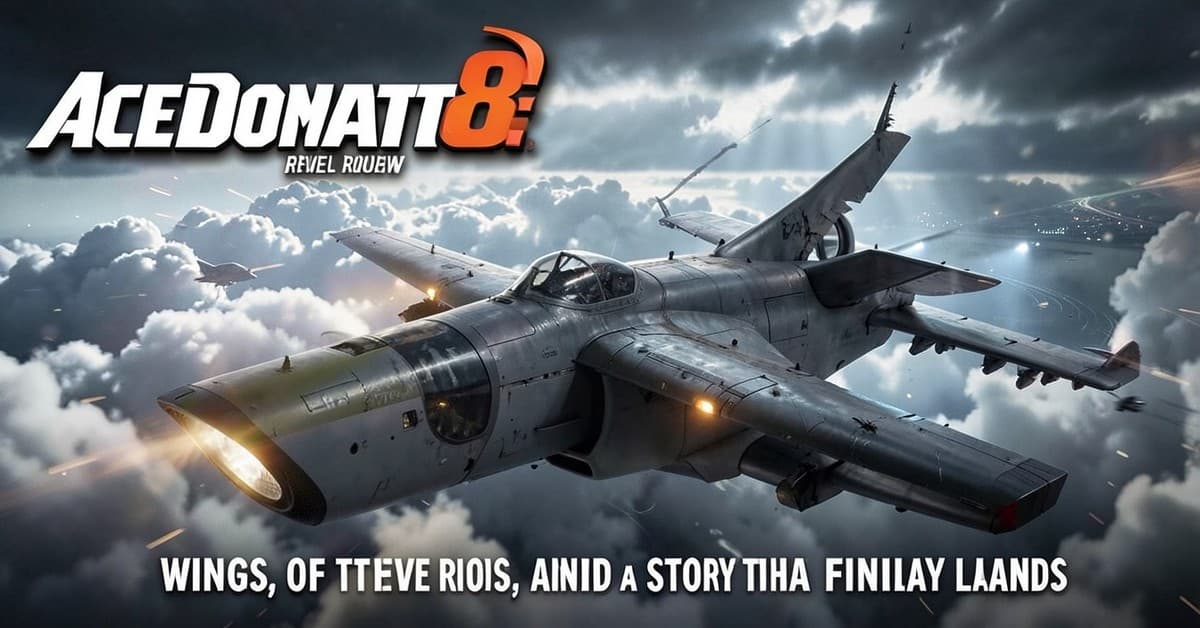
Seven years after Ace Combat 7: Skies Unknown set a new bar for arcade flight combat, Bandai Namco Aces has returned with Ace Combat 8: Wings of Theve. The verdict from critics is clear: this is a worthy successor that refines the aerial action to a razor's edge while attempting something the series has never quite pulled off — a story that resonates as deeply as its dogfights. For players who have been circling the hangar since 2019, the wait has produced a game that feels both familiar and startlingly new.
The significance here goes beyond a simple sequel. Ace Combat has always been about the fantasy of piloting a superplane through impossible odds, but Wings of Theve invests heavily in the people inside those cockpits. The result is a campaign that spans 30 missions and roughly 30 distinct aircraft, each with detailed interiors that make first-person view tempting even when third-person offers a tactical advantage. If you've ever wanted to feel the weight of a handshake on the carrier deck before a sortie, this is the entry that finally lets you.
What Is Ace Combat 8: Wings of Theve?
Developed by Bandai Namco Aces and published by Bandai Namco, Wings of Theve is an arcade flight combat simulator that continues the series' tradition of blending real-world aircraft with near-future superweapons and anime-operatic storytelling. The game centers on Joker Flight, a squadron of pilots including Tasha, Coster, and Daxter, whose interpersonal dynamics drive a narrative that unfolds across a 30-mission campaign. Unlike previous entries that relegated character moments to briefings and radio chatter, this installment introduces interactive first-person sequences that place you directly in the pilots' boots between sorties.
The package targets both longtime fans and newcomers with a roster of around 30 aircraft covering distinct roles — air superiority, ground attack, multirole — encouraging loadout experimentation across varied mission types. Dynamic weather and day-night cycles affect visibility and missile performance, while the new Cloudly cloud engine replaces the third-party solution used in Ace Combat 7 with a proprietary layered system. For genre enthusiasts, this is the most feature-complete Ace Combat yet; for curious outsiders, the lowered barrier to narrative entry makes this the most accessible jumping-on point in years.
Here's a thinking process:
The flight model has been sharpened to the point where one Kotaku reviewer called it “the best Ace Combat has ever felt.” Controls glide effortlessly, and every turn feels punctuated by crisp visuals. Throughout the 30‑mission campaign, the missions stay fresh even though they all revolve around dogfights and bomb runs—encounter design layers extra objectives, varied enemy squads, and environmental tricks. The 30 aircraft are more than skins; each has a unique function, forcing players to think about loadouts to win. Picking the right plane and gear can mean the difference between a clean victory and a scramble to survive.
The Cloudly engine transforms clouds from skybox decoration into tactical actors. Cloud banks stack in layers that behave differently at various altitudes, and diving into them with a missile on your tail can break lock, while enemies hiding inside shrink your targeting range and can break locks entirely. This creates genuine risk-reward decisions: do you burn energy to climb above the overcast for clear shots, or dive into the soup to shake a pursuer? The dynamic weather and day-night cycles compound this, turning a clear-skies intercept into a low-visibility knife fight mid-mission. Detailed cockpit interiors further reward first-person play, with functional instrumentation that makes the view viable rather than a novelty.
Here's a thinking process:
The most striking technical achievement is the Cloudly cloud engine, built in-house to replace Ace Combat 7's third-party solution. Reviewers describe clouds that "stack the sky in layers that look and behave differently depending on how high you're flying" — gorgeous to behold but mechanically significant. The first-person narrative sequences represent an equally bold swing: interactive story segments with QTE prompts that place you in the ready room, on the carrier deck, and in quiet moments with your wingmates. Shot framing, cinematography, emotive motion capture, and voice acting combine with the series' trademark soaring music to produce moments that genuinely land emotionally.
One reviewer admitted being "oddly moved" by the combination of technical craft and narrative earnestness, noting that the story "actually sticks the landing" — a rarity for a series historically content with Saturday-morning cartoon plots. The characters of Joker Flight, particularly Tasha, Coster, and Daxter, benefit from the increased screen time; you grow to know them across the campaign, making key story beats hit harder. The earnestness borders on corny, but it's the endearing kind that reflects genuine ambition rather than cynical box-checking.
Here's
The narrative innovation comes with growing pains. Early cutscene pacing "sometimes feel at odds with the kinetic nature of the pre- and post-mission briefs," creating a stop-start rhythm that can stall the momentum the flight gameplay builds. The interactive sequences lean heavily on momentary QTE button prompts for simple actions — reaffirming a handshake, initiating a movement — that feel trite rather than immersive. These pop up frequently and rarely ask for meaningful input, undermining the immersion they're meant to create.
By the time credits roll, the plot's twists and turns have "lost their impact," and the story grows "a little stale come the end." The ambition is admirable, but the execution doesn't sustain across the full runtime. For players primarily here for the flying, this is a secondary concern — the flight and combat mechanics remain "even more fantastic" — but it prevents the narrative from matching the gameplay's consistency. The QTE issue in particular feels like a solvable design mistake rather than a fundamental limitation.
Wings of Theve arrives as the most complete Ace Combat package to date: a flight model at the peak of its form, a proprietary cloud system that changes how you fight, and a narrative swing that connects more often than it misses. The pacing drags and QTEs grate, but the dogfighting remains the series' north star — smooth, varied, and deeply satisfying across 30 missions. For series veterans, it's the sequel you've waited seven years for. For newcomers, it's the most inviting entry point the franchise has ever offered. The clouds alone are worth the price of admission.
Sources
Frequently asked questions
What is new about the storytelling in Ace Combat 8: Wings of Theve?
Ace Combat 8 introduces interactive, first-person sequences that immerse the player in the story of Joker Flight, along with far more cutscenes than previous entries, allowing players to get to know the crew better.
How does the gameplay in Ace Combat 8 differ from previous games?
The gameplay in Ace Combat 8 is described as wonderfully smooth and varied across 30 missions, with improved presentation and a new cloud engine called Cloudly that affects combat dynamics.
What is the Cloudly engine in Ace Combat 8?
The Cloudly engine is a new cloud system developed by Bandai Namco Aces that replaces the third-party tool used in Ace Combat 7, creating layered skies that look and behave differently depending on altitude and affect combat.
How many aircraft are there in Ace Combat 8?
There are around 30 aircraft in Ace Combat 8, each serving distinct roles and beautifully detailed inside and out.
What are some criticisms of Ace Combat 8?
Some critics mention that the pacing of cutscenes can feel at odds with the kinetic nature of the game, and the use of QTE button prompts for interactivity can feel corny and trite.