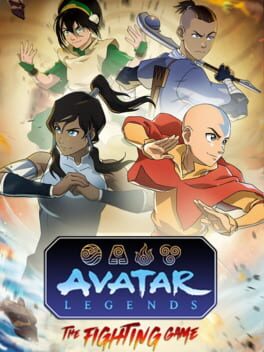

Avatar Legends: The Fighting Game — An Avatar-Themed Brawler Done Right
Avatar Legends: The Fighting Game is a 2D fighting game developed by Gameplay Group International that adapts Nickelodeon's Avatar: The Last Airbender and The Legend of Korra into a competitive versus experience. The roster spans both series, with each character's playstyle meticulously designed to reflect their canonical bending abilities and personality — Aang's evasive airbending enables four-way mix-ups and movement cancels, while Azula demands precision and Korra favors aggressive, straightforward pressure.
The title hits shelves at $29.99 on current consoles and PCs, marking it as a mid‑tier fighter that values depth over sheer polish. The base combat is solid—every combo chain feels earned, and the netcode stays snappy even on congested servers. That said, the single‑player content and tutorial feel like a rough cut from earlier iterations; they’re functional but don’t sparkle. Hardcore fighting fans will enjoy the depth, but those looking for a deep narrative offline will find the experience a bit shallow. In short, it’s a solid entry that folds in technical skill while missing the polish some long‑time fans expect.
Avatar Legends' Fight System: A Masterclass in Chaos
The combat foundation rests on three attack buttons — light, medium, and heavy — alongside quarter-circle motion inputs for special moves that will feel immediately familiar to genre veterans. What distinguishes Avatar Legends is the Flow movement system, a character-specific traversal mechanic tied to a dedicated button that lets each bender deal with the stage in ways that mirror their element. Aang weaves through the air with his glider to shift approach angles, Katara launches off ice ramps for ambiguous cross-ups, and firebenders turn themselves into heat-seeking projectiles.
Flow abilities cancel into each other, enabling improvisational movement chains that let players express themselves through spacing and angles rather than pure frame data optimization. Push the cancels too far, however, and the Flow meter drains into an "unbalanced" state that locks out all Flow moves until the bar recharges naturally — a risk/reward dynamic nearly identical to Street Fighter 6's Drive system. Meanwhile, a separate Chakra meter builds over the course of a match to gate EX moves and supers, adding a second resource layer that encourages patience and timing.
On paper, the move lists look sparse compared to Street Fighter 6's expansive toolkits, but the Flow system multiplies each character's options exponentially. Sokka players have already developed vortex strategies built around boomerang ricochets and sword slashes, while Zaheer breaks conventional rules by calling assists in a manner reminiscent of Marvel vs. Capcom team mechanics. An autocombo system attached to the light attack button gives newcomers a functional entry point without trivializing the skill ceiling, striking a balance that many modern fighters have struggled to achieve.
Visuals, Audio, and Performance
Hand-drawn animation carries the visual identity, faithfully recreating the series' distinctive art style across every character model, attack, and stage transition. While it doesn't quite scale the aesthetic peaks of Arc System Works' Dragon Ball FighterZ — which remains the gold standard for anime-style fighter presentation — the authenticity is undeniable. Each bending art animates with the weight and fluidity fans expect, from water's sinuous whip-cracks to earth's blunt, geological impacts.
The roster demonstrates encyclopedic attention to detail, referencing both iconic televised moments and deep-cut novel lore in character animations, win poses, and move names. This fidelity extends to the netcode, which holds up under competitive scrutiny — matches feel responsive with minimal rollback artifacts, a critical foundation for any fighter hoping to sustain a ranked ecosystem. Performance across platforms is stable, though the review build revealed some characters in visibly incomplete states.
Weak Character Combos Break the Flow
The story mode, guided by series co‑creator Michael Dante DiMartino, pieces together short visual‑novel dialogues and even shorter bouts with AI opponents. Those AI opponents swing between predictable throw reads and full‑screen projectile attacks that feel like a Level 1 CPU. RPG elements are added on top, yet they barely change how you play. The plot itself lives in a non‑canonical “filler” zone that throws characters from different eras into a broken reality, creating awkward scenes where Azula and Korra suddenly act like besties.
Onboarding tools send mixed signals. The generalized tutorial covers basics but lacks Mortal Kombat's genre-vocabulary explanations that give true newcomers a fighting chance. Character-specific guides introduce an innovative step-by-step input slowdown feature that turns learning into a rhythm game, yet they teach narrow, often non-optimal combos rather than broad game plans. Training mode includes advanced frame data bars but omits fundamental functionality like randomized dummy block states, leaving both novices and lab monsters underserved.
Several roster members shipped in visibly unfinished condition. Avatar Aang and Nightmare Korra are explicitly labeled as partial builds with future updates promised — both play uniquely (Aang as a skybound zoner, Nightmare Korra as a teleport-heavy rushdown) but share recycled animations with their base counterparts. Fire Lord Ozai arrived so late in the review period that his missing animations and recent rework made evaluation difficult. Ranked mode was unavailable for testing, a concerning omission for a game targeting competitive longevity.
Pros
- Deep, expressive combat built around character-specific Flow movement
- Faithful adaptation of bending styles and character personalities
- Solid netcode and responsive online play
- Low barrier to entry with high mastery ceiling
- Hand-drawn animation authentically recreates the series' art style
Cons
- Lackluster single-player content with poor AI and half-baked RPG mechanics
- Non-canonical story mode with out-of-character moments
- Incomplete onboarding tools and training mode missing basic features
- Multiple characters shipped in unfinished states
- Ranked mode unavailable at launch
Avatar Legends: The Fighting Game succeeds where it matters most — the moment-to-moment combat that will keep players returning for years. The Flow system creates a strategic vocabulary unique to this title, and the roster's faithfulness to the source material makes every match feel like an episode brought to life. But the rushed release state is impossible to ignore: unfinished characters, absent ranked play, and single-player modes that feel like obligations rather than features. At $29.99, it's a compelling purchase for fighting game enthusiasts willing to overlook the rough edges. For Avatar fans hoping for a complete offline experience, the wait continues. The foundation is excellent; the house built atop it needs more time.