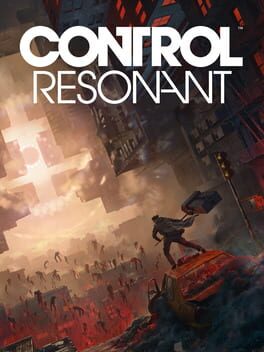

Remedy Entertainment's Control Resonant arrives as a follow-up to the studio's 2019 paranatural shooter, trading the Brutalist corridors of The Oldest House for the Hiss-infected streets of Manhattan. The core premise remains familiar: protagonist Dylan Faden navigates a reality-warping crisis while uncovering the secrets of the Federal Bureau of Control through scattered documentation. But where the original game made its paperwork feel like a natural extension of its office-building setting, the sequel's reliance on the same tell-don't-show methods creates friction with its more personal, character-driven narrative.
The writing itself has not dipped in quality. Every piece of lore found in Resonant so far is top-notch, and even something as simple as a tuning fork puzzle in a subway gets elevated by notes that paint a picture of a frustrated research team trying to understand why they keep teleporting around. It makes every piece of Resonant's world feel narratively motivated rather than something that's there for the sake of gameplay. That level of craft is what puts Remedy head and shoulders above so many of its peers as a big-budget developer. The problem is not what the logs say — it is how many of them there are, and how the game forces players to engage with them.
The Volume Problem
Early in the campaign, lore logs appear at a manageable clip. A few documents here and there set the scene, and each only demands a quick pause to read. The volume ramps up sharply the deeper Dylan ventures, and it becomes overwhelming fast. In one mid-game mission set in an underground labyrinth, the player encounters several FBC test sites scattered throughout a liminal space. Each site is filled to the brim with text and audio logs, one after another. As soon as one log is finished, another appears just two steps away. This density transforms exploration from a process of discovery into a chore of inventory management, where the reward for pushing forward is yet another wall of text to parse.
This pacing issue feels less narratively harmonious than it did in the original Control. That game was largely about the inner machinations of a government agency, set in an office building where paperwork lying around everywhere made diegetic sense. Finding sensitive secrets on a conference table helped build the idea that the FBC were playing things too loose. Resonant, by contrast, is far less about FBC politics and more focused on a sibling story between Jesse and Dylan. All that loose paperwork distracts from that emotional heart rather than reinforcing it. The environmental storytelling that made The Oldest House feel like a character in its own right has been replaced by a deluge of collectibles that feel increasingly disconnected from the moment-to-moment experience.
Here's a thinking process:
The audio log implementation introduces its own set of frustrations. When Dylan picks one up, it autoplays without requiring a menu visit — a design choice that theoretically allows players to listen while continuing to move and fight. In practice, the system actively undermines itself. The logs will stop playing if the player triggers any story-related audio, and in a dialogue-heavy game like Control Resonant, those triggers are often close enough to pickup locations that walking ten feet accidentally shuts the log down. This forces the player to open a menu and manually hit play anyway, negating the entire purpose of the autoplay feature.
Players who want to soak in an audio log have to freeze the character until it ends. In a title that prizes fluid movement, that pause feels like a wrench in the flow. The game’s language is run, dodge, throw, shoot, and narrating in a hushed corner breaks that rhythm. The mismatch makes the audio system feel like it belonged to a slower paced experience. When dozens of dialogue triggers crowd the same speaker channel, the immersion fractures. The result is a mechanic that looks like it was ripped from a different era, one that doesn’t match the kinetic pace built into the gameplay.
Here's a thinking process:
Control Resonant is not alone in this approach. Lore floods have become a fashionable design choice across the industry, appearing in everything from compact games like Pragmata to open-world behemoths like The Blood of Dawnwalker. When used sparingly, they can give a world more color and make it feel lived in — the entire Resident Evil series stands as a great example of restraint paying off. But it can just as easily become a momentum killer in action games like Marvel's Wolverine that repeatedly force the player to put down the controller for a minute or two to watch a character stand in place and listen to a tape recorder. It is not exactly the most exciting way to hear a story in a game, and Resonant's implementation leans toward the latter extreme.
None of these issues rise to the level of a deal-breaker. The lore remains entirely optional, and players can choose to engage with it on their own terms. But the overreliance on a tell-don't-show approach hurts the pacing of a game that otherwise wants to keep the player moving. There are other ways to achieve worldbuilding that are more integrated into play — environmental design that lets players infer a story without having it spelled out. The real Manhattan that Resonant's city draws on is full of weird, unexplained sights that haunt the observer for years precisely because no audio log explains them. Sometimes the most powerful storytelling trusts the player to sit with the mystery.
Key Takeaways
- Control Resonant's writing quality remains excellent, with even minor puzzles elevated by detailed lore entries
- Lore log volume escalates sharply in mid-game areas, particularly in FBC test sites within liminal spaces
- Audio logs autoplay on pickup but cut out when story dialogue triggers, forcing menu playback or standing still
- The collectible-heavy approach distracts from the core sibling narrative between Jesse and Dylan Faden
The fundamental tension in Control Resonant is between a studio that writes some of the best lore in the business and a delivery system that buries the player in it. Remedy has proven it can do environmental storytelling that rivals anything in the medium — The Oldest House remains a masterclass in showing rather than telling. The hope for whatever comes next, whether it's a Resonant update or a full sequel, is that the studio trusts its own level design to carry more of the narrative weight. The sibling story at the center of this game deserves the space to breathe without a stack of paperwork blocking the view.
Sources
It makes sense, then, that Remedy would double down on what it did best for Control Resonant.