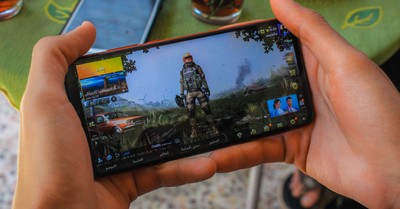
Disney president and chief creative officer Dana Walden has directly addressed persistent rumours that the entertainment giant intends to acquire Epic Games, putting the speculation to rest with a clear denial. Speaking at Bloomberg's Screentime event last week, Walden stated that "those are not the conversations we are having right now," referring to any potential buyout of the Fortnite publisher. This marks the most definitive public statement from Disney leadership on the matter since the company made its $1.5 billion equity investment in Epic Games in 2024. For players and industry watchers who have been parsing every cross-promotional event for signs of a deeper merger, Walden's comments draw a firm line under the acquisition narrative — at least for the foreseeable future.
The $1.5 billion investment announced last year gave Disney a significant stake in Epic Games, but it stopped well short of a full acquisition. At the time, Epic Games CEO Tim Sweeney made it explicit that Epic would "continue to maintain control of the board following the close of [the] transaction." That governance structure remains intact, and Walden's remarks confirm that Disney's current strategy revolves around partnership rather than ownership. The distinction matters for players because it means Fortnite's creative direction, platform policies, and ecosystem independence stay in Epic's hands — while Disney brings its intellectual property to the table through collaborative experiences rather than top-down mandates.
Here's a thinking process:
Since the investment closed, Disney and Epic have rolled out a steady stream of crossovers that blend Fortnite's live-service platform with Disney's theme park attractions and media franchises. The most recent example is Smugglers Gambit, a Fortnite island that recreates the Millennium Falcon: Smuggler's Run ride from Disneyland. Walden described the integration in detail: "When they get there, they link their identities with their Disney ID and Fortnite ID. There's a light touch of personalisation on the actual ride, and then the digital rewards that you win on the ride are redeemable back in Fortnite." This two-way loop — physical park visit open uping digital cosmetics, digital engagement driving park awareness — is the template both companies plan to replicate across Star Wars, Marvel, Pirates of the Caribbean, The Incredibles, and The Nightmare Before Christmas.
For the average Fortnite player, this means more themed islands, limited-time events, and cosmetic drops tied to Disney's release calendar. For Disney park guests, it means rides that recognize their Fortnite profile and grant persistent rewards. The technology enabling this — identity linking between Disney ID and Epic accounts — is still in its early stages, but Walden noted the Smugglers Gambit activation "created so many impressions and awareness for The Mandalorian and Grogu, so there will continue to be events that lift these libraries forever." The phrase "lift these libraries forever" signals a long-term content strategy: Disney sees Fortnite as a perpetual marketing engine for its back catalogue, not just a one-off promotional venue.
Here's a thinking process:
Disney Experiences chairman Josh D'Amaro has framed the partnership as a way to "bring together our incredible collection of stories and experiences from across the company for a broad audience in ways we have only dreamed of before." He added that "Epic Games' industry-leading technology and Fortnite's open ecosystem will help us reach consumers where they are so they can engage with Disney in the ways that are most relevant to them." That language — "open ecosystem," "reach consumers where they are" — underscores why Disney does not need to own Epic to achieve its goals. Fortnite's existing user base, cross-platform infrastructure, and creator tools already provide the distribution layer Disney wants. Buying the company would add regulatory scrutiny, integration risk, and cultural friction without necessarily improving the collaboration that is already producing results.
Walden’s decision to drop buyout chatter reveals that Epic isn’t a solo venture; the studio still counts on heavy investors like Sony and Tencent. Pulling the plug with a full takeover would be far more knotty than the 2024 equity swap, and the leadership team has no hint of a willingness to part. For now, the split‑brain deal keeps both sides happy: Disney keeps a rolling, living playground for its toys, while Epic continues to pour top‑tier content that keeps players glued and bolsters Fortnite’s spot as a social hub just shy of the
Key Takeaways
- Disney president and CCO Dana Walden dismissed Epic Games buyout rumours: "Those are not the conversations we are having right now."
- Disney invested $1.5 billion in Epic Games in 2024; Epic retains board control per CEO Tim Sweeney.
- Current collaboration focuses on cross-platform experiences linking Disney parks, Disney ID, and Fortnite accounts.
- Recent activations include Smugglers Gambit island, Star Wars, Marvel, Pirates of the Caribbean, The Incredibles, and The Nightmare Before Christmas content.
Sources
When the acquisition went through, Epic Games CEO Tim Sweeney said Epic would