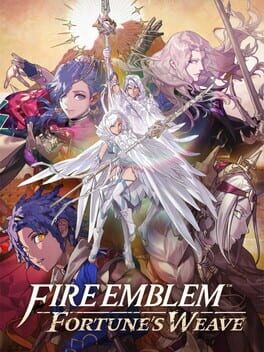
Nintendo lifted the curtain on Fire Emblem: Fortune's Weave today with a 20-minute Nintendo Direct broadcast that packed more structural surprises into its runtime than most full-length showcases. The Switch 2 exclusive arrives September 17, marking the first major Fire Emblem launch since 2019's Three Houses and positioning itself as a direct spiritual successor to that game rather than a continuation of Engage's lighter approach. For players who have been waiting half a decade for the next big tactical RPG, the wait ends in just over a month — and the design philosophy looks deliberately familiar.
Quick Facts — Fire Emblem: Fortune's Weave
| Publisher | Nintendo |
|---|---|
| Platform(s) | Switch 2 |
| Release Date | September 17 |
| Genre | Turn-based RPG |
The significance here extends beyond a simple release date. Three Houses succeeded because it married battlefield tactics with a calendar-driven social simulation that made every week feel consequential. Fortune's Weave appears to be doubling down on that formula while adding a four-protagonist structure and a mid-game time jump that fundamentally reshapes the campaign. If the Direct's promises hold, this isn't just another Fire Emblem — it's an attempt to evolve the Three Houses template into something that spans generations rather than a single academy year.
<strong>Picking One Hero Just Got Brutal</strong>
The game opens in the Dagda Empire, year 1449, with the capital city of Dagison serving as the central hub. A Roman-style amphitheater hosts the Heroic Games, a championship where the prize is a single wish granted by the empire's ruler, Solel. Four distinct heroes compete for that wish, each with their own storyline, allies, and motivations. Cai is a young farm boy fighting to free his imprisoned father. Dietrich, a brooding seafarer, washes ashore after an encounter with an enormous monster and seeks glory. Theodora aims to restore peace to her remote kingdom, which worships a mysterious goddess. Leda, born into prestige, is consumed by rage over her father's murder and discovers the killer plans to participate in the games.
This four-protagonist structure represents a significant departure from the series' traditional single-lord format. Fortune's Weave lets you swap between all four heroes at the Pale Raven's Perch, a mysterious location that uses the powers of a mysterious bird to switch perspectives. Playing through all four storylines in parallel means the narrative payoff for this structure arrives at the five-year time jump, where these introductory arcs converge.
City Activities and Systems Beyond Battle
Dagison functions as more than a menu hub. The Direct detailed a weekly cycle that should feel immediately familiar to Three Houses veterans: training sessions at the arena level up fighters, while watching opponent battles gathers intel on their techniques. A shopping arcade handles weapon enhancement, and a temple offers blessings that provide stat buffs in combat. Certification Exams serve as the mechanism for class changes, letting characters attempt different roles. Townsfolk quests provide rewards and world-building, and powerful warriors can be recruited — though some initially refuse, requiring gifts or dinner invitations to win them over.
Inns serve as rest points that automatically generate materials over time and host support conversations with allies, including a bathhouse scene. The Pale Raven's Perch stands apart as the narrative linchpin, enabling the four-hero swap mechanic. This density of systems suggests the developers want players living in Dagison week by week, not just visiting between battles. The arena championship structure provides pressure — each week of preparation builds toward the next match, and the wish-granting premise gives every activity narrative weight.
Overworld Exploration and Non-Grid Dungeon Combat
Beyond Dagison's walls, an overworld map opens up for skirmishes against bandits and dungeon exploration. Time passes during exploration, inevitably pulling players back to the arena for scheduled matches. The most mechanically significant reveal concerns dungeon combat: instead of the series' signature grid-based battles, dungeons use a non-grid system with combo attacks between support allies. All four heroes offer unique abilities in this format, and dungeons yield materials and items for the city's enhancement systems.
This split combat design — grid-based for arena matches, free-form for dungeons — is a bold structural choice. Grid combat has defined Fire Emblem's tactical identity for decades; moving away from it, even partially, signals confidence that the combo system can deliver comparable depth. The combo attacks with support allies suggest a more action-oriented rhythm, potentially resembling the pair-up mechanics of recent entries but with real-time positioning. If the transition between systems feels seamless, it could give each mode a distinct tactical flavor: calculated precision in the arena, fluid improvisation in dungeons.
The Time Jump and True Protagonist
After the Heroic Games conclude, the story jumps five years to 1454 and reveals its actual protagonist: Eshmel. The four heroes were merely the introduction. Eshmel is called by the returning goddess Sothis — older now, linking directly to Three Houses — to prevent Dagda's destruction. Goddess Fortuna enables time travel, presenting players with a critical choice: face the threat solo, or bring the four heroes from 1449 into the future to assist. This decision likely branches the narrative significantly, determining which allies, supports, and story beats remain accessible.
The time-jump structure reframes everything that came before. The first act isn't just a prologue; it's an investment phase where players build relationships, classes, and equipment that may carry forward — or be lost — depending on the 1454 choice. Sothis's return and Fortuna's time powers explicitly tie Fortune's Weave to Three Houses' lore, confirming this isn't just a spiritual successor but a direct narrative continuation. For longtime fans, that connection carries weight: Three Houses' ending left Sothis's fate ambiguous, and seeing her older suggests the timeline has advanced meaningfully.
Fire Emblem's Four Heroes: Who Actually Stands Out?
Fortune's Weave arrives at a pivotal moment for the franchise. Three Houses sold over three million copies and expanded Fire Emblem's audience significantly; Engage, while mechanically solid, felt like a safe retreat to traditional formula. This Direct suggests Nintendo understands what made Three Houses resonate — the calendar, the social bonds, the sense of a living world — and are attempting to scale those systems across a dual-timeline narrative with four protagonists. The Switch 2 exclusivity also positions it as a showcase title for the new hardware, though the turn-based nature means visual fidelity matters less than design ambition.
The risk is structural complexity. Four protagonists, two timelines, dual combat systems, and a branching choice at the midpoint create an enormous number of narrative and mechanical variables. If the systems don't interlock cleanly — if the dungeon combat feels shallow compared to the arena, or if the time jump renders early choices inconsequential — the ambition becomes bloat. But the Direct's confidence in showing these systems running suggests the team has solved the integration problems that sink many ambitious RPGs. September 17 will reveal whether Fortune's Weave earns its place alongside Three Houses or becomes another Engage: competent but forgettable.
Key Takeaways
- Fire Emblem: Fortune's Weave launches September 17 as a Switch 2 exclusive
- Four playable heroes — Cai, Dietrich, Theodora, Leda — each with unique storylines and allies
- Story jumps five years to 1454, revealing true protagonist Eshmel and goddess Sothis's return
- Dual combat systems: grid-based arena battles and non-grid dungeon combat with combo attacks
The Dagdan Collection special edition and Nintendo Music integration show Nintendo treating this as a tentpole release, not just another entry. For players who have tracked Fire Emblem's evolution from permadeath niche to mainstream phenomenon, Fortune's Weave represents the series' most ambitious structural gamble yet. Whether that gamble pays off depends on execution — but the Direct made clear the ambition is genuine, and the September 17 launch leaves little time to wait for the verdict.