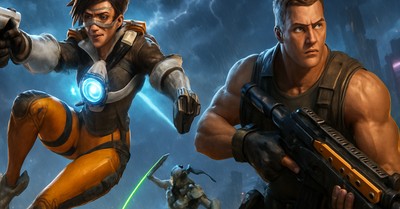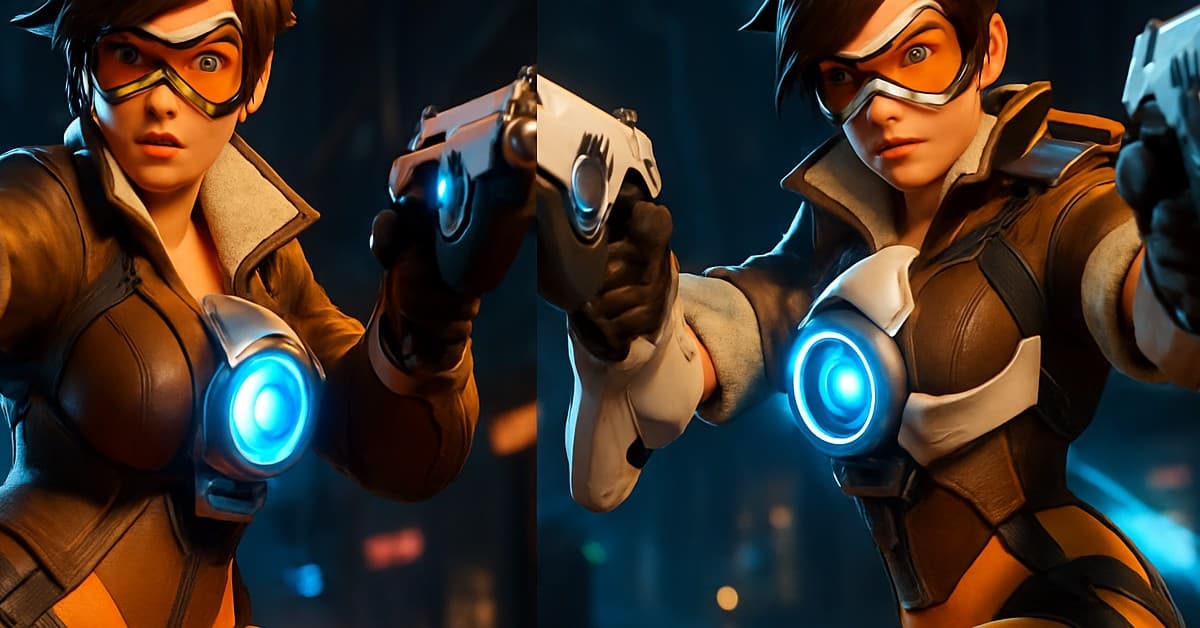
The crossover event bringing Overwatch heroes into Fortnite has unleashed a flurry of community reactions, but none as unexpectedly humorous as the focus on character model adjustments, particularly the more voluptuous rear ends of Tracer and D.Va compared to their Overwatch versions. For fans deeply familiar with the Overwatch roster, the difference is not just noticeable but has become a point of amusement and speculation.
Quick Facts — Fortnite
| Developer | Epic Games |
|---|---|
| Platform(s) | PC |
| Genre | Battle Royale |
At the heart of the discussion is Tracer, whose Fortnite model has been described by popular streamer Muselk as "so goddamn voluptuous" in comparison to her Overwatch counterpart.
"why is it so goddamn voluptuous in Fortnite? My lesbian queen, act in queer solidarity and tell me the glute routine. The world needs heroes."
Muselk, Streamer
The Tracer Conundrum and Overwatch's Past Controversy
Tracer's rear end has historically been a point of discussion since Overwatch's launch in 2016, when Blizzard altered one of her victory poses due to feedback that it showed off her butt too prominently in her tight pants. There has been a lingering belief among some fans that Blizzard further reduced the emphasis on Tracer's rear end in subsequent updates, a claim ex-director Jeff Kaplan has denied, stating, "denied that Blizzard removed some of the junk in Tracer's trunk." The Fortnite version, however, leaves no doubt about the increased emphasis.
This contrast sparks interesting questions about character design choices across different gaming universes and the freedom (or lack thereof) developers have when adopting characters from other IPs. Tracer's model in Fortnite serves as a stark example of how the same character can be perceived differently based on the game's aesthetic and design philosophy.
D.Va Joins the Conversation, Snake Gets "Nerfed"
Tracer is not alone in this noticeable design shift; D.Va's Fortnite model also boasts a more emphasized rear end compared to her Overwatch version, as highlighted by community member eshenta_. This consistency in design approach for Overwatch heroes in Fortnite raises questions about whether this is a deliberate styling choice by Epic Games for characters imported into the battle royale.
Interestingly, this design liberty was not extended to all crossover characters. Metal Gear Solid's Snake, who was introduced to Fortnite in 2019, had his rear end "nerfed" according to community observations, with one user, milktst, jokingly expressing disbelief: "So tracer gets an ass but the legendary solid snake gets nothing…? Wow." This inconsistency in design approach across different franchises' characters adds to the intrigue.
Community Reaction and the Bigger Picture
The community's reaction, while largely humorous and surprised, touches on broader themes of character design, IP crossover dynamics, and community expectations. The lighthearted memes and jokes surrounding Tracer's and D.Va's models in Fortnite also underscore the deep engagement and observation level of gaming communities.
As the gaming landscape continues to see more crossovers, incidents like these highlight the challenges and freedoms developers face in merging aesthetics and satisfying both the original game's community and the new host game's audience. For now, Tracer's Fortnite model remains a talking point, a symbol of the whimsical side of gaming community interactions.
https://twitter.com/muselk/status/2054903583125143581?ref_src=twsrc%5Etfw https://twitter.com/IGN/status/2055094295556706395?ref_src=twsrc%5Etfw https://twitter.com/eshenta/status/2055001589274841366?refsrc=twsrc%5Etfw https://twitter.com/milktst/status/2055070076857205076?ref_src=twsrc%5EtfwKey Takeaways
The situation with Tracer's and D.Va's models in Fortnite compared to Overwatch raises several key points about game development and community response:
- Character Model Adjustments: Significant changes can occur when characters cross over between games, reflecting different design philosophies.
- Community Engagement: Even minor (or seemingly minor) changes can spark deep community interest and humor.
- Crossover Dynamics: The treatment of characters from different IPs can vary greatly, as evidenced by the differences in how Tracer/D.Va versus Snake were adapted.
In conclusion, while the focus on Tracer's and D.Va's rear ends might seem frivolous at first glance, it illuminates the intricate dance between game development choices, community perceptions, and the evolving landscape of character crossovers in gaming.