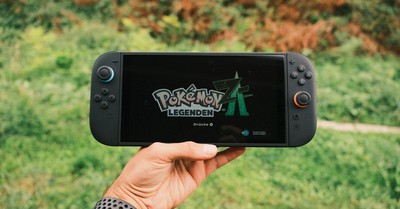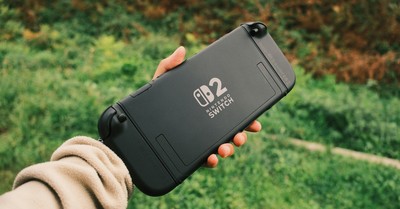
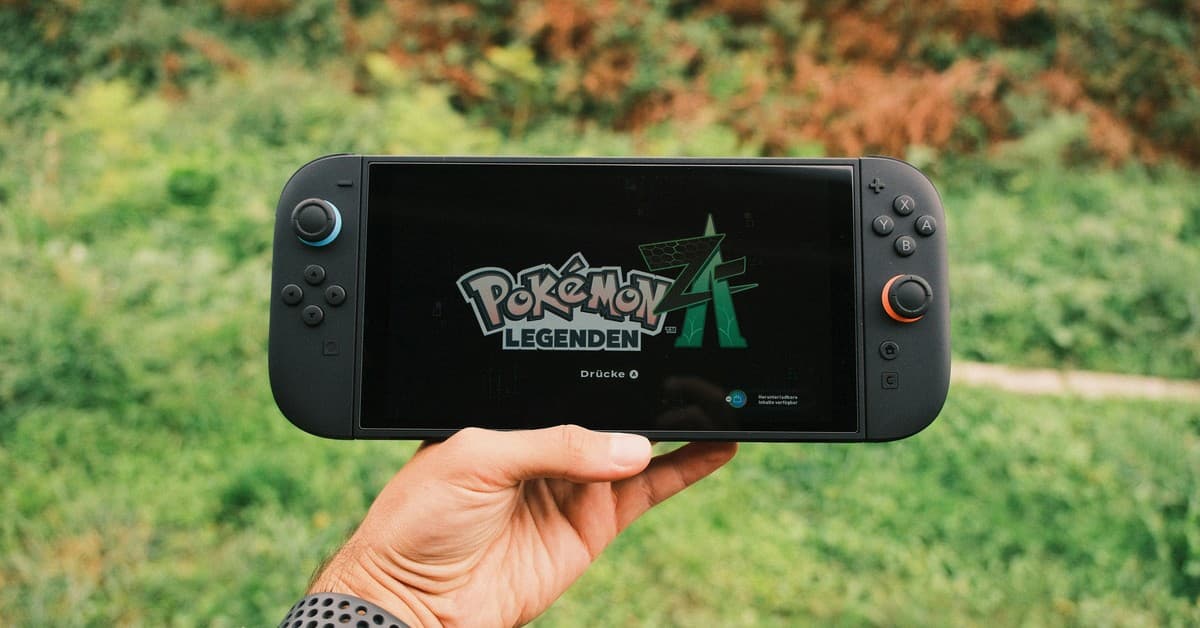
Nintendo has built a reputation on zigging when the industry zags, but the jokes about the company chasing graphical parity have started landing differently. Star Fox on Switch 2 is a stellar remake of a game that's been remade several times since 1993, now draped in lens flare and physically-based feathers, while Ocarina of Time's second remake appears to chase a similarly contemporary sheen. Shigeru Miyamoto's public embrace of the Mario Galaxy movie's mediocrity only deepens the unease. For a company whose soul has always meant making decisions that could only have come from them, the question becomes unavoidable: has Nintendo started going with the flow?
This is not a new argument. Nintendo already had it with itself twenty-six years ago at the Spaceworld exhibition in Chiba, Japan, where the GameCube debuted alongside a 12-second realistic Zelda demo reel that sent fans into a frenzy.
"In a very un-Nintendo style it showed how great the games could graphically be, not how well they might play... In fact, the whole presentation was almost totally devoid of Nintendo's true vision. The innovative company has said time and time again that great graphics mean nothing, and it can only s"
Fran Mirabella, IGN
Nintendo has said time and time again that great graphics mean nothing, but that stance was tested as the industry moved toward graphical competition. The backlash that erupted when Wind Waker first appeared in a cartoon style a year later was fierce—forums exploded with posts like “Where is my mature Zelda?” and “They turned Zelda into a puppet show for five‑year‑olds!” Those reactions showed the community wanted something else. Looking back, the SpaceWorld demo looks worse than dusty cardboard.
The Philosophy That Built Nintendo's Soul
The answer to what makes Nintendo Nintendo traces back to Gunpei Yokoi, the inventor of Game & Watch and Game Boy who coined "Lateral Thinking with Withered Technology." Yokoi saw salarymen playing with calculators on trains and built handheld gaming from cheap, well-understood components. His Game Boy traded color for a monochromatic screen that delivered 30 hours of battery life on double-A batteries — a deliberate constraint that became a competitive advantage. When Satoru Iwata became president in May 2002, he scaled this doctrine to home consoles. The GameCube generation would be the last where Nintendo tried matching Sony and Microsoft teraflop-for-teraflop; competing was expensive, bloated development costs, and unlike its rivals, Nintendo turns a profit on every console shipped.
The Wii emerged from this philosophy: a console that couldn't crack 720p while Call of Duty and Grand Theft Auto defined the seventh generation's graphical arms race. The games that made the Wii worth owning were bespoke experiences designed ground-up around cost-efficient hardware. They didn't look like other games because they couldn't — and that limitation became permission to dazzle with wit and craftsmanship instead. Soul is responding to Donkey Kong Country's pre-rendered muscle with Yoshi's Island's crayon scribbles. Soul is choosing Toon Link over a hyper-realistic Hero of Time. Even Nintendo's flops — the Satellaview, the Wii U — carried the undeniable spirit of a company willing to try something different.
Nintendo's Slow Decade-Long Descent
The Wii U's commercial disaster forced a pivot. The withered technology ethos wasn't the problem — the Switch would prove that with extreme prejudice — but Nintendo clearly decided it was time for more mainstream revenue streams. The tightly-controlled walled garden opened wide to licensors, theme parks, toys, and movies. The film Nintendo signed off on with all its creative capital and institutional weirdness was a shallow, by-the-numbers exercise in brand management — exactly the kind of safe, committee-approved product the old Nintendo would have rejected.
That same safety-first instinct now permeates the hardware strategy. The Switch 2's existence feels less like a bold new lane and more like an iterative obligation — a console that exists because the market expects a successor, not because Nintendo has a significant idea for how games should be played. The remake slate doubles down on this: Star Fox and Ocarina of Time chasing contemporary graphical sheen instead of reimagining what those games could be on new hardware. When Miyamoto publicly embraces a movie's "mid-ness," it signals a leadership comfortable with adequacy — a word that should never appear in the same sentence as Nintendo.
Nintendo's $10 Billion Gamble
It's worth steel-manning the other side. Nintendo has always remade games — Ocarina of Time 3D, Majora's Mask 3D, Link's Awakening on Switch — and the company has always been weirdly protective of its IP in ways that frustrated fans. The Amiibo strategy, the Nintendo Switch Online app locking voice chat behind a smartphone, the $40 plastic figurine DLC: these were "recognizably, soulfully, Nintendo insane" decisions that prioritized control over convenience. The Switch 2 could simply be the next chapter in a long history of Nintendo doing Nintendo things that look foolish until they print money. The Wii U looked like a disaster until the Switch proved the dual-screen concept worked in handheld form. The DS looked like a gimmick until it wasn't.
But there's a difference between idiosyncratic Nintendo and indifferent Nintendo. The former makes decisions no other company would make because they serve a singular vision. The latter makes decisions every other company makes because they're safe and profitable. The Star Fox remake with its triple-A feather rendering doesn't feel like a bold reinterpretation — it feels like a tech demo for hardware that doesn't have a Wii Sports moment waiting in the wings. The soul isn't in the polygons. It's in the decision to make something that couldn't exist anywhere else.
Nintendo has survived worse identity crises. The company that gave us the Virtual Boy also gave us the Game Boy. The company that stubbornly stuck with cartridges in the disc era gave us the DS touchscreen revolution. But survival isn't the same as vitality. The question isn't whether Nintendo will make money — they turn a profit on every console shipped. The question is whether the next Wind Waker moment is still possible at a company that seems increasingly content to give the "hire this man" crowd exactly what they asked for. The lunchroom bullies got their realistic Zelda eventually. It was called Twilight Princess, and it remains solidly mid. The real Zelda was the one Nintendo made on its own terms.
Key Takeaways
- Nintendo's "soul" has historically meant making decisions only they would make — zigging when the industry zags
- Gunpei Yokoi's "Lateral Thinking with Withered Technology" philosophy powered the Game Boy, DS, and Wii
- The 2000 Spaceworld realistic Zelda demo sparked fan outrage, but Wind Waker's cartoonish style endured as a classic
- Recent output — Switch 2 hardware, repetitive remakes, movie embrace — suggests a shift toward safer, industry-standard choices