IGN hardware editor Jackie Thomas has spent the first couple of weeks testing the Steam Machine, and the verdict is clear: this device solves a specific problem beautifully, but that problem only exists for a certain type of player. After falling ill over a weekend and retreating to the couch with the compact PC connected to a TV, Thomas discovered the Steam Machine's true purpose — seamless access to an existing Steam library without network streaming compromises. For players who have spent two decades building a PC collection, the ability to continue saves from a desktop to the living room without repurchasing games is genuinely significant.
The $1049 price tag remains the elephant in the room, and Thomas is blunt about what it means for the average buyer. At that cost, the price-to-performance ratio simply cannot compete with a PS5 or Xbox Series X for someone who just wants to play console games. But for the specific demographic that already owns thousands of Steam titles — many of which never released on PlayStation or Xbox — the value proposition flips entirely. The Steam Machine isn't a console alternative; it's a living room endpoint for an existing PC ecosystem.
About the Steam Machine
The Steam Machine represents Valve's latest push to bring the Steam ecosystem into the living room, running SteamOS in a compact form factor designed to sit alongside traditional consoles. Unlike previous iterations that relied on third-party manufacturers, this device arrives as a first-party solution built around SteamOS Gaming Mode — a console-like interface that handles nearly all daily operation without ever dropping to a Linux desktop. Thomas set the output resolution to 1440p rather than 4K, noting that at typical living room viewing distances the difference is imperceptible.
Thomas has played PC games for almost 20 years and owns thousands of Steam titles, and approached the review from a unique position: someone who buys consoles every generation but rarely plays them. The PS5 Pro sitting next to the Steam Machine has been collecting dust; Death Stranding 2 saw only an hour of playtime last year. That context frames the entire evaluation — this is not a console gamer asking whether to switch, but a PC enthusiast asking whether the living room gap has finally been bridged.
SteamOS Gaming Mode and the Living Room Experience
SteamOS Gaming Mode is the feature that finally makes a living room PC viable for daily use. Previous living room PCs always frustrated Thomas with the need to keep a keyboard and mouse stashed away for inevitable desktop fiddling — driver updates, launcher issues, settings tweaks. Gaming Mode eliminates almost all of that. The interface handles updates, library management, and game launching entirely within the controller-friendly environment, meaning the desktop becomes a rare destination rather than a daily necessity.
For the player experience, this means the Steam Machine behaves like a console when you want it to, but retains full PC flexibility when you need it. You can install third-party launchers like Epic Games Store or GOG Galaxy when required, then return to Gaming Mode for actual play. The transition is seamless enough that Thomas went an entire weekend of heavy use — Resident Evil 4 Remake and Final Fantasy 7 Rebirth in a Nyquil-induced haze — and found it incredible.
Steam Controller Trackpads and Desktop Navigation
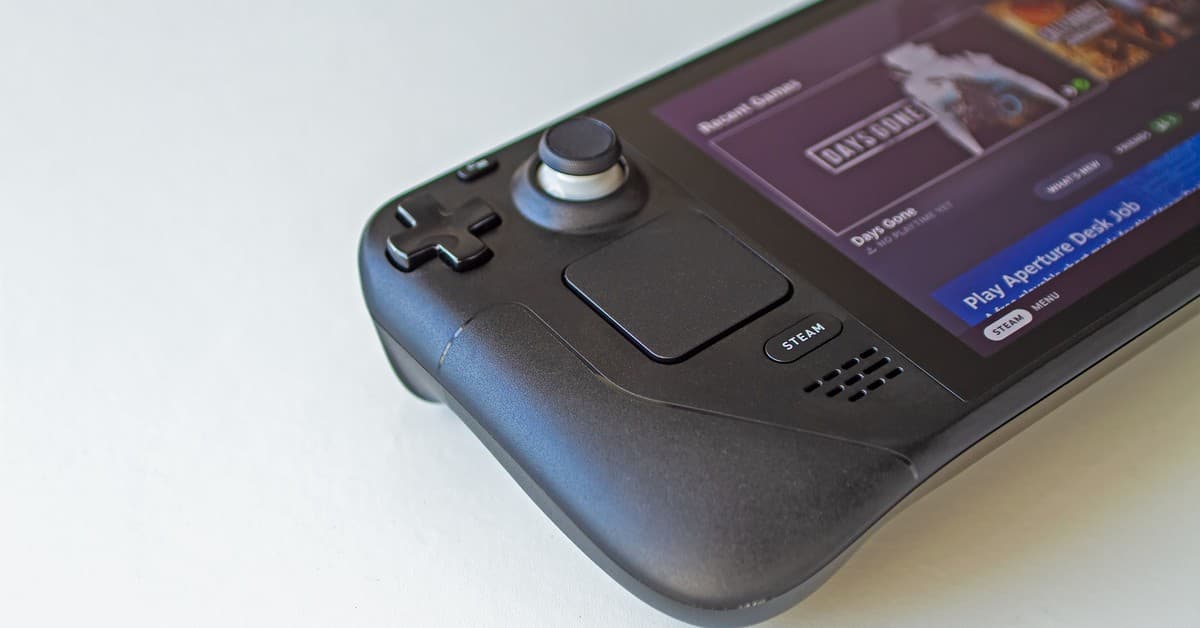
When desktop access does become necessary, the Steam Controller's trackpads make it so that Thomas doesn't have to break out a keyboard and mouse. The trackpads make desktop navigation usable from the couch — no keyboard and mouse required. This is a small detail with outsized impact: it means a single input device handles both Gaming Mode and the occasional desktop session, and the Steam Machine never forces you to break the living room immersion to hunt for peripherals.
In practice, this means installing a non-Steam game or tweaking a graphics setting feels like a natural extension of the console-like experience rather than a jarring context switch. The trackpads provide enough precision for desktop tasks while remaining comfortable in a handheld controller form factor. For anyone who has ever balanced a keyboard on their lap while trying to click a tiny "Accept" button on a TV ten feet away, this quality-of-life improvement cannot be overstated.
Local Steam Library Playback and Cross-Device Saves
The core appeal remains local Steam library playback with full save synchronization across devices. Thomas describes the weekend routine: shut down an RPG at the desk, pick up the same save on the Steam Machine in the living room, continue grinding side quests while watching a show. This workflow — handheld, laptop, desktop, now living room box — all sharing the same library and progression — is the PC ecosystem's killer feature, and the Steam Machine finally extends it to the TV without compromise.
The difference from streaming solutions is critical. No network dependency means no compression artifacts, no input latency spikes, no router configuration headaches. The games run natively on the hardware in front of you. Thomas set the output resolution to 1440p rather than 4K, noting that at typical couch-to-TV distances the difference is imperceptible — and the performance headroom gained matters more than pixel-count bragging rights. Would it hold up to pixel peeping? Probably not. But living room gaming isn't about pixel peeping.
"I got to carry on my saves from my PC and didn't have to buy another copy of either of the games just to play them on the PS5 Pro that's now collecting dust next to the Steam Machine."
This quote captures the economic reality for heavy Steam investors. Resident Evil 4 Remake and Final Fantasy 7 Rebirth already owned on PC — no second purchase required. The PS5 Pro version would have demanded a separate license for the same content. Multiply that across thousands of games and the Steam Machine's $1049 price starts to look like a library access fee rather than a hardware premium.
Steam Machine’s Tiny Size Hides Big Problems
The Steam Machine takes up roughly half the space of a PS5 or Xbox Series X, a practical advantage that Thomas emphasizes repeatedly. Previous living room PCs were full towers that dominated entertainment centers — loud, hot, and visually jarring alongside sleek consoles. This device disappears into the setup. For someone who values a clean living room aesthetic, the form factor isn't a nice-to-have; it's a prerequisite for the device existing in that space at all.
The compact design also reinforces the console-like presentation. It sits horizontally, runs quietly under load, and doesn't demand attention. Combined with Gaming Mode's interface, the physical design completes the illusion: this feels like a console built by people who understand why consoles look and behave the way they do, but who also refuse to accept the walled garden limitations.
Steam's $500 Console Quandary
The Steam Machine is a niche product that serves its niche exceptionally well. If you are a PC gamer with a substantial Steam library who wants living room access without streaming compromises, this device delivers an experience nothing else currently matches. The combination of local playback, save synchronization, Gaming Mode convenience, and compact design solves a problem that has persisted for years. Thomas's "dream come true" assessment is genuine — this is the living room PC enthusiasts have been waiting for.
For everyone else, the calculation is brutally simple. At $1049, you could buy a PS5 and Xbox Series X with money left over for games. The price-to-performance ratio favors traditional consoles by a wide margin for anyone starting fresh. Thomas explicitly does not recommend the Steam Machine to "anyone that just wants to play console games." That honesty is the review's most valuable contribution — it defines the audience by exclusion as much as inclusion.
Key Takeaways
- SteamOS Gaming Mode handles nearly all daily operation without requiring desktop access
- Steam Controller trackpads enable desktop navigation from the couch without keyboard and mouse
- Local Steam library playback with full cross-device save progression is the core value proposition
- Compact form factor takes roughly half the space of a PS5 or Xbox Series X
- At $1049, price-to-performance ratio is poor for console gamers but justifiable for heavy Steam library owners
The Steam Machine won't dethrone the PS5 or Xbox Series X, and it doesn't try to. It exists for a different conversation entirely — one about library ownership, ecosystem investment, and the friction of moving between devices. For the right player, it's the missing piece of a puzzle they've been solving for years. For everyone else, it's an expensive answer to a question they never asked. Valve's living room vision has always been specific rather than universal, and this device proves that specificity can still produce something remarkable.