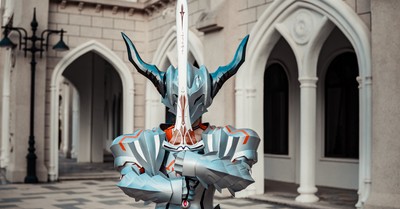
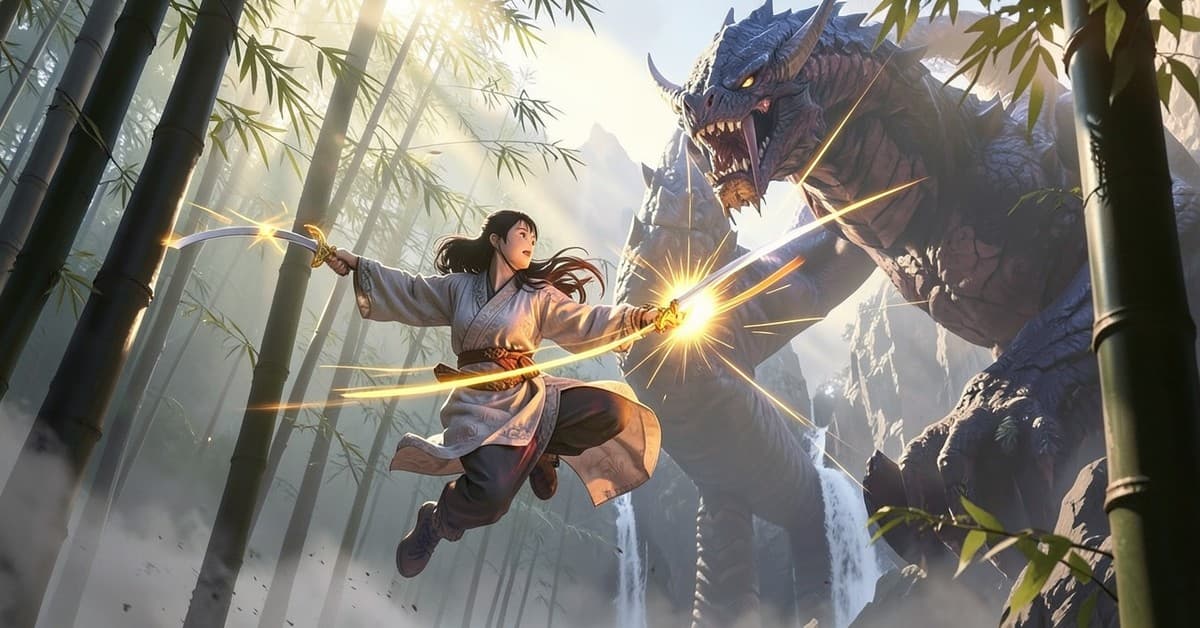
Swords of Legends arrives at a crowded moment for the soulslike subgenre, yet Aurogon Shanghai's reboot of the long-running Gujian series manages to carve out distinct territory through its wuxia-inspired martial arts combat and mythical hero progression. The developer brought a substantial demo to Summer Game Fest 2026, offering over an hour of hands-on time that reveals a game comfortable with its influences but eager to expand beyond them. For players who have exhausted the current wave of Souls-inspired action RPGs and want something that trades gothic gloom for martial arts spectacle, this preview suggests the wait may be worth it.
The preview builds on a foundation that Western audiences may not recognize immediately — Swords of Legends draws from Gujian, a Chinese cross-media franchise spanning RPGs and a live-action TV show. Developer Aurogon Shanghai reimagines this material as a faster, fiercer action RPG centered on Sipan, a fallen swordsman turned agent of the underworld tasked with harvesting souls across dreamlike mythical worlds and demon-overrun mortal landscapes. The core loop will feel familiar: deliberate combat, pattern recognition, and soul-fueled progression. The difference lies in the flavor, and that flavor is unmistakably wuxia.
Swordplay That Steals the Show
Combat follows the classic soulslike formula: sidestep, punish, evade, and strike only when the timing clicks. Yet the way those moves feel is far more punchy than other titles that lean into a reserved style.
"There's a dance-like quality to the flow of these fights, where you're dishing out combo attacks and reacting to enemy attacks in a way that was really exciting to watch as it was to take part in."
Alessandro Fillari
That rhythm translates to a more expressive combat style where aggression feels rewarded rather than punished, provided you respect the enemy's tells.
Parrying in particular stands out. The Cosmic Mirror artifact, Sipan's default tool, summons glyphs that block and parry incoming strikes with a tactile satisfaction Fillari compares to Street Fighter III: 3rd Strike — high praise for a mechanic that lives or dies by its timing window. Successfully smacking away an attack chain and slipping in a critical hit to stagger an enemy delivers the genre's signature dopamine hit, amplified here by visual flair that makes each exchange feel like a choreographed sequence. The Thunder Banner artifact offers an offensive alternative, adding lightning damage to core attacks and a quick lightning dodge that proves invaluable during fiercer encounters. Both artifacts meaningfully alter how you approach combat rather than simply providing stat bonuses.
Dynasty Warriors' Dynasty Returns
Boss design represents where Swords of Legends most confidently embraces its wuxia identity. The Tri-Tail encounter exemplifies this: a seemingly wholesome cat transforms into a muscular feline powerhouse that "pummeled me to bits," in Fillari's words. That tonal shift — whimsical to terrifying — captures the mythical fable quality the game chases. The demo's final challenge, a powered-up Ox-Head, demands mastery of Sipan's expanded arsenal, including a shrine guardian armor set covered in talismans. Even with upgraded gear, the fight required many attempts to crack, suggesting the difficulty curve respects genre veterans while the spectacle keeps each attempt engaging.
Defeated bosses don't just vanish — they join your cause. Ox-Head becomes a summonable ally after his initial defeat, offering powered-up strikes and, importantly, cinematic Link Attacks during key boss battles. These sequences pair Sipan with his companion for critical damage on staggered foes, turning solo struggles into duet finishers that sell the "mythical hero building a legend" fantasy. The mechanic adds strategic depth: knowing which ally suits which encounter becomes part of the preparation loop, and the visual payoff reinforces the wuxia spectacle without feeling gratuitous.
Freq: 5 H2/H3 headings needed.
In a genre that usually treats advancement like a fight for survival, Swords of Legends flips the script and treats it as an upward climb. When enemies fall, Sipan can collect souls that land in his growing backpack of gear—glavies, two‑handed swords, and artifact‑based tools that shift how he plays the game. The demo’s intro machine only skims the full web of progression, yet the upgraded Ox‑Head battle shows the change you get from better equipment and new moves; it actually reshapes the same foe into something you tackle differently, rewarding creative play instead of memorizing patterns. Fillari notes that the title “focuses on players steadily building up a mythical hero,” and that line feels like a solid hook for an action‑RPG.
The dual-world structure — dreamlike mythical landscapes and isolated mountain communities in the mortal world — provides environmental variety that supports this progression narrative. Each realm carries distinct visual language and enemy archetypes, preventing the environmental fatigue that plagues some genre entries. The mythical realm's ethereal aesthetic contrasts sharply with the mortal realm's grounded, demon-infested settlements, reinforcing Sipan's role as a bridge between worlds.
Lag Ruins Perfectly Good Battles
Not everything lands cleanly. Fillari notes "unfortunate technical hiccups that disrupted the flow and made landing some parries a bit difficult" during his demo session. For a genre where frame-perfect timing defines the core experience, inconsistent performance isn't a minor annoyance — it's a structural risk. Parry windows that fluctuate due to frame drops or input latency erode player trust faster than any difficulty spike. Aurogon Shanghai has time before launch to address these issues, but the preview makes clear: the combat's dance-like quality only works when the music plays at a steady tempo.
This concern gains weight when measured against recent standouts like Black Myth: Wukong and Wuchang: Fallen Feathers, both of which launched with strong technical foundations that let their combat systems breathe. Swords of Legends invites direct comparison to these titles — all three draw from Chinese mythology, all three adopt soulslike structures, and all three aim for international breakthrough. The wuxia combat identity gives Aurogon Shanghai a legitimate differentiator, but technical parity at launch becomes the baseline expectation, not a bonus.
Wuxia’s New Souls Clone Stumbles on Camera
Swords of Legends demonstrates that Aurogon Shanghai understands what makes soulslike combat compelling — the tension, the rhythm, the satisfaction of mastery — while injecting a cultural and mechanical identity that feels fresh rather than derivative. The wuxia combat flow, summonable boss allies with Link Attacks, and mythical hero progression framework form a cohesive vision. Technical performance in the demo builds remains the critical unknown. If the studio resolves the hiccups that disrupted parry timing, Swords of Legends could stand alongside Black Myth: Wukong and Wuchang: Fallen Feathers as a defining entry in the new wave of Chinese mythology-driven action RPGs. For now, it's a promising soulslike with stylish wuxia combat and mythical hero progression, but technical issues in the demo need fixing before launch.
Pros
- Wuxia-inspired combat with dance-like flow and satisfying parry mechanics
- Summonable defeated bosses as allies with cinematic Link Attacks
- Mythical hero progression through souls and artifacts alters fighting style meaningfully
- Distinct dual-realm environments (mythical and mortal) with varied enemy design
Cons
- Technical hiccups in demo disrupt flow and make parry timing inconsistent
- Soulslike structure remains familiar despite combat innovations
- Full progression depth not yet shown in demo build