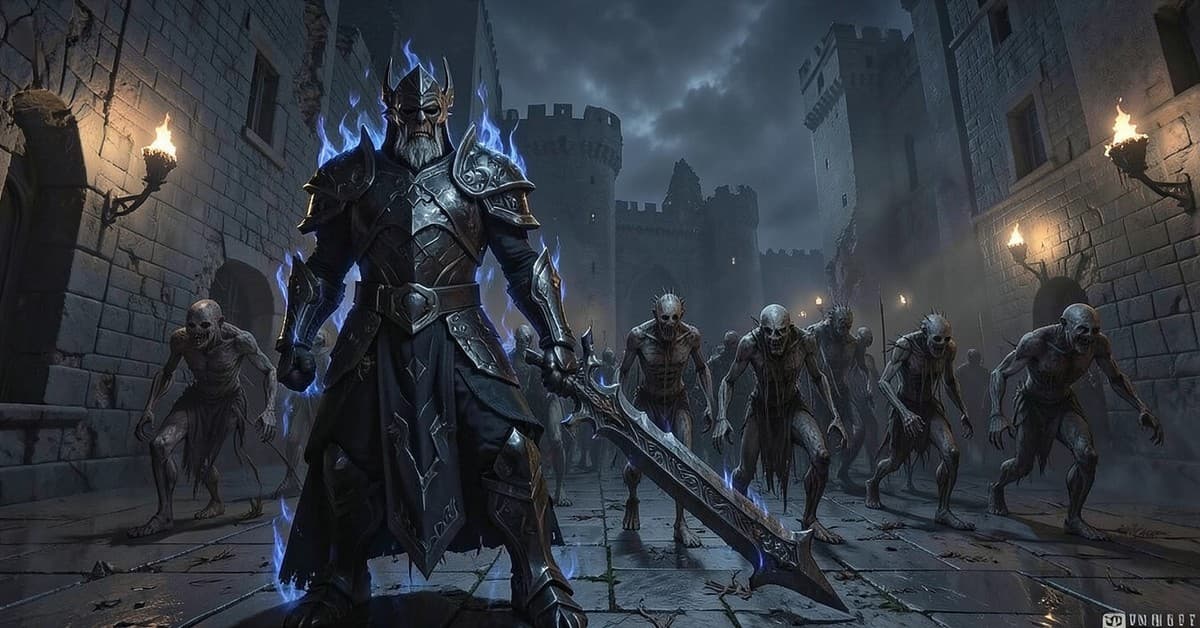
Blizzard surprise-released Warcraft 3 Reforged: Forsaken Kingdom in 2026, delivering the first new single-player campaign for the RTS classic in 23 years. The expansion arrives without the usual months of marketing buildup, landing directly into players' hands as a substantial addition to a game many considered finished. For anyone who has been starved for single-player RTS content since Starcraft II: Nova Covert Ops in 2016, this release feels like an unexpected gift from a studio that had largely moved on from the genre.
Quick Facts — Warcraft 3 Reforged: Forsaken Kingdom
| Developer | Blizzard |
|---|---|
| Platform(s) | PC |
| Release Date | 2026 |
| Genre | RTS, RPG |
The package centers on a brand-new story campaign spanning roughly 30 hours, preceded by a four-mission prologue called Last Days of Lordaeron. That prologue drops players into one of Warcraft's most pivotal moments — the day Arthas returned from Northrend to murder his father — through the eyes of guard lieutenant Garek Bandarion. What follows is a desperate defense of Andorhal and Stratholme that culminates in a showdown with Baron Rivendare, weaving in references that reward deep lore knowledge without alienating newcomers. It's honestly great to be back, considering Blizzard hasn't given single-player RTS fans anything new to chew on at all since 2016's Starcraft II: Nova Covert Ops.
What Is Warcraft 3 Reforged: Forsaken Kingdom?
Warcraft 3 Reforged: Forsaken Kingdom is a new expansion for Blizzard's 2002 real-time strategy game, developed and published by Blizzard Entertainment exclusively for PC. The expansion adds a substantial single-player campaign set 23 years after The Frozen Throne, introducing a new hero, graphical overhaul, and gameplay changes that affect every mode. Blizzard positions this as a definitive single-player experience for a game that has largely survived on multiplayer and custom maps for two decades.
The expansion launches at a time when classic RTS revivals are rare and single-player content in the genre is even rarer. Players who loved the original campaigns but bounced off 2020's divisive Reforged update should pay attention — this is not a remake but a genuine continuation of the story, built on lessons learned from that troubled release. The $30 price point (unconfirmed by Blizzard at time of writing) positions it as a premium add-on rather than a full sequel, which feels appropriate for the scope on offer.
Here's a thinking process:
The Last Days of Lordaeron prologue showcases mission design that respects Warcraft 3's roots while experimenting with structure. The Siege of Andorhal introduces a MOBA-inspired twist: capturing towers spawns waves of AI-controlled friendly soldiers at regular intervals, creating a push-pull dynamic across the map that feels fresh without abandoning the game's core base-building and hero-management loop. Another segment gates unit recruitment behind holding specific objectives rather than simply constructing the associated building, forcing players to maintain map control instead of turtling.
Stratholme takes a different approach, structuring the mission as a winding dungeon crawl that requires coordinating two separated groups — one led by Garek, the other by elven priest Ilastar Songbreeze. The groups remain apart for the first half, creating opportunities where one team's progress open ups paths for the other. They unite for a final dramatic push that feels like a proper set-piece. This dual-group coordination recalls Rexxar's Founding of Durotar bonus campaign in The Frozen Throne but with more mechanical complexity and narrative weight.
The main Forsaken Kingdom campaign shifts toward RPG-style free-roaming adventure in the Undercity beneath the capital ruins. Quest-driven exploration replaces linear mission progression, with Garek — now raised as a free-willed Forsaken — taking orders directly from Sylvanas alongside her lieutenant, Dark Ranger Anya. The campaign leans heavily into being an RPG so far, like a more ambitious version of Rexxar's Founding of Durotar bonus campaign in The Frozen Throne. This structural pivot could be the expansion's most significant contribution, potentially redefining what a Warcraft 3 campaign can be.
Here's a thinking process:
Forsaken Kingdom introduces Warcraft 3's first new tavern hero since the Alchemist and Firelord in 2004: the Forsaken Paladin, based on Garek Bandarion. He occupies an awkward conceptual space — the Human Paladin already exists, and the Death Knight was designed as its dark mirror. So where does an undead paladin fit? The answer lies in a kit that creates deliberate counterplay opportunities rather than raw power.
As an undead neutral hero, the Forsaken Paladin can only heal living units, making him ironically less useful to Undead players. His Q ability is a dash that deals increasing damage per enemy passed through, rewarding aggressive positioning. His W, Consecration, damages undead enemies and heals friendly living units in a radius — a direct callback to World of Warcraft's paladin kit. A passive aura reduces magic damage taken and increases healing received, while his ultimate purges and stuns in an area, healing allies with bonus effects if debuffs were removed. This toolkit suggests strong counterplay against magic-heavy or debuff-reliant compositions, and pro player reception will determine whether he becomes a staple or a niche pick.
Here's a thinking process:
Forsaken Kingdom debuts a third graphical option for Warcraft 3: Definitive Edition. The goal was to address complaints about 2020's Reforged update by delivering more detail and modernity while preserving the original's feel. The results are starkly divided by context. Zoomed in during cutscenes, the textures read as flat, matte, and almost unfinished — visible pixels appear on armor transitions, and lighting feels dated. These sequences expose the art direction's limitations rather than its strengths.
But in actual gameplay, zoomed out at competitive pace, the illusion holds. Playing zoomed out at a fast pace, I almost forgot I wasn't using the original 2003 graphics. It's like a magic trick. All the units and buildings look like how I remember them, just with higher fidelity. This discrepancy creates an awkward distribution: the Forsaken Kingdom campaign mandates Definitive Edition graphics, multiplayer and skirmish support all three styles (Classic, Reforged, Definitive), but the original Reign of Chaos and Frozen Throne campaigns remain locked to Classic and Reforged only. Players revisiting the classic campaigns — which remain superb — cannot access the new visual style at all.
Here's a thinking process:
The Definitive Edition graphics' cutscene shortcomings are the most immediate disappointment. Flat textures, visible pixelation on armor edges, and dated lighting undermine the narrative moments meant to carry emotional weight. For a campaign leaning heavily on story, this is a persistent distraction. The mandatory use of Definitive Edition for the new campaign means there's no fallback to the cleaner Reforged or Classic styles during these sequences.
The control group size doubling across all game modes represents a more systemic concern. Increasing the unit cap per control group from 12 to 24 fundamentally changes army management in a game balanced around the original limit for over 20 years. Traditional players will likely groan at the shift, and competitive balance implications remain untested. While the change may reduce micro burden for newer players, it risks homogenizing high-level play where control group precision was a key skill differentiator. The old guard will groan about control group size doubling, but from my spot down here in the tryhard seats, I think it's a positive change overall.
The uneven graphics distribution across campaigns creates a fragmented experience. Players moving between the new Forsaken Kingdom campaign (Definitive Edition only), multiplayer (all three options), and the classic campaigns (Classic and Reforged only) must mentally adjust to different visual languages. This inconsistency feels like a compromise driven by technical constraints rather than player experience.
This expansion maintains the feel of classic Warcraft 3 while mixing in some new ideas, and that's something I might never run out of appetite for. The campaign's ambition — blending RTS mission design with RPG free-roaming, introducing MOBA-inspired objectives, and adding a mechanically distinct hero — suggests Blizzard understands what made the original special while recognizing where the genre has evolved. Whether the full 30-hour campaign sustains this quality remains to be seen, but the first quarter inspires genuine optimism for a game many had written off.
Keep an eye out in the coming weeks for the final review once the full campaign has been completed. The early hours suggest a worthy successor to The Frozen Throne's legacy — flawed in presentation, perhaps, but ambitious in design and deeply respectful of what made Warcraft 3 a landmark RTS.