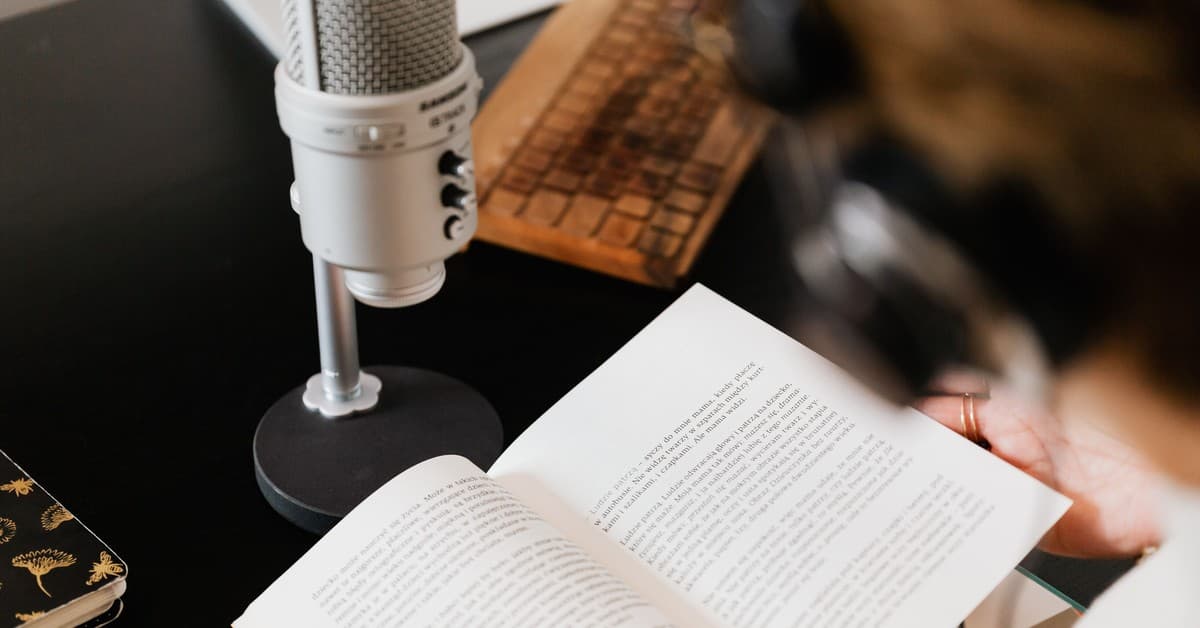
Games Workshop has taken its anti-AI messaging off the website and into the listening experience itself. At the close of the audiobook for Robert Rath's Necrons novel The Wicked and The Warped, narrator Richard Reed reads a copyright notice that explicitly forbids using the recording for "text and datamining activities, or developing or training artificial intelligence models or systems." The warning, copyrighted to Games Workshop 2026, appears to be the first time a Black Library narrator has voiced such a prohibition directly to listeners — a notable escalation from the static legal text buried in website footers. For fans who consume Warhammer lore through audio, the moment makes the company's position unavoidable: this content is not training data.
The audiobook warning arrives as the broader publishing industry grapples with revelations about how major AI models were built. A March 2025 investigation by The Atlantic alleged that Meta pirated millions of books via the LibGen database to train its AI systems, and Black Library authors were among those horrified to discover their novels in that dataset. Robert Rath's Warhammer novels appear in LibGen, according to verified reports. Meanwhile, 404 Media reported last week that Amazon has been buying massive quantities of books, scanning them for AI training data, and destroying the physical copies in the process. Anthropic's Project Panama similarly shredded millions of physical books to train Claude, resulting in a $1.5 billion settlement despite a ruling that largely sided with the AI company on fair use. For Games Workshop, the audiobook warning is a public line in the sand — but whether it carries legal weight against companies claiming fair use remains an open question.
Games Workshop's Hardening Anti-AI Stance
The company's opposition to AI in creative work has intensified across 2025. In January, Games Workshop banned AI from its content production and design processes, stating that none of its senior managers were excited about the technology. By July, CEO Kevin Rountree reiterated the stance and revealed internal investigations into marketing materials that some suspected were AI-generated. "We are not using AI at Games Workshop in our product design nor on the creation of our IP, this will protect the integrity and ownership of our IP," Rountree said at the time. He acknowledged "a few human errors on the depiction of our products in the year" that were investigated to ensure staff followed internal policies. The audiobook warning extends that policy into the finished product itself, turning every listener into a witness to the prohibition.
Rountree has also admitted the limits of the company's control. "AI was automatically included in third-party software 'whether we like it or not,'" he said, making it difficult to claim Games Workshop avoids AI entirely outside its own studio. He characterised this as "something we are just going to have to potentially live with and monitor." The candour is unusual for a major IP holder — most companies either deny AI use entirely or stay silent. Games Workshop's position is that it can police its own house, but the supply chain of modern software makes total purity impossible. That tension between principle and practicality will only grow as AI embeds deeper into creative tooling.
Warhammer 40K’s AI-Generated Nightmare
While Games Workshop fights a defensive battle over training data, an offensive problem has emerged on storefronts. Unlicensed Warhammer 40,000 books with clearly AI-generated covers and apparent AI-generated text have begun appearing on various retailers. These fakes exploit the franchise's massive back catalogue and hungry audience, mimicking legitimate Black Library releases to deceive buyers. The problem mirrors what authors across genres face: generative tools lower the barrier to producing convincing knockoffs at scale. For Games Workshop, the audiobook warning serves double duty — it signals to AI companies that the content is protected, and it helps listeners distinguish the authentic product from the synthetic flood. Richard Reed's voiced warning becomes a mark of authenticity as much as a legal notice.
The Black Library website carries its own blunt statement: "Any use of website content to train generative artificial intelligence (AI) technologies is expressly prohibited." Detailed AI warnings populate the legal sections of Games Workshop's web properties. But website text is easily scraped; an audiobook warning read by a human narrator is harder to strip without detection. It also reaches a different audience — commuters, painters, hobbyists who consume lore while their hands are busy. The company is signalling across every format it controls: this IP is not free training data.
What This Means for Players and the Industry
Games Workshop's approach contrasts sharply with publishers who have struck licensing deals with AI companies. By refusing to engage — and by making that refusal audible — the company bets that its IP's value comes from human craftsmanship, not algorithmic efficiency. "We are proud to deliver consistent great returns employing great people (many of them hobbyists themselves) celebrating with other hobbyists in the real world," Rountree said. "Our business performance is still built on staff development and hard work with very little waste." That philosophy resonates with a fanbase built on painting miniatures, writing lore, and gathering around tables — activities that are stubbornly physical. The audiobook warning reinforces that identity: Warhammer is made by people, for people.
The legal test will come if Games Workshop pursues an AI company over training data. So far, courts have largely sided with fair-use arguments, and Anthropic's settlement came despite a ruling that favoured the AI company. A federal court advanced new infringement theories against OpenAI in October in a suit brought by authors including George R.R. Martin, but no final judgment exists. Games Workshop has not filed suit. Until it does — or threatens to with credible force — the audiobook warning remains a statement of intent rather than an enforcement mechanism. But as a statement, it is unusually clear, unusually public, and now, unusually audible.
Key Takeaways
- Narrator Richard Reed reads an explicit AI training prohibition at the end of The Wicked and The Warped audiobook, a first for Black Library productions.
- Games Workshop banned AI from its content production and design process in January 2025 and reiterated the stance in July.
- Black Library authors including Robert Rath discovered their novels in the LibGen database allegedly used by Meta to train AI models.
- Fake AI-generated Warhammer 40,000 books with synthetic covers and text are appearing on retail platforms.
- CEO Kevin Rountree admits AI is embedded in third-party software "whether we like it or not," limiting the company's ability to claim total AI avoidance.
Games Workshop has drawn a line and read it aloud. Whether the industry's largest AI players respect it — or whether the courts eventually force them to — will shape the next chapter of this conflict. For now, every listener who reaches the end of The Wicked and The Warped hears the boundary stated in a human voice: this recording belongs to Games Workshop, and it is not training data.