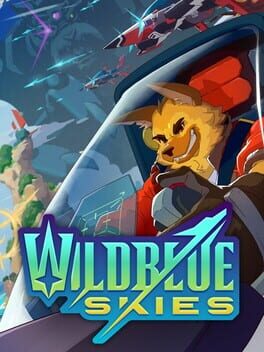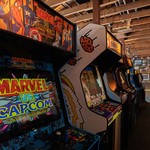

Chuhai Labs has pulled back the curtain on Wild Blue Skies, an on-rails shooter that launches August 13 on Xbox Series X|S and Xbox on PC with full Xbox Play Anywhere support. The studio, led by director Giles Goddard, built the game as a deliberate love letter to the genre that defined Saturday mornings and borrowed controllers in the 90s. For players who grew up chasing high scores in arcade cabinets, this release matters because it doesn't just mimic the surface — it reconstructs the design philosophy that made those games feel urgent and alive.
Quick Facts — Wild Blue Skies
| Developer | Chuhai Labs |
|---|---|
| Publisher | Balor Games |
| Platform(s) | XBOX Series X|S, XBOX on PC |
| Release Date | August 13 |
| Genre | on-rails shooter |
The game arrives from publisher Balor Games with a clear mission: remind you why you loved on-rails shooters in the first place. Xbox Play Anywhere support means your progress carries across both platforms. That cross-platform continuity matters for a genre built on replayability and score-chasing, where picking up exactly where you left off keeps the momentum intact.
Wild Blue Skies Launches August 13
The development team discovered early that the distinctive feel of classic on-rails shooters came from technical constraints, not in spite of them. The most significant breakthrough came when they drastically reduced view distance — a change that initially sparked debate but instantly transformed how missions played. Enemies stopped feeling like they spawned from thin air, and players naturally focused on immediate threats rather than sniping at distant targets.
That lesson became the project's north star. "In an era where the sky is the limit, we found it important to set clear pillars and embrace working with constraints," the Chuhai Labs team says. Whether driven by hardware, resources, or genre conventions, limitations became their biggest ally. This philosophy extends to mission structure: bite-sized episodic missions built atop a high-level world map conceived before any individual level took shape.
A 90s Arcade Flight Fantasy Returns
"Camera and controls were a huge focus early in development. We wanted the aircraft to immediately feel good. To give you the means to fly and fight through our world without feeling overwhelmed."
The quote above captures the team's obsession with the cockpit experience. Framing the player's aircraft in on-rails missions required careful tuning — the plane needed to feel present without obstructing the world. A dithering technique on the plane model helps achieve this, working with careful tuning to maintain visibility of the world while keeping the plane feeling present. It's a small detail that makes a big difference in how connected you feel to the cockpit.
Control depth emerges from simple inputs with high skill ceilings. Dodge rolls deflect enemy fire when timed precisely, transforming a defensive maneuver into an aggressive tool. In free-flight missions, the brake mechanic enables 180-degree turns to get behind pursuers. Every mechanic can be learned in five minutes but rewards hours of mastery — exactly the arcade contract players expect.
World-Building Before Mission Design
Rather than designing missions in isolation, Chuhai Labs started with environment concepts and a comprehensive world map. Each mission began as an environment paired with a narrative pitch, then moved through grayboxed geometry with floating text placeholders for encounters and dialogue. Relentless playtesting at this stage ensured pacing — the rhythm of quiet moments, enemy waves, hazards, and climactic encounters — felt right before art and sound layers were applied.
Pacing is everything in an on-rails shooter because the player is always being pushed forward. The iteration-heavy approach means missions are structured as bite-sized episodes, drawing on the Saturday morning cartoon energy the team cites as inspiration. Clean, simple UI shapes complete the package.
90s Arcade Cockpit Nostalgia Reboots August 13
Studio Ghibli's films provided the primary visual inspiration, particularly how painted backgrounds and relatable characters create immersive worlds. The team crafted an outlined cel-shaded look that makes characters, enemies, and aircraft pop against painterly environments built with softer details, dynamic light, shadow, and fog. The goal was always to make Wild Blue Skies feel like you'd just been thrown into a 90s action movie and Saturday morning cartoon at the same time.
The aesthetic philosophy carries over to the Blue Bombers squad—Bowie Stray, Roe Whitetail, Chuck Barbacoa, and Thorne—so they feel instantly recognizable yet still stand apart. Their archetypes mirror the cartoons that shaped the decade: cheesy one‑liners, bold personalities, and the kind of squad dynamics that linger from childhood memories. They bring a nostalgic punch, echoing the charm of Saturday morning hour, and factor into the game's replay value.
Meet the Wild Blue Pilots Who'll Drag You into the Cockpit
An all-star voice cast brings the Blue Bombers to life with serious anime and gaming credentials. Jonah Scott voices Bowie Stray, bringing experience from Legoshi in Beastars and Sniper Mask in High-Rise Invasion. Suzie Yeung takes on Roe Whitetail, known for Yuffie in Final Fantasy VII Remake and Makima in Chainsaw Man. Edward Bosco portrays Chuck Barbacoa, with credits including Albedo in Overlord and Il Dottore in Genshin Impact. Daman Mills rounds out the squad as Thorne, recognized for Frieza in Dragon Ball Super and Blade in Honkai: Star Rail.
The casting choices reflect the team's commitment to authentic 90s cartoon energy — each actor carries the vocal range to deliver both comedic timing and genuine dramatic weight. "We can't wait to see which characters become your favorites," the developers note, signaling confidence in the ensemble's chemistry.
Key Takeaways
- Wild Blue Skies launches August 13 on Xbox Series X|S and Xbox on PC with Xbox Play Anywhere support
- Chuhai Labs embraced technical constraints like reduced view distance to recreate authentic 90s on-rails shooter feel
- Dodge rolls deflect enemy fire when timed correctly; brake mechanic enables 180-degree turns in free-flight missions
- Cel-shaded visual style inspired by Studio Ghibli with painterly environments and clean UI
- All-star voice cast includes Jonah Scott, Suzie Yeung, Edward Bosco, and Daman Mills
Wild Blue Skies is a rare modern effort to grasp why the arcade shooter genre succeeded instead of just copying its look. Chuhai Labs uses constraints as creative limits and builds the world first before writing any missions. That approach makes the game feel like more than just a nostalgia trip. Players who enjoy the old style will see if this August 13 release can bring that feeling back to a new audience, while veteran fans will get their long‑awaited revisit.