Agefield High: Rock the School’s Biggest Mistake
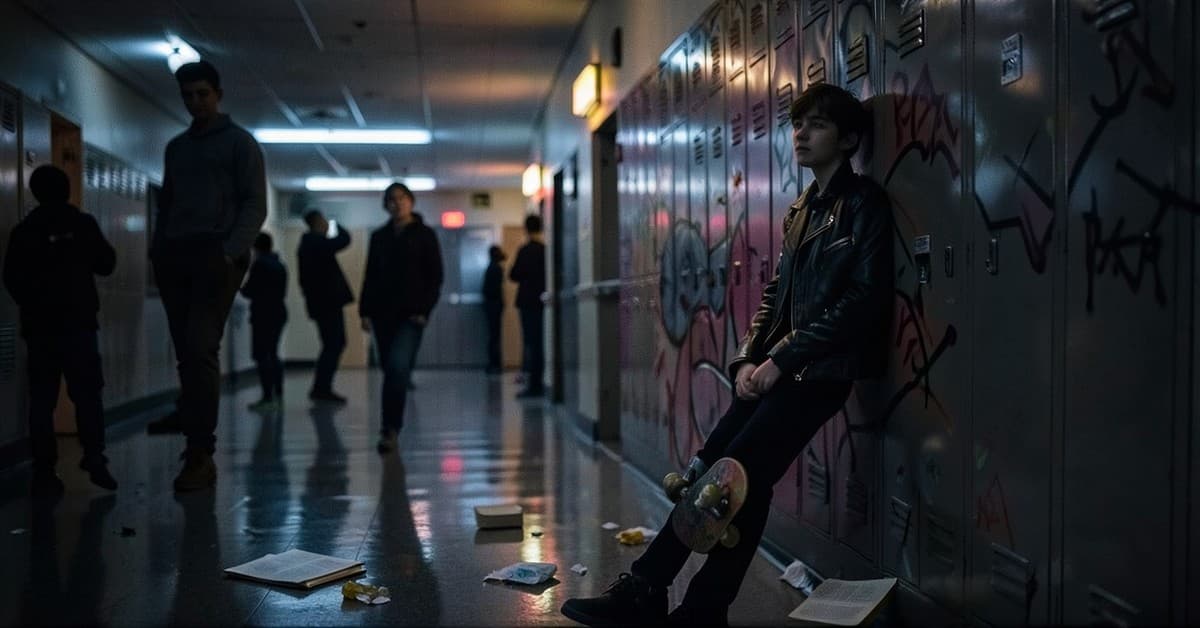
Agefield High: Rock the School is an open-world action-adventure from Refugium Games scheduled to release on August 12. You play as a student navigating high school life — attending classes, biking across town, sneaking into restricted areas, and picking up side gigs like lawn mowing and food delivery. The structure mirrors Bully almost beat for beat: an in-game clock governs an academic schedule, grades determine your allowance, and social cliques replace Rockstar's factions. On paper, it checks every box. In practice, the preview suggests the boxes are empty.
The game targets PC and console platforms, though the preview doesn't specify which consoles. Price hasn't been announced. What matters more than platform or price is the state of the build IGN played — six missions deep, with main and side content sampled extensively. The preview author struggled to find anything redeemable beyond a single gag. That's a damning assessment for a game a month from launch. Usually a preview build this close to release represents near-final code. If that's true here, Refugium Games has a mountain to climb in the remaining weeks.
Agefield High's Broken Combat Puts a Low Blow on Bully
The cycling mechanics emerge as the preview's lone bright spot. You earn a bike early and spend most of your time pedaling across Agefield's four blocks — fleeing bullies, racing clocks, meeting friends in the park. Tricks exist but feel underused; a skate park near the town center hints at deeper systems the final game might explore. Crashes trigger GTA-style ragdoll physics, though the preview calls them "wonkier." A recurring bug respawns the bike in mission-breaking positions, though the town is "filthy with bikes" you can grab as replacements. It's functional, occasionally fun, and the only system that "felt right."
Stealth missions comprise the bulk of mission finales — panty raids, teachers' lounge burglaries, the teen-comedy staples. The concept fits the genre. The execution doesn't. Visibility indicators lie: the preview author was spotted outside clearly marked vision cones, sometimes through walls or across floors. Sections are short, so failure doesn't cost much time, but the frustration accumulates. When stealth fails, combat takes over — and combat is where Agefield High collapses entirely.
Fights follow a single rigid pattern: lock on, throw punches, block, push to break guard, kick, repeat. Lock-on exists but tracking doesn't. Each attack roots you in place, disconnecting movement from offense. Punches whiff despite appearing to connect. The preview describes it as "a miracle of physics that the punches are weightless and the movement is heavy." There's no flow, no readability, no satisfaction. Every encounter plays out the same way. For a game structured around schoolyard conflicts, that's a foundational failure.
Class Minigames: The Worst Part of High School Simulator
An in-game clock enforces a rigorous academic schedule across five subjects:
- English
- German
- Geography
- Math
- Music
In practice, four of the five minigames are functionally identical multiple-choice quizzes. German vocabulary swaps for country identification on a map, which swaps for fill-in-the-blank spelling. The repetition is naked. Music class breaks the pattern with a Guitar Hero-style rhythm game, but the preview calls it "shoddy" — inputs lack impact and feel offbeat. This same rhythm game reappears in a late demo mission, doubling down on a weak mechanic. The allowance economy could drive engagement, but the minigames underneath it offer no reason to engage.
The School Sidequest Nobody Wants
Cutting class opens time for side content, which the preview finds equally repetitive. Two chore-style missions stand out:
- A lawn-mowing minigame "ripped straight from No More Heroes"
- A food delivery run that serves as the most reliable cash source
The lawn-mowing comparison to No More Heroes is particularly damning. Suda51's game turned grass-cutting into surreal, stylized satire. Agefield High apparently copies the mechanic without the personality. That pattern — lifting surface-level ideas from better games while missing what made them work — defines the preview's entire critique. The Bully DNA is there in systems, but the soul is absent.
A $2.99 Mobile Game Worth $60
Agefield feels like a gray, flavorless backdrop, the preview laments, hinting that perhaps a computer was involved in its creation. They’re not blaming the team—just
Cutscene direction compounds the problem. Nearly every conversation opens with a prolonged close-up of a character staring blankly, often directly into the camera, lasting "seconds longer than it needs to — every time." The preview calls these "some of the worst cutscene camera choices I've ever seen in a video game." It's unintentionally hilarious, the preview admits, but not for the reasons the writers intend. Some NPCs bear "uncomfortably close resemblance to real-life people" — an old man named Clint who evokes a certain Western icon. These choices suggest either bold legal risk or a placeholder asset pipeline that never got replaced.
Dead After School: The Clone Parasite Striking Again
The script draws the preview's sharpest ire. "Derivative ideas and un-cartoonish caricatures offer nothing to set this specific shade of grey apart," the author writes. Each cutscene parades clichés — dead-end adults, clueless teachers, complaining elders, restless students — without engaging culture, time, or place. The juvenile tone feels like a "sauceless ChatGPT redux of American Pie-era comedies." What's memorable is bad; what's funny is funny-bad. The preview author compares the result to The Room or Book of Henry cult status — not Superbad or Napoleon Dynamite.
Technical issues compound the design problems. Buggy gameplay, wonky physics, broken stealth detection, weightless combat, and bike respawn softlocks all appear in a build one month from launch. The preview author doesn't see the "big-picture stuff improving" even if rough edges get sanded down. The writing, the world design, the core gameplay loops — these are structural, not superficial. A day-one patch can't rewrite a script or redesign a town. Refugium Games has weeks. The preview suggests they need months, if not years.
For Bully fans who hoped Agefield High might recapture even a sliver of that classic's magic, the preview offers a clear verdict: thorough disappointment awaits on August 12. The game mimics Rockstar's systems without understanding their alchemy. It copies No More Heroes minigames without Suda51's madness. It channels American Pie without the heart that made those movies endure. What remains is a hollow nostalgia act — four city blocks, five NPC lines, and a bike that's the only thing that feels right. Sometimes that's enough for a cult following. The preview suggests this cult will gather to mock, not celebrate.