
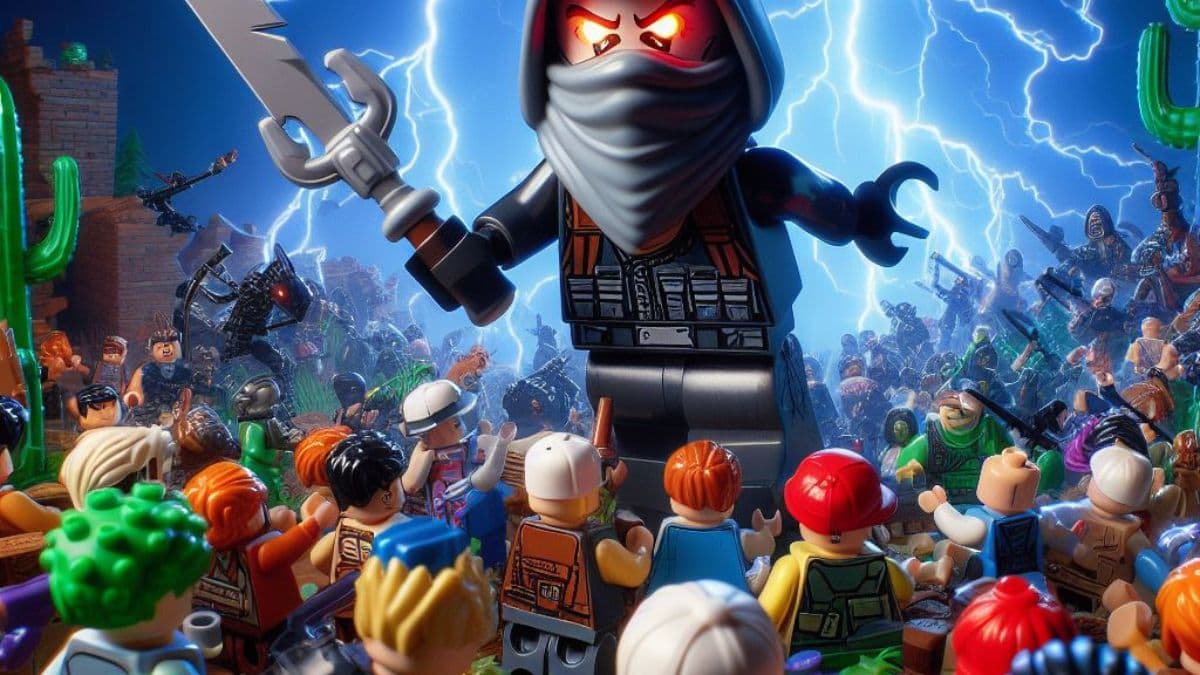
The gaming universe has witnessed a seismic shift with the advent of Lego Fortnite, Epic Games' latest foray into the survival genre. Launched on December 7, this spinoff has not only captured the attention of gamers but has propelled Fortnite to new heights of popularity. In this article, we delve into the remarkable ascent of Lego Fortnite and its far-reaching impact on the gaming landscape.
The Rise of Lego Fortnite: A Statistical Marvel
1. Unprecedented Concurrent Players
Epic Games' official player tracking, as reported by Fortnite.gg, reveals an astounding peak of 2.45 million concurrent players on a single Saturday. To contextualize this achievement, it surpasses the all-time highs of most games on Steam, excluding PlayerUnknown’s Battlegrounds. The sheer magnitude of Lego Fortnite's concurrent player base has set a new benchmark in the gaming industry.
2. Dominance Within Fortnite's Modes
Lego Fortnite has emerged as the dominant game mode within Fortnite itself. Drawing approximately twice the players of the main Battle Royale mode, it stands shoulder to shoulder with the combined player count of Battle Royale, Zero Build, and Ranked modes. This dominance signifies a paradigm shift within Fortnite's gameplay preferences.
3. Fortnite's Multifaceted Evolution
The launch of Lego Fortnite marks a pivotal moment in Fortnite's evolution from a battle royale shooter to a multifaceted, metaverse-style online gaming platform. Alongside Lego Fortnite, Epic introduced two other games, Rocket Racing and Fortnite Festival. While not as popular as Lego Fortnite, they contribute significantly to Fortnite's diverse gaming experience.
4. Strategic Launch Amidst Fortnite's Chapter 5
The strategic launch of these three new modes coincided with Fortnite's Chapter 5 release and followed the spectacular Big Bang event on December 2. This synchronized approach underscores Epic's meticulous planning, transitioning Fortnite into a versatile gaming platform.
Player Engagement and Records Shattered
1. Monthlong Fortnite OG Retro Event
Epic orchestrated an expertly timed Fortnite OG retro event, allowing players to revisit the original game map and experience several seasons from the game’s inaugural Chapter. This event drew record numbers of players, setting the stage for the subsequent launches of Lego Fortnite, Rocket Racing, and Fortnite Festival.
2. Peak Concurrent Players and Comparisons
On a Saturday, the amalgamated peak number of concurrent players for all Fortnite modes reached a staggering 7.6 million, surpassing the 6.2 million for Fortnite OG. This achievement far exceeds the 1-3 million simultaneous players Fortnite garnered earlier in 2023. For context, the entirety of Steam had just over 10.1 million players in-game at the same time on that Saturday.
3. Planned Evolution and Visionary Leadership
In a revealing sketch dated December 13, 2017, Donald Mustard, Epic's former Chief Creative Officer, outlined a visionary blueprint for Fortnite. This blueprint envisioned Fortnite as a hub with diverse offshoots, including "PVP," "cart," "music," and "survival." Mustard's foresight, shared years ago, has now materialized with the realization of Lego Fortnite and Fortnite's current multifaceted form.
Final Thoughts:
The meteoric rise of Lego Fortnite has not only captivated the gaming community but has redefined Fortnite's identity. As Epic Games continues to navigate Fortnite through uncharted territories, the strategic launch of Lego Fortnite stands as a testament to careful planning and visionary leadership. Whether this surge in popularity will be sustained remains to be seen, but as of now, Epic has orchestrated one of the most notable comebacks in online gaming history. Fortnite's evolution from a battle royale sensation to a diverse gaming platform is a journey worth observing, marking a new era in the ever-evolving landscape of online gaming.