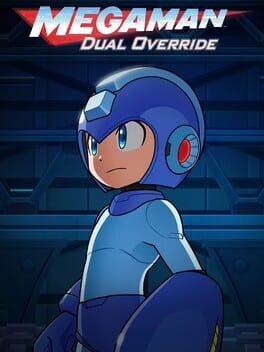
Capcom made it official at Gamescom: Mega Man: Dual Override is a mainline Mega Man game, not a spin-off, despite being the first entry to drop the numbered naming convention. Producer Hiroyuki Minamitani confirmed the status directly during an interview following hands-on time with the game, putting to rest any lingering doubts since the announcement. For a series that has maintained a strict numerical lineage across its canon, this distinction matters — it signals that Capcom treats Dual Override with the same weight as Mega Man 11, not as a side experiment like the Battle Network or Star Force sub-series. The stakes are higher because the game also carries the burden of the franchise's 40th anniversary celebration, a milestone that demands both reverence for history and a viable path forward.
The significance extends beyond branding. Minamitani and series producer Shingo Izumi framed Dual Override as a deliberate entry point for players who discovered Mega Man through crossover appearances in Super Smash Bros. Ultimate, Fortnite, or even the recent Pragmata skins rather than through the classic games themselves. As the numbering climbed over decades, new players could feel intimidated by the weight of history — a barrier Capcom wants to dismantle without diluting what makes Mega Man distinct. This philosophy shapes everything from the standalone story to the reimagined stage structure, and it positions Dual Override as the most important Mega Man release in years for the franchise's long-term health.
What Is Mega Man: Dual Override?
Developed and published by Capcom, Mega Man: Dual Override is an action-platformer that slots directly into the classic series timeline while functioning as a standalone narrative. Minamitani stated that the story has no strict chronological dependency on previous entries — it fits within the overall Mega Man world without requiring players to have experienced the prior games. This approach mirrors how modern long-running franchises like Resident Evil or Final Fantasy have made individual entries accessible to newcomers while rewarding veterans with callbacks. The game is intended to be a celebration of the 40th anniversary, which means returning bosses, musical references, and visual nods are woven throughout rather than relegated to a separate anniversary mode.
For players weighing whether to jump in, the calculation is straightforward: if you have ever enjoyed a Mega Man game, Dual Override delivers the core loop you expect — pattern recognition, boss weapon acquisition, and precision platforming — with structural changes designed to respect your time. If you bounced off the series previously because the difficulty curve felt punitive rather than challenging, the segmented stages and optional Dual Override mechanic may finally make the formula click. The game does not yet have a confirmed release date or platform list beyond the Gamescom preview build.
Gameplay and Mechanics
The most immediately noticeable change is the segmented stage structure. Director Shinya Ikuta explained that traditional Mega Man stages ramp up difficulty continuously until the boss, creating a single peak of accomplishment at the end. Dual Override breaks each robot master stage into multiple areas, each capped by its own boss encounter. During the preview, three stages were played leading up to Twinkle Girl — a brand-new boss described as an exuberant performer who attacks with exploding fireworks and constant dashing — and the second stage featured Astro Man R, a returning boss from Mega Man 8. Before the fight, Mega Man commented that they made a copy of him. This structure delivers more frequent accomplishment beats, shorter individual segments, and room for a larger total boss roster without bloating stage length.
The titular Dual Override mechanic functions as a limited power-up state. Players build a meter that can activate automatically when health drops below a configurable threshold — a setting the preview build defaulted to — creating a "one last shot" moment without trivializing the challenge. In this mode, the buster gains stronger shots, and charging the weapon fully unleashes an even more powerful attack. Importantly, low health remains low health; you still need to play defensively and dodge patterns. The flashy activation cutscene can be skipped entirely, a quality-of-life touch that respects repeat attempts. For veterans, it's a safety net that doesn't automate success; for newcomers, it's a lifeline that keeps them engaged long enough to learn the patterns that define Mega Man mastery.
Where the Pixel Art Shines
The preview build at Gamescom ran smoothly with crisp sprite work and the vibrant color palette the classic series is known for. Twinkle Girl's firework attacks fill the screen with particle effects that read clearly despite the chaos, and Astro Man R's redesign preserves his Mega Man 8 silhouette while updating the animation fidelity. The audio design leans heavily on the series' chiptune-adjacent heritage — boss themes feel familiar yet fresh, and the Dual Override activation sound cue is distinct enough to register mid-combat without checking the UI. No technical specifications such as target frame rate, resolution, or platform-specific features were disclosed during the preview, but the build felt polished for a hands-on demo months before launch.
Performance-wise, the segmented stages load quickly between boss encounters, and the automatic Dual Override trigger responded instantly at the configured health threshold. The skipable cutscene transitions immediately back to gameplay with no hitch. These are baseline expectations for a modern 2D action game, but they matter in a genre where input latency or frame drops can make pattern recognition feel unfair. Capcom's internal teams have a strong track record with the RE Engine and MT Framework for 2D titles, and Dual Override appears to benefit from that institutional knowledge even if the underlying tech wasn't discussed.
Where the Classic Formula Fails
The preview's three stages, while well-designed, represent a limited sample size. The segmented structure works elegantly across these early levels, but it remains to be seen whether the pacing holds across a full eight-plus robot master campaign without becoming formulaic. Twinkle Girl's fight stood out as the most demanding encounter shown, but if later bosses don't escalate creatively — introducing new movement patterns, screen-filling attacks, or phase shifts — the segmented format could start to feel repetitive rather than refreshing. The automatic Dual Override trigger is convenient, but players who prefer manual control may find the default setting intrusive during early runs before they adjust the threshold.
Another open question is weapon utility. Classic Mega Man lives and dies by how useful each boss weapon is against other bosses and stage hazards. The preview did not demonstrate the full weapon roster or weakness cycles, so the strategic depth of the arsenal remains unverified. If Dual Override's power shots overshadow the acquired weapons, the series' signature rock-paper-scissors dynamic could erode. Finally, the story's standalone nature is a double-edged sword: it lowers the barrier to entry, but it also means longtime fans shouldn't expect narrative payoffs for plot threads dangling since Mega Man 11. The 40th anniversary callbacks are welcome, but they risk feeling like fan service rather than meaningful continuity if the new narrative doesn't stand on its own.
Mega Man's Biggest Test Yet
Any conversation about Mega Man's future inevitably circles back to the X series. The last mainline entry, Mega Man X8, released in 2004 — 22 years ago. When asked whether a new X game is something the team would consider, series producer Shingo Izumi responded affirmatively: "From my perspective, yes, that is something we would definitely love to visit. Mega Man X is an important series within the Mega Man brand. We definitely value that series, and if there is a chance, we would always love to consider that." This is not an announcement, a tease, or a roadmap hint — it is a statement of institutional intent. But for a fanbase that has weathered cancelled projects, mobile spin-offs, and the X Legacy Collections as the only new X content in two decades, intent feels fragile without a greenlight.
Dual Override's success could be the catalyst. A strong commercial and critical reception for a mainline classic entry proves the brand still moves units and attracts new players, which strengthens the business case for reviving the more action-heavy, mobility-focused X sub-series. The segmented stage structure and Dual Override mechanic even share DNA with X's design philosophy — shorter, punchier levels and power-up states that reward aggressive play. If Capcom applies Dual Override's accessibility lessons to a hypothetical X9, the result could bridge the gap between the classic series' precision and the X series' speed in a way neither has fully achieved alone. For now, X fans wait. But the door is at least ajar.
Mega Man: Dual Override feels like a genuine evolution of the classic formula rather than a nostalgia trip with a fresh coat of paint. The segmented stages solve a pacing problem the series has carried for decades, the Dual Override mechanic adds a layer of tactical choice without breaking the challenge, and the standalone story respects both newcomers and veterans. The 40th anniversary framing gives Capcom license to celebrate its history while building something that stands on its own. Whether it becomes the template for the next decade of Mega Man — or a one-off experiment — depends on execution across the full campaign. But the foundation is solid, and the intent is clear: this is a Mega Man game for everyone who has ever wanted to play one, and for everyone who never stopped.