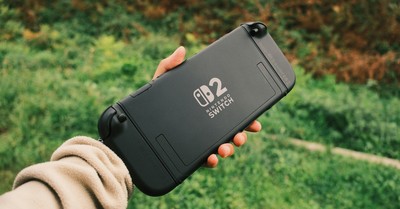
Nintendo will end production of the original Nintendo Switch, Switch Lite, and Switch OLED for the European market in February 2027, a decision forced by new European Union right-to-repair legislation that requires batteries in electronic hardware to be easily removable and replaceable. The company has determined that redesigning the three existing Switch models to comply is not worth the expense given their approaching end of life. This development was first reported by Polygon in their Switchboard newsletter.
The legislation takes effect as the Nintendo Switch 2 prepares to launch at $500, a price point that matches the base Xbox Series S but represents a significant jump from the $200 Switch Lite that has served as the primary budget gateway into gaming for years. For European players, the timing creates a genuine accessibility crisis — the affordable option disappears just as the premium replacement arrives at more than double the price.
EU Right-to-Repair Legislation Forces Nintendo's Hand
The European Union's new battery regulation mandates that consumer electronics must feature user-replaceable batteries, part of a broader push to reduce electronic waste and combat planned obsolescence. This follows the EU's earlier success standardizing USB-C charging across devices, which eliminated proprietary connectors from everything from MacBooks to budget reading lights. Nintendo is complying by introducing a revised Switch 2 model for Europe with a replaceable battery, alongside updated versions of the Switch 2 Pro Controller, Joy-Con, and Joy-Con 2 controllers.
The company has clearly calculated that retrofitting the original Switch, Switch Lite, and Switch OLED with compliant battery designs would cost more than the remaining sales justify. That logic is sound from a business perspective, but it creates a collateral impact on European consumers who relied on the original hardware as an affordable entry point. The legislation itself addresses a real problem — smartphone manufacturers have long used sealed, degrading batteries to push premature upgrades — but the timing relative to the console transition is unfortunate.
Switch 2 Pricing Creates an Accessibility Gap
At $500, the Switch 2 sits at the same price as the base Xbox Series S, which Nintendo and its defenders will correctly note is competitive for a new console generation. But competitive does not mean accessible. The original Switch ecosystem, with the Switch Lite starting at $200 and a massive library of affordable games, has functioned as the de facto budget gaming platform for families, younger players, and lower-income households worldwide. Removing that option from Europe without a direct replacement at a similar price point leaves a vacuum.
"The Switch's early retirement is a small price to pay for this advance — but not as small as it might have been,"
Polygon
A worldwide memory shortage crisis is pushing hardware costs higher across the industry, a factor outside both Nintendo's and the EU's control. But the practical result remains: European players losing access to new, affordable Nintendo hardware in early 2027 will face a $500 minimum spend to stay current.
The $500 Switch 2 Decision That Excludes Europe
For European households considering a first console purchase in the next two years, the calculation has fundamentally changed. The Switch Lite at $200 offered a complete, low-risk entry into gaming with access to thousands of titles. The Switch 2 at $500 demands a commitment that many families cannot or will not make, particularly when the original Switch library remains perfectly playable and enjoyable. Secondhand markets will absorb some demand, but used hardware carries warranty risks and battery degradation — the very problem the EU legislation aims to solve.
"If $500 becomes the lowest point of entry into video gaming, the hobby and the industry are going to lose a lot of new players — young kids, people in lower-income households, people who live in developing economies,"
Polygon
Sony and Microsoft Already Lost $500
This situation illustrates a growing tension in the gaming industry between regulatory progress and economic accessibility. The EU's right-to-repair framework is consumer-friendly in principle and environmentally necessary, but its implementation coincides with a hardware generation where component costs — driven by memory shortages and inflation — have pushed baseline console prices upward. Sony and Microsoft face similar pressures with the PlayStation 5 and Xbox Series X/S, though both companies have maintained lower-tier SKUs or subscription-based entry points that Nintendo has not yet matched for Switch 2.
Nintendo's historical strength has been offering distinct value propositions at lower price points — the Wii, the DS family, the original Switch Lite. The Switch 2 at $500 signals a departure from that strategy, at least initially. Whether Nintendo introduces a lower-cost Switch 2 variant later in the generation remains to be seen, but for European players, the window to buy new, affordable Nintendo hardware is closing on a fixed timeline.
Key Takeaways
- Nintendo ends original Switch, Switch Lite, and Switch OLED production in Europe by February 2027
- EU right-to-repair legislation requires user-replaceable batteries in consumer electronics
- Switch 2 launches at $500 with a Europe-specific model featuring a compliant replaceable battery
- Original Switch Lite at $200 served as the primary budget gaming entry point, now disappearing in Europe
The coming months will reveal whether Nintendo plans a budget-friendly Switch 2 variant or expects the original hardware's secondhand market to bridge the gap. For now, European players face a hard deadline: secure an original Switch before February 2027, or prepare for a $500 minimum investment to join the next generation. The EU's legislation achieves its stated goals of sustainability and consumer rights, but the transition period it creates may leave a generation of potential players on the outside looking in.