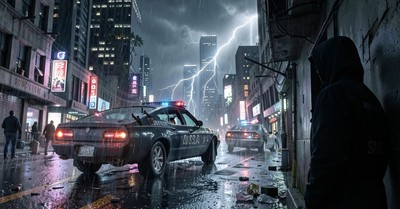
If you own a PlayStation 5, you cannot play Grand Theft Auto 4. You also cannot play the original Grand Theft Auto, its expansions, Grand Theft Auto 2, Liberty City Stories, Vice City Stories, Grand Theft Auto Advance, or Chinatown Wars. The two Grand Theft Auto 4 expansions — The Lost and Damned and The Ballad of Gay Tony — are equally absent from Sony's current console. For a series that has defined open-world gaming for over two decades, this represents a preservation failure that stands in stark contrast to industry peers who have made their histories accessible on modern hardware.
Quick Facts — Grand Theft Auto series
| Developer | Rockstar Games |
|---|---|
| Platform(s) | PS5, PC, Xbox, mobile phones, PlayStation 2 |
| Genre | Action-adventure, Open world |
The situation is slightly better on PC and Xbox, where Microsoft's backward-compatibility engineering has kept GTA 4 and its expansions available. But the 2D games that launched the franchise remain completely unavailable through legitimate means on any modern platform. To play them today requires tracking down original discs for aging PlayStation hardware or sourcing unofficial PC copies and adapting them with community mods. This matters because Rockstar's neglect cuts off new generations of players from understanding how the series evolved — and it leaves money on the table for a publisher that has built its modern strategy around scarcity and event-scale releases.
Here's a thinking process:
Grand Theft Auto is an action-adventure open-world series developed and published by Rockstar Games across PlayStation, Xbox, PC, and mobile platforms. The franchise spans six mainline releases and numerous spinoffs, with fourteen games arriving in its first twelve years — a pace that has slowed dramatically to just two titles in the seventeen years since Grand Theft Auto 4. The series shifted from a steady multi-platform cadence resembling EA Sports or Call of Duty to an Elder Scrolls-style model built around massive, infrequent releases and the ongoing revenue engine of GTA Online.
Here's a thinking process:
On PlayStation 5, only three classic Grand Theft Auto titles are officially available: Grand Theft Auto 3, Vice City, and San Andreas — and even those arrived via the troubled 2021 reissue Grand Theft Auto: The Trilogy — The Definitive Edition. Every other pre-GTA 5 entry is absent. Grand Theft Auto 4 and its expansions remain purchasable on PC and Xbox through backward compatibility, but the PlayStation ecosystem has no equivalent path. The handheld spinoffs Liberty City Stories and Chinatown Wars exist only on mobile phones in what the source describes as a random scattering of availability, while Vice City Stories and Grand Theft Auto Advance have no modern presence at all.
This gap becomes striking when measured against contemporaries. The Legend of Zelda series offers twenty-one mainline entries with only six unavailable on Switch 2 — five of those due to genuine hardware constraints from multi-screen designs. Final Fantasy fares even better: of sixteen numbered games spanning thirty-six years, only two cannot be played on PS5, and one is a twenty-four-year-old MMO with understandable technical barriers. Both Nintendo and Square Enix have made extensive spinoff libraries available as well. Rockstar's peers treat preservation as both community service and revenue stream; Rockstar treats its back catalog as an afterthought.
Here's a thinking process:
The 2021 release of Grand Theft Auto: The Trilogy — The Definitive Edition was meant to address the availability problem for the series' most beloved 3D-era games. Instead, it exposed how little care Rockstar invested in its own history. The outsourced remastering work launched in a technically unpolished state with artistically inconsistent visuals that betrayed the original art direction. Rockstar appeared caught by surprise by the harsh fan reaction, suggesting the publisher genuinely did not expect players to care deeply about the quality of these classic games.
Contrast this with Bethesda's 2025 remake of The Elder Scrolls 4: Oblivion — a lavish, ground-up reconstruction that honors the source material while modernizing it for new audiences. The difference in approach is stark. Patches have improved The Trilogy since launch, but the initial release served as an unguarded moment: Rockstar briefly allowed the world to glimpse that it didn't really care for its classic games, and it didn't expect anyone else to either. That perception damages long-term trust with a fanbase that has proven eager to champion forgotten entries and reclaim series history.
Here's a thinking process:
The shift from fourteen releases in twelve years to two in seventeen reflects more than rising development costs. Rockstar transformed from a multi-studio, multi-project developer into a global monolith focused on one gigantic release at a time. Resources poured into Red Dead Redemption 2, and the discovery of GTA Online as a massive recurring revenue stream changed the calculus entirely. The series once operated like EA Sports or Call of Duty — steady cadence, multi-platform presence, varying scope. Now it operates like The Elder Scrolls — scarcity, event status, scale, and undeniable quality as the only priorities.
In this new paradigm, the older games become embarrassing. They don't fit the vision of what Grand Theft Auto is now: a prestige blockbuster franchise where each release is a cultural event. Rockstar doesn't want to make it easy to play Grand Theft Auto 2 or Vice City Stories because they don't align with that curated image. But this is short-sighted. Nintendo may not be proud of Zelda 2: The Adventure of Link, yet it keeps the game available because making the full history accessible deepens fans' relationship with the series — a long-term gain that outweighs any short-term brand inconsistency.
Here's a thinking process:
For players, the consequence is simple: the only way to experience most of Grand Theft Auto's history is through original hardware, unofficial PC copies, or mobile ports of questionable quality. The community has stepped in with mods and preservation efforts, but the burden should not fall on fans to keep a multi-billion-dollar franchise's history playable. Rockstar's ambivalence also means the Definitive Edition remains the only official way to play the PS2 trilogy on modern consoles — and even after patches, it carries the stigma of a launch that felt disrespectful to the source material.
The commercial argument for preservation is equally clear. Re-releasing classic Grand Theft Auto games would generate revenue from a fanbase that has demonstrated willingness to buy the same games repeatedly across generations. It would also serve as a bridge for new players drawn in by Grand Theft Auto 6's eventual marketing push — players who might want to understand why this series matters. Every other major publisher at Rockstar's tier has figured this out. Rockstar's refusal to tend its own garden is not just a preservation failure; it is a business decision that leaves money and goodwill unclaimed.
Key Takeaways
- Only 3 of 14+ Grand Theft Auto titles are officially available on PlayStation 5
- GTA 4 and expansions remain playable on PC and Xbox but not PlayStation
- The 2021 Trilogy remaster launched in a technically unpolished state with artistic inconsistencies
- Nintendo and Square Enix maintain far better backward compatibility for their flagship series
Keeping game history alive is a constant battle, and the medium's most successful practitioners have a duty to tend their own gardens. Rockstar has the resources, the audience, and the commercial incentive to make its full catalog available — it simply chooses not to. The next time the publisher announces a reissue or a classic collection, players should judge it not by nostalgia but by whether it finally respects the games that built this empire. Release the games, Rockstar. It's a win-win.
Sources
Rockstar doesn't want to make it easy for you to play the likes of GTA 2 or Vice City Stories because they don't fit its vision for what GTA is now.
Frequently asked questions
Why can't I play Grand Theft Auto 4 on PlayStation 5?
Rockstar has not made GTA 4 available on PlayStation 5, leaving it unplayable on modern hardware.
Are the original 2D Grand Theft Auto games available on modern platforms?
No, the original 2D GTA games are completely unavailable on modern platforms, requiring original discs or illegal PC copies with community mods.
What Grand Theft Auto games are available on current-generation hardware?
Only GTA 5, GTA Online, and the classic trilogy of GTA 3, Vice City, and San Andreas are available on current-generation hardware.
How does Rockstar's approach to preserving its back catalog compare to other studios?
Unlike studios like Nintendo or Bethesda, Rockstar has shown little effort in maintaining its back catalog, with many GTA games being unplayable on modern hardware.
What was the reception to Grand Theft Auto: The Trilogy - The Definitive Edition?
The 2021 reissue was technically unpolished and artistically inconsistent, leading to a harsh reaction from fans.