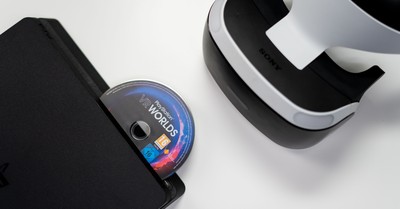
Sony Interactive Entertainment has drawn a line under the physical media era for PlayStation. The company announced on July 1 that it will cease production of physical game discs for all new PlayStation releases beginning January 2028, a move that reflects a market where digital purchases have become overwhelmingly dominant. For players who have built libraries of boxed games over decades, the decision feels abrupt — but the sales data suggests the writing has been on the wall for years.
The significance of this shift cannot be overstated for anyone who values game preservation, resale, or simply the tactile experience of owning a physical copy. Sony's own numbers tell the story: in 2013, when the PlayStation 4 launched, only 13% of full-game unit sales on Sony consoles were digital. By 2025, that figure has climbed to almost 80%. The transition is not a prediction — it is a measured response to where the revenue already flows.
| Metric | Value |
|---|---|
| Digital share of full-game purchases on Sony consoles in 2013 | 13% |
| Digital share of full-game purchases on Sony consoles in 2025 | 80% |
Sony’s Shock 2028 Disc Phase-Out
Sony confirmed through a PlayStation Blog post by Sid Shuman, Senior Director of Content Communications, that physical disc production for new games will end in January 2028. The statement frames the decision as a response to "shifting trends in consumer preference" and emphasizes that games released before the cutoff will remain available in disc format. New titles after that date will launch exclusively on the PlayStation Store and through retailers in digital formats only. The policy applies to both PlayStation 5 and PlayStation 4 platforms, though the practical impact will center on the current generation.
"This transition has no impact on games that already released, or will be releasing, prior to January 2028 in disc format."
Sid Shuman, Senior Director of Content Communications, PlayStation
Sony Axes Discs by 2028 After Digital Dominates
- Physical disc production for new PlayStation games ends January 2028
- Only 7 PlayStation games sold over 100,000 physical units in the U.S. so far this year
- Just 2 PlayStation games sold more than 10,000 physical units in the week ending July 11
- Digital share of full-game purchases on Sony consoles reached nearly 80% by 2025, up from 13% in 2013
- Over 25% of PS5 consoles in the U.S. are digital-only models
- More than half of Xbox Series consoles in the U.S. lack a disc drive
- Sony retains 100% of revenue on first-party digital sales versus ~65% on physical
- Third-party digital sales net Sony a 30% cut (~$21 on a $70 game) versus ~15% licensing on physical
Sony's 2028 Disc Death Sentence
The financial logic behind Sony's decision is stark. On a first-party physical release like The Last of Us, Sony keeps roughly 65% of the sticker price — 30% goes to the retailer and another 5% covers manufacturing and shipping. For third-party physical titles, Sony collects only a 15% licensing fee. By contrast, first-party digital sales on the PlayStation Store deliver 100% of revenue directly to Sony, while third-party digital sales yield a 30% platform cut. As console hardware costs rise and margins tighten, eliminating the physical supply chain represents a significant profit lever.
Analysts agree the decision is irreversible. Dr. Serkan Toto of Kantan Games notes that even a hypothetical protest of 500,000 PlayStation Plus cancellations would represent just 1% of Sony's 50-million-subscriber base — "not enough for Sony to start rethinking." Piers Harding-Rolls of Ampere contextualizes the shift: console gaming was the last holdout for physical media in the gaming sector, but purchasing trends have made the outcome inevitable. Robin Zhu of Bernstein puts it more bluntly: "If gamers and preservationists had bought more physical games, Sony wouldn't have seen the digital sales ratios that justify this decision."
"If gamers and preservationists had bought more physical games, Sony wouldn't have seen the digital sales ratios that justify this decision."
Robin Zhu, Bernstein
For players, the loss extends beyond convenience. Physical media enables sharing, resale, gifting, and long-term preservation — rights that digital licenses do not guarantee. Kim Bayley, CEO of the U.K.'s Digital Entertainment and Retail Association, called the move "a triumph of corporate convenience over consumer choice," warning that narrowing purchase options hurts gamers, retailers, and the industry's long-term health. The backlash has been significant: online petitions and social media protests have swamped PlayStation's channels, even overshadowing unrelated game launches.
"a triumph of corporate convenience over consumer choice"
Kim Bayley, CEO of the U.K.'s Digital Entertainment and Retail Association
Government intervention appears unlikely. The EU has already indicated it lacks the authority to prevent Sony — or any company — from discontinuing physical media. With over 120 million active PlayStation users and a digital revenue model that grows more profitable each quarter, Sony has little incentive to reverse course. The disc era isn't ending because Sony stopped making them; it's ending because the market stopped buying them in meaningful numbers.
Key Takeaways
- Sony will end physical disc production for new PlayStation games in January 2028
- Only 7 PlayStation titles sold over 100,000 physical copies in the U.S. this year
- Digital sales now represent nearly 80% of full-game purchases on Sony consoles
- Sony keeps 100% of first-party digital revenue versus ~65% on physical copies