Finji has quietly become one of indie gaming's most reliable tastemakers, publishing breakout hits like Tunic, Chicory: A Colorful Tale, and Night in the Woods while also developing their own titles. Their next project, Usual June, arrives October 28 on Windows PC and represents the studio's most ambitious genre blend yet — a coming-of-age narrative exploration game wrapped around Devil May Cry-style action combat. Polygon's exclusive Fall Preview hands-on session reveals a game that refuses to settle into a single lane, and that refusal might be exactly what makes it special.
Quick Facts — Usual June
| Developer | Finji |
|---|---|
| Platform(s) | Windows PC |
| Release Date | Oct. 28 |
| Genre | adventure, action, narrative exploration |
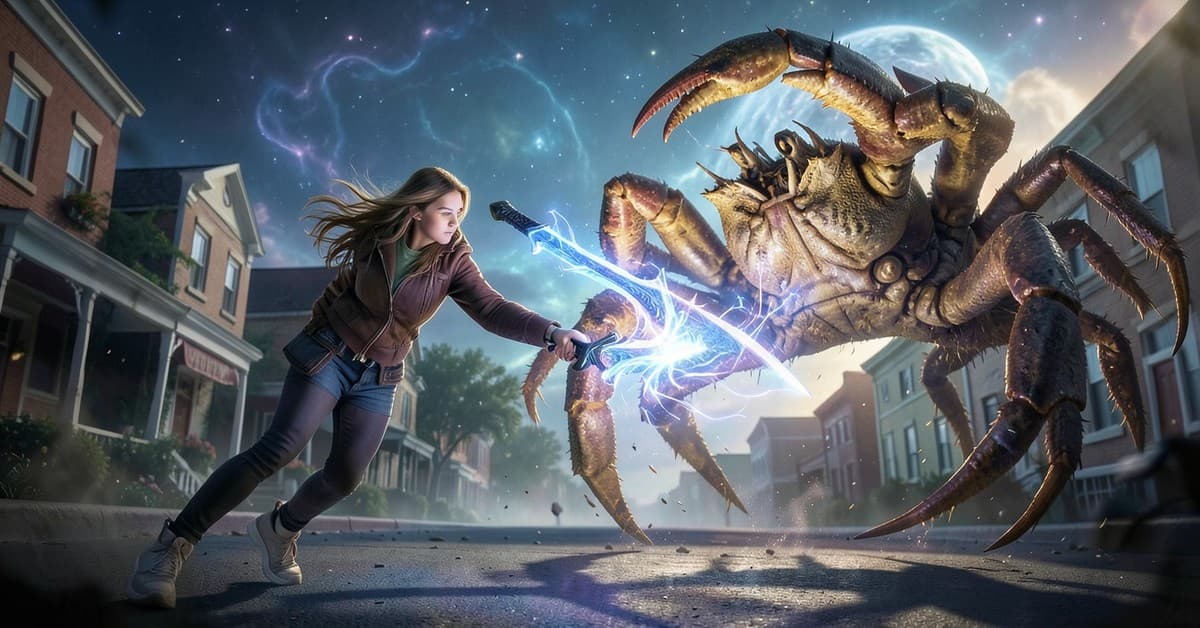
The preview builds on roughly 30 minutes of gameplay starting 25 minutes into the experience, demonstrated at Gamescom 2026. Players control June on her birthday — June 17, per an in-game smartphone menu — as she and her friends explore a cemetery in Fen Harbor, a fictional Midwest college town that looks like a Hallmark movie set run through an indie aesthetic filter. What begins as light hijinks quickly escalates: the group meets a ghost, fights spectral crabs, and discovers an astral plane beneath a 100-year-old mausoleum that could erase Fen Harbor from existence. The metaphorical weight is deliberate and unmistakable.
Here's a thinking process:
Usual June comes from Finji, the Michigan-based studio cofounded by Rebekah and Adam Saltsman. The game sits at the intersection of adventure, action, and narrative exploration — a coming-of-age story about a young woman named June navigating her summer break in Fen Harbor while contending with interdimensional threats. Finji serves as both developer and publisher, maintaining the creative control that has defined their publishing catalogue. The October 28 release date positions it as a major fall indie release on Windows PC.
The project emerged from Finji's R&D phase in 2020 and 2021, when the team consciously chose not to make what Rebekah Saltsman described as "a fishing game based on Animal Crossing." Instead, they built something that reflects the specific anxieties of the Midwest: "When things come to an end in the Midwest, historically, it's because billionaires are done harvesting stuff there, and move on," Adam Saltsman explained. That economic reality — towns surviving or dying at the whim of distant capital — forms the thematic backbone beneath the ghost fights and spectral crabs. For players who connected with Night in the Woods' small-town decay or Chicory's creative anxiety, this feels like familiar territory approached from a new angle.
Here's a thinking process:
Combat in Usual June draws explicit inspiration from Devil May Cry, but with a heavier emphasis on dodging than parrying. June's dodge is a short-distance dash; timing it correctly fills a super meter that open ups more powerful attacks. The system aims for what lead writer David Pinckney calls a "low skill floor and high skill ceiling" — accessible enough for newcomers but deep enough to reward mastery. During the Gamescom demo, Pinckney played through a combat sequence flawlessly, while the preview author admitted to losing significantly more health on their own attempt.
A distinctive green screen appears before every encounter, showing the enemy lineup and letting players plan their approach. This transparency removes the frustration of surprise ambushes and encourages strategic thinking over reflexive panic. Health restores fully after each fight, encouraging aggressive experimentation rather than resource conservation. The spectral crabs showcased in the demo serve as early-game enemies, but the astral plane mechanics suggest the threat escalates well beyond crustaceans. A stylized frame rate effect — reminiscent of Spider-Man: Into the Spider-Verse — gives combat a comic-book visual language that makes the action readable even at high speed.
Between fights, the game leans heavily into dialogue-heavy narrative sequences. Cara Ellison, whose narrative credits include God of War Ragnarök and The Seance of Blake Manor, consulted on narrative direction. She emphasized that the team "left room in the levels and between combat for how our four main characters might experience the discoveries they make, and what they mean." The preview author noted an unusual pull: during combat they wanted more story, and during story they wanted more combat — a balance that suggests both halves are working.
Here's a thinking process:
The most technically ambitious audio feature is a custom Vocaloid system that took audio designer Adam Hays roughly three years to build. Rather than traditional voiced dialogue, the game uses what the preview describes as "twee art house gibberish" — Detroit-based voice actors recorded vocal tones and accents for each character, then the Vocaloid system transforms those performances into a unique non-language that still conveys personality and emotion. It's an unusual choice that sidesteps the uncanny valley of budget voice acting while giving each character a distinct auditory signature.
Visually, Fen Harbor blends cozy Midwest aesthetics with creeping surrealism. The Spider-Man: Into the Spider-Verse frame rate effect during combat creates a stylized look that differentiates action sequences from exploration. The preview was tested on a Steam Deck, though the game crashed before settings were lowered to low — Finji has not officially verified Usual June for Steam Deck. Performance on other hardware configurations remains untested in this preview build.
Here's a thinking process:
The Steam Deck crash during the hands-on session raises legitimate concerns about optimization, particularly for a game targeting a fall release. While the preview author noted the issue resolved after lowering settings, the lack of official Steam Deck verification means portable play cannot be guaranteed at launch. For a game with this visual style and combat complexity, performance consistency across hardware tiers will be critical — the frame rate effect that makes combat readable at 60fps could become a liability if performance dips unpredictably.
The preview's 30-minute slice also leaves significant questions about long-term structure. The balance between combat and narrative felt effective in a controlled demo, but sustaining that rhythm across a full game is a different challenge. Games that alternate between action and dialogue-heavy exploration often struggle with pacing in their back half — either the combat grows repetitive or the story loses momentum. Finji's track record suggests they understand this risk, but the preview simply hasn't shown enough to confirm the full game sticks the landing.
Finji has built its reputation on identifying and nurturing games that defy easy categorization. Usual June might be the purest expression of that philosophy yet — a game that refuses to be just a narrative adventure or just an action game, grounded in specific Midwestern anxieties while fighting spectral crabs in an astral plane. The custom Vocaloid system alone represents a level of audio experimentation rarely seen at this scale. If the combat depth and narrative warmth maintain their demo-quality balance across the full experience, Usual June could join the ranks of the studio's most memorable releases. The October 28 launch will tell whether that balance holds.