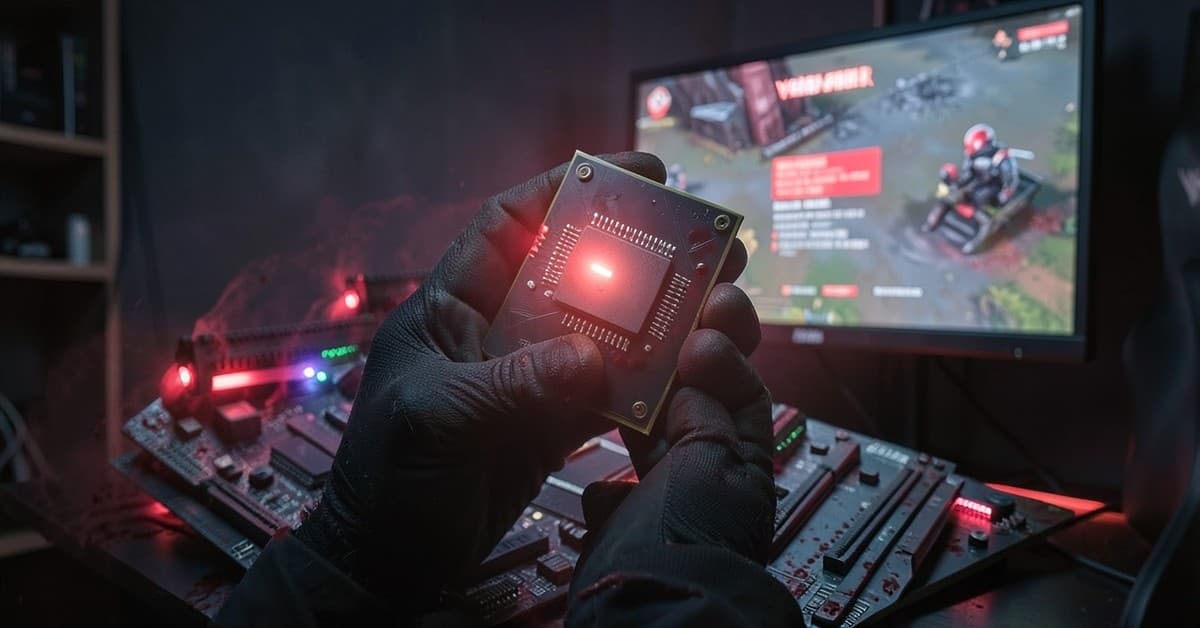
A German Valorant player discovered the hard way that Riot Games' Vanguard anti-cheat system tracks hardware at the component level — and that a ban follows the silicon, not the person. Reddit user After-Cartoonist-196 purchased a used Ryzen 7 5800X3D from Kleinanzeigen, a German eBay alternative, in late September hoping to save money on a sought-after processor. Instead, they found themselves locked out of the tactical shooter entirely, banned not for anything they did, but for what the CPU's previous owner did months earlier.
Quick Facts — Valorant
| Developer | Riot Games |
|---|---|
| Platform(s) | PC |
| Genre | Tactical Shooter |
Surprise alert for anyone buying used PC parts: a hidden flaw in Vanguard’s system is still alive. Even though hardware ID bans have been around for a while, this example shows that the flags stick to a chip even after it changes owners, and there’s no way to reset the serial. That means a cheap CPU you snag might already be locked out, and the ban will travel with it into every new build you throw it into. For budget‑savvy gamers, the takeaway is clear: a used processor can bring a permanent ban that sweeps through the whole system.
Here's a thinking process:
After‑Cartoonist‑196 posted a detailed timeline on Reddit that has since spread across Valorant forums. He swapped in a used Ryzen 7 5800X3D, fired up the client, and got kicked straight away. The old CPU had run him fine, so the instant block made no sense until he reached out to Riot support. Their reply said the processor’s ID and serial are on Vanguard’s ban list. That blacklist dates back to August 12th—long before the Reddit user bought the chip—when the previous owner allegedly broke the rules with it. Nothing about the new machine violated any policy; it was
In a follow-up comment, the poster revealed an even more aggressive enforcement detail: Riot informed them that all components in their rig had been similarly flagged after the CPU ban. Swapping the processor for a clean one would not resolve the issue because the motherboard, memory, storage, and other parts were now "smeared by the cursed microchip" in Vanguard's tracking. Short of buying an entirely new rig, the support representative reportedly told them there was nothing they could do.
Here's a thinking process:
If accurate, this leak suggests Vanguard's hardware fingerprinting creates a persistent chain of liability that travels with each individual component. A single flagged CPU appears to contaminate an entire system's hardware ID profile, meaning a player who unknowingly installs a banned part could lose access to their account and every piece of hardware in their computer. The financial stakes are substantial — a used CPU purchase of a few hundred euros could effectively brick a multi-thousand-euro gaming rig for Valorant purposes.
This raises practical questions for the secondary hardware market. Kleinanzeigen and similar platforms have no mechanism to verify whether a used component carries an anti-cheat ban, and sellers may not even know if their hardware was previously used for cheating. Buyers have no way to check a serial number against Vanguard's blacklist before purchase. The only safe path currently appears to be buying new, sealed components directly from authorized retailers, which defeats the cost-saving purpose of the used market entirely.
Here's a thinking process:
Vanguard has faced criticism for its kernel-level access and aggressive enforcement since its launch alongside Valorant in 2020. The anti-cheat runs at system startup and has previously flagged legitimate software, caused system instability, and drawn privacy concerns from security researchers. But this appears to be the first widely documented case of a hardware ban transferring to an innocent secondhand buyer through component serial tracking. The Reddit user's decision to leave their post up as a warning — "perhaps it will help save someone else from a similar situation" — suggests they have exhausted appeal options and accepted the loss.
Riot Games has not publicly commented on this specific case as of writing. The company's standard policy on hardware bans typically offers no appeal path for the banned hardware itself, only for the account. Whether Riot will implement a verification or clearance process for transferred hardware ownership remains unknown. For now, the community has one confirmed data point: a used Ryzen 7 5800X3D bought in late September carried an August 12th ban that extended to an entire system, and the buyer was told nothing could be done.
The incident reminds us that anti‑cheat systems run deeper than most gamers think. Vanguard can read a component’s serial number even after it changes hands, so a CPU’s past owns as much weight as its specs. If Riot never says bans can be lifted when you buy a used part – or adds a public serial‑lookup tool – the risk stays in your pocket. In Vanguard’s logic the Ship of Theseus problem fades: swap the CPU, the ban still flags the same device. Players who trade or refurbish hardware
Sources
I launched Valorant and was immediately kicked out
Frequently asked questions
Can buying a used CPU get you hardware banned in Valorant?
Yes, a German player was hardware banned in Valorant after purchasing a used Ryzen 7 5800X3D because the previous owner had used that CPU to cheat, causing its ID to be blacklisted in the Vanguard system.
Which anti-cheat system issued the hardware ban?
The hardware ban was issued by Vanguard, Riot Games' internal anti-cheat detection system.
Where did the player buy the used CPU?
The player purchased the used Ryzen 7 5800X3D on Kleinanzeigen, a German alternative to eBay.
When was the hardware ban originally applied to the CPU?
The CPU was hit with a hardware ban on August 12th due to the previous owner cheating in Valorant.