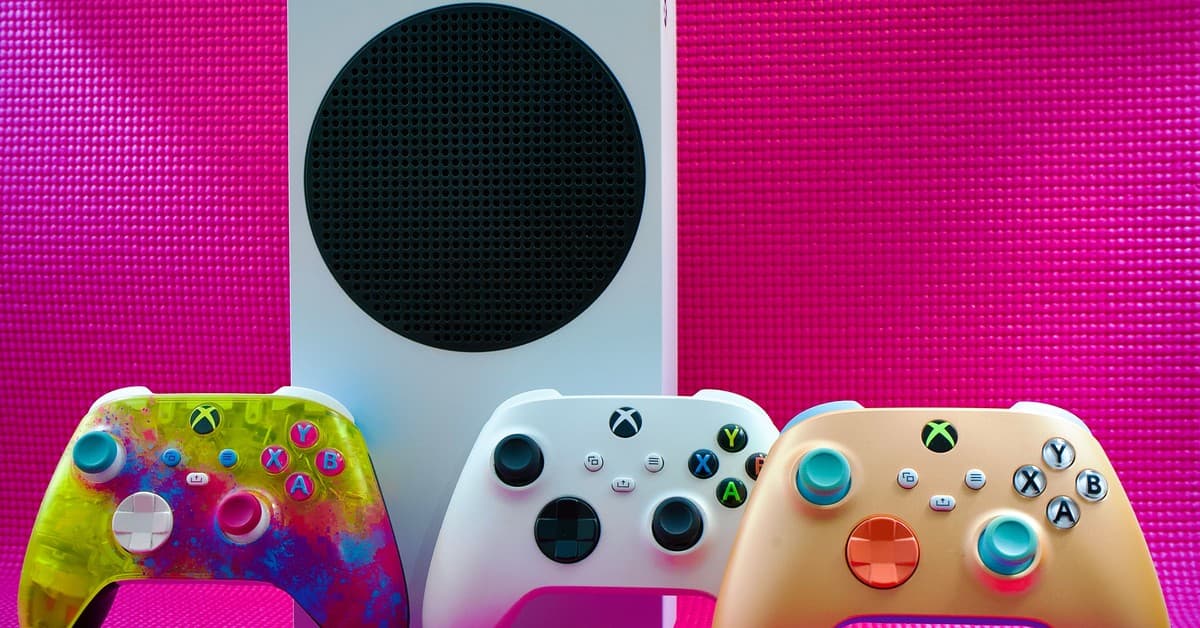
Microsoft has unveiled XBOX LABS, a new experimental division designed to explore the bleeding edge of gaming technology and challenge fundamental assumptions about how games are built, distributed, and played. The announcement came via an internal message from Xbox leadership to Team Xbox employees globally, signaling a structured commitment to experimentation that has previously happened in scattered pockets across the industry. For players, this represents a potential shift toward a future where hardware barriers dissolve, legacy titles find new life on modern platforms, and the line between playing a game and creating one blurs significantly.
The initiative arrives at a moment when the technical boundaries of gaming are being publicly stress-tested in real time. In recent weeks, the industry has watched as major titles have been decompiled and rebuilt to run on hardware they were never designed for — Windows PC builds translated to Apple Silicon, or ported to run inside browsers via WebAssembly and WebGPU, which now approaches 90% global browser support. Perhaps most strikingly, major games have been remixed into the source code of entirely different projects. These aren't theoretical proofs-of-concept; they are working demonstrations that the tether between software and specific hardware is far more fragile than the industry's business models assume.
What XBOX LABS Will Actually Do
The internal memo says Xbox Labs will be a tight‑knit crew of creators, engineers, and scientists led by Scott. Their job is to turn fresh ideas into real‑world demos that gamers and devs can actually use. That mandate is wide‑open: build things publicly, watch how folks use the tools, and judge success by how many people end up playing or building. The “build in the open” mindset hints that Microsoft will publish its progress instead of hiding projects until a final polish. It marks a jump away from the usual first‑party secrecy model.
The focus areas hinted at in the announcement are revealing. Leadership explicitly cited making great games easier to access, giving old games new life, and allowing more players to become creators and co-creators. These are framed as "unmistakably good outcomes for players, even when (and sometimes because) they challenge our existing business models." That last clause is the most significant — it acknowledges that the experiments emerging from Labs may disrupt how Xbox currently makes money, and that the division is willing to accept that friction in pursuit of broader player value.
The AI and Scale Argument
The announcement makes a specific case for why Xbox is positioned to lead this exploration, centering on the intersection of AI agents and gameplay data. Coding became the first major workload for AI agents because they can write, run, and test software in tight feedback loops. Games share many of those same properties — defined rules, simulatable environments, measurable outcomes — and Xbox holds a staggering dataset: more than 72 billion hours a year spent playing Xbox games, roughly five times the estimated time spent writing code worldwide. With 25 years of institutional knowledge on making great games, the argument is that Xbox's game makers should help shape what these new technologies make possible, and the tools built will be shared with developers across the industry.
This framing positions XBOX LABS not just as a skunkworks for cool tech demos, but as a strategic bet on the convergence of generative AI, user-generated content, and massive-scale gameplay telemetry. If AI agents can learn to code by writing and testing software, the logic follows they can learn game design by building and testing gameplay systems against 72 billion hours of human behavior data. The division's output — tools, frameworks, experimental runtime — would then flow back to the broader developer ecosystem, extending Microsoft's platform influence beyond its own studios.
Core Priorities Remain Unchanged
Leadership was explicit that the creation of XBOX LABS does not signal a pivot away from existing commitments. The "4Cs" — a reference to Xbox's internal framework covering content, cloud, community, and commerce — remain the north star. The company remains committed to making great games, to its hardware roadmap, and to being responsible stewards of IP and the communities built around it. Labs is framed as a parallel track: a way to explore new technology without abandoning the work already underway. This is a necessary reassurance for developers and players who have watched other platform holders chase trends at the expense of their core offerings.
The distinction matters because the experiments Labs will pursue — browser-based game streaming via WebGPU, hardware-agnostic binary translation, AI-assisted content creation — directly interrogate the value proposition of dedicated console hardware and traditional distribution models. If great games run in any browser on any device, the "console" becomes a preference rather than a requirement. If players become co-creators at scale, the definition of a "finished game" shifts. Xbox is betting it can navigate that transition from a position of strength rather than reacting to it from weakness, and Labs is the vehicle for that navigation.
For the average player, the immediate impact is minimal — no new console, no sudden service change, no game announcement. But the signal is clear: Microsoft is institutionalizing the kind of boundary-pushing experimentation that usually happens in modding communities, research labs, or rogue side projects. By giving it a name, a budget, and a mandate to build in the open, Xbox is saying the future of gaming won't be defined solely by bigger budgets and prettier graphics, but by who can dismantle the assumptions that currently constrain what games can be and who can make them. The next time a classic title appears playable in a browser on a phone, or a player modifies a live game using natural language prompts, there's a good chance XBOX LABS had a hand in making it possible.
Sources
The first video games emerged some 75 years ago. In the time since, there have been booms and busts, but every year there are more great games to play, more devices to play them, and best of all, more people than ever playing.