
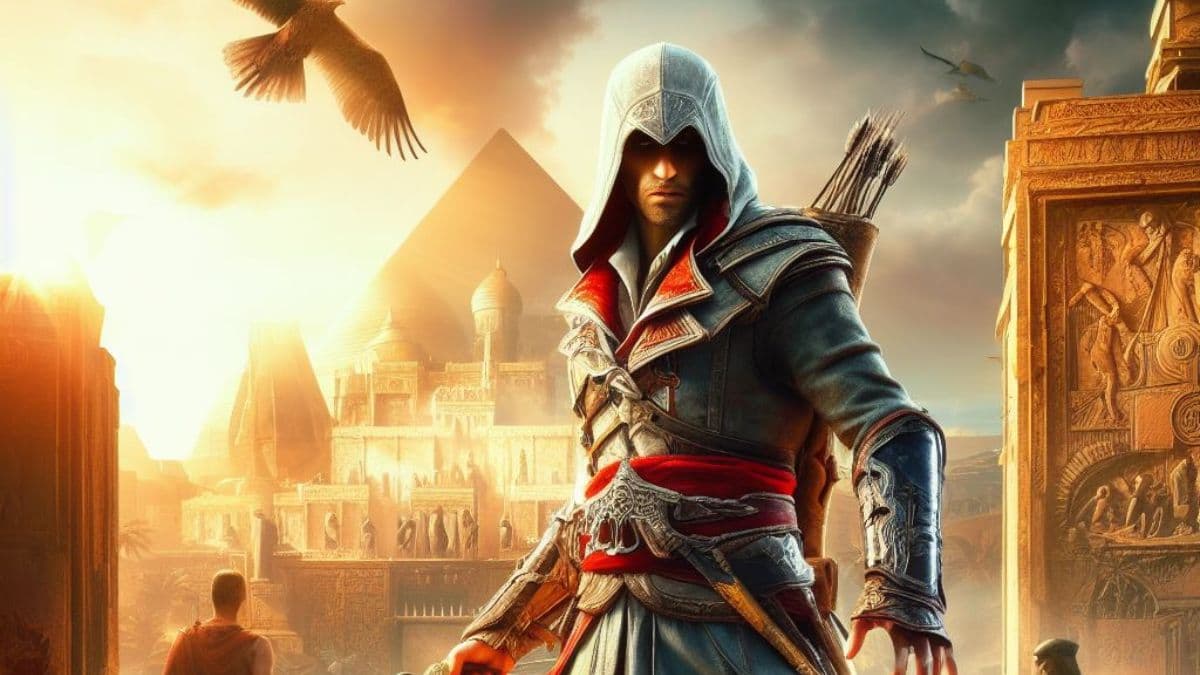
Ubisoft’s Assassin's Creed (AC) series has undergone numerous transitions, oscillations, and evolutions throughout its journey. Recently, with the introduction of Assassin’s Creed Mirage and the forthcoming Assassin's Creed Red, the franchise finds itself at an intersection of its past and its potential future. Let's delve deeper into this paradigm shift and assess the implications for both the developers and the fanbase.
The Return to Roots with Assassin's Creed Mirage
Ubisoft's decision to pivot back to the classic action-adventure formula with Assassin's Creed Mirage was widely welcomed by a significant portion of its audience. This game not only satiated the yearning of long-term fans for the nostalgic gameplay but also introduced a slew of contemporary elements. These additions successfully modernized what was once considered a traditional gameplay model.
However, the winds of change are unpredictable. Rumors suggest that the successor to Mirage, Assassin's Creed Red, is poised to deviate once again from the tried-and-true formula, causing a stir in the community.
The Shift Towards the RPG Model
When Ubisoft unveiled AC Origins, they unveiled a reinvented franchise. Venturing into the realms of role-playing games (RPG), Origins presented a fresh take on the AC experience. The game's resounding success set the stage for subsequent titles like Odyssey and Valhalla.
Nevertheless, the RPG route was a double-edged sword. While commercially successful, titles like Odyssey and Valhalla garnered a mix of admiration and criticism. Detractors felt that the essence of Assassin's Creed was being diluted, overshadowed by the overwhelming RPG elements. Amidst such feedback, Assassin's Creed Mirage was a refreshing respite, taking fans back to the series' essence.
The Impending Challenge for AC Red
The decision to revert to the RPG model with AC Red raises eyebrows. With Mirage having just rekindled the old AC charm, there's skepticism about Red's potential trajectory. This switch between gameplay styles could result in an identity crisis for the series. Thus, AC Red shoulders the hefty responsibility of justifying the reversion to the RPG model, ensuring it resonates with both new and old fans alike.
The Uncertainty of Direction
The Assassin's Creed series seems to be standing at crossroads. Having offered fans a taste of both worlds — the classic action-adventure with Mirage and the RPG-style with the likes of Odyssey and Valhalla — Ubisoft's strategy for its upcoming titles will be under intense scrutiny. Will they solidify their stance in one direction, or will the franchise continue to oscillate between the two? Only time will tell.
Assassin's Creed Mirage is currently available on multiple platforms, including PC, PS4, PS5, Xbox One, and Xbox Series X.
Final Thoughts
Ubisoft's Assassin's Creed has remained a cornerstone in the gaming world, adapting and evolving to the changing tastes and trends of the gaming community. The shifting dynamics between the Mirage and Red titles emphasize the franchise's adaptive nature. As the Assassin's Creed saga unfolds, its diverse gameplay strategies could be its strength, or they might emerge as its Achilles' heel. The gaming community will undoubtedly watch keenly as AC's journey progresses.


