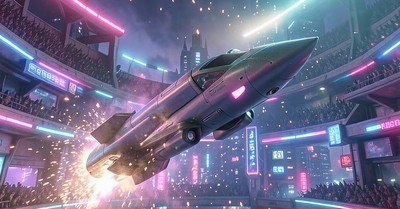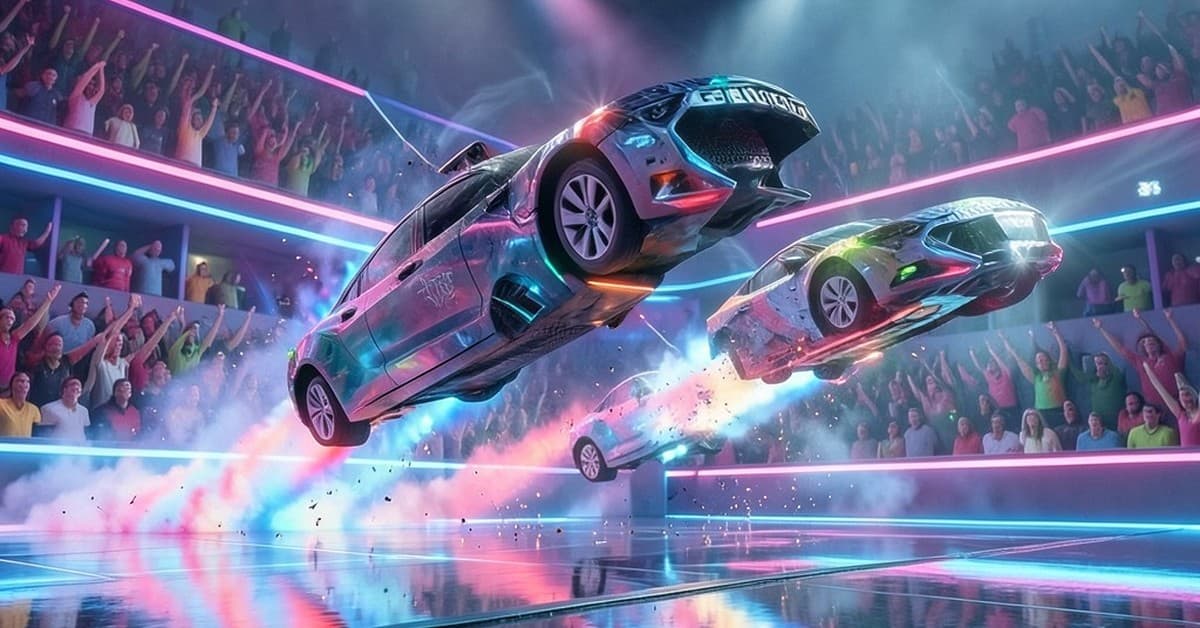
Epic Games has officially unveiled Unreal Engine 6 (UE6) through a sleek Rocket League teaser trailer debuted during the game's Paris Majors semi-finals. This first look not only showcases UE6's capabilities but also hints at a revolutionary "new era" for Rocket League, currently still running on Unreal Engine 3. The teaser, labeled as "captured real-time in game," boasts cinematic visuals that blur the line between gameplay and movie trailers, though it stops short of revealing actual gameplay changes.
The immediate takeaway for Rocket League fans is the promise of a significant graphical overhaul, with "interoperable content" being a key feature of UE6. This technology allows for seamless content sharing across games using the engine, potentially streamlining updates and expansions for Rocket League. However, the teaser raises more questions than it answers, notably the absence of a release date for this visual revamp and the public availability timeline for UE6 itself. Given Unreal Engine 5's relatively recent release in 2022, a lengthy wait is anticipated.
Unpacking the Teaser: What's Revealed and What's Not
Beyond Rocket League's shiny new look, complete with realistic hazy lighting effects, the trailer briefly showcases a panorama of Epic Games' titles, including Fortnite and Lego Fortnite, culminating in a glimpse of a Disney castle. This nod to Disney aligns with Epic's previously announced Disney mega metaverse game, which serves as a testing ground for UE6 innovations. Notably, the trailer's overview segment sparked speculation, with prominent Fortnite leaker Hypex suggesting it teases a universal hub for accessing multiple games, though such claims should be viewed cautiously.
"The trailer's overview segment sparked speculation, with prominent Fortnite leaker Hypex suggesting it teases a universal hub for accessing multiple games, though such claims should be viewed cautiously."
Hypex, Fortnite Leaker
The lack of gameplay details in the teaser is somewhat disappointing, especially for fans eager to see how UE6 enhances Rocket League's core experience. While the visual upgrade is unquestionable, the real impact of UE6 on gameplay mechanics and the community's engagement remains to be seen. Psyonix's use of UE3 for Rocket League currently underscores the potential for behind-the-scenes improvements that could enhance development efficiency and player experience alike.
Evaluating the UE6 Debut: Implications and Expectations
Epic's choice to debut UE6 through Rocket League speaks to the game's enduring popularity and its suitability as a showcase for the engine's interoperable content and real-time cinematic capabilities. Compared to the visuals seen in typical cinematic trailers, UE6's output in Rocket League is remarkably indistinguishable, highlighting a new standard for in-game graphics. However, the comparison to cinematic trailers also raises questions about whether this leap in visuals will fundamentally alter the Rocket League experience or merely enhance its aesthetic appeal.
Critically, the teaser's focus on visuals over gameplay might leave some fans wondering if substance is being sacrificed for style. The community's response will be crucial, especially considering the wait time anticipated before UE6's public rollout and the integration of its features into Rocket League. As with any significant engine upgrade, balance between visual innovation and the retention of the game's core identity will be key.
Looking Ahead: Timelines and Speculations
With Unreal Engine 5 still in its early adoption phase since its 2022 release, the wait for UE6 and its integration into Rocket League could be substantial. Fans and developers alike will be watching for more concrete details on the engine's public release and the Rocket League visual revamp timeline. Speculations around a potential universal hub for Epic's titles, as hinted at in the trailer, add another layer of anticipation to the UE6 rollout.
In conclusion, while the Rocket League teaser for Unreal Engine 6 is more of a visual showcase than a gameplay reveal, it undoubtedly marks an exciting step forward for both the game and the gaming industry at large. As details emerge, the real challenge for Psyonix and Epic Games will be in translating these visual advancements into an enhanced, yet true-to-form, Rocket League experience.