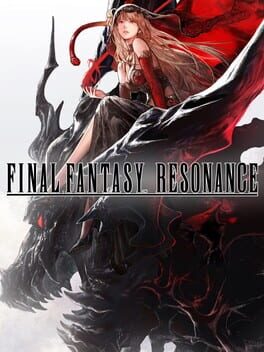

Square Enix has confirmed that Final Fantasy Resonance will launch with a proper soundtrack release that dwarfs most mainline entries in the series. The publisher announced a 120-track original soundtrack spread across four CDs, arriving on October 28th — exactly one week after the HD-2D game's October 2024 launch. For a franchise that has historically treated soundtracks as premium collector's items rather than day-one companions, this scale of musical investment signals serious confidence in the Brave Exvius spin-off.
The collection breaks down into 33 brand-new compositions from Noriyasu Agematsu and 87 existing tracks pulled from both Final Fantasy Brave Exvius and War of the Visions: Final Fantasy Brave Exvius. That ratio matters: Agematsu isn't just arranging legacy material, he's writing a substantial new identity for Resonance. Track names like "Leviathanomachy," "Wickedness Afoot," and "He Who Shoulders Umbral Darkness" suggest the new material leans into the operatic, battle-heavy tone that defined Brave Exvius's best moments. Players walking into this without mobile baggage get a curated greatest-hits album plus a full album's worth of fresh music — a rare value proposition for a spin-off launch.
The 120-Track Behemoth Explained
The four-disc set represents the largest Final Fantasy soundtrack by track count in recent memory. Digital versions of Final Fantasy 10, 7, and 8 clock in at 89, 85, and 73 tracks respectively — Resonance exceeds them all by a wide margin. That volume reflects the game's mobile heritage: Brave Exvius and War of the Visions accumulated years of event music, character themes, and battle variations that now get a proper physical release. Agematsu's 33 new tracks aren't filler; they're the connective tissue turning a playlist into a cohesive score for a standalone HD-2D experience.
- 120 total tracks across 4 CDs
- 33 new compositions by Noriyasu Agematsu
- 87 existing tracks from Brave Exvius and War of the Visions
- Release date: October 28, 2024 (one week after game launch)
Why This Matters for the HD-2D Experiment
Square Enix's pitch for Resonance has been explicit: "What if Final Fantasy had continued to push the limits of pixel art?" The question references the series' pivot to 3D with Final Fantasy 7 in 1997, and the answer arrives via the HD-2D technique proven in Octopath Traveler and Triangle Strategy. Those games demonstrated that 2D-HD hybrid visuals could carry full-priced, single-player RPGs — but neither carried the Final Fantasy brand weight. Resonance does, and it arrives with a mobile gacha lineage that makes traditional fans skeptical. A 120-track soundtrack launching alongside the game isn't just marketing; it's a statement that Square Enix treats this as a mainline-adjacent release, not a mobile port cash-in.
The soundtrack's scale also solves a practical problem: HD-2D games live or die by atmosphere. Octopath Traveler's score by Yasunori Nishiki carried its eight stories; Triangle Strategy's music anchored its political drama. Resonance needs to unify decades of Brave Exvius lore into one coherent journey. Agematsu's new tracks serve as thematic bridges between the 87 legacy pieces, giving players who never touched the mobile games a reason to care about musical callbacks they won't recognize. For veterans, those 87 tracks are a greatest-hits album they've never been able to own physically. Both audiences get served — if the game itself sticks the landing.
The real test arrives when players press start. Trailers have showcased the HD-2D aesthetic at its sharpest, and the soundtrack investment suggests Square Enix expects players to spend dozens of hours in this world. But Brave Exvius was a gacha game built on infinite progression loops — translating that DNA into a finite, narrative-driven HD-2D RPG requires more than pretty pixels and a massive playlist. The music is ready. The visual language is proven. Now the game has to justify why this particular story needed the Final Fantasy name.