
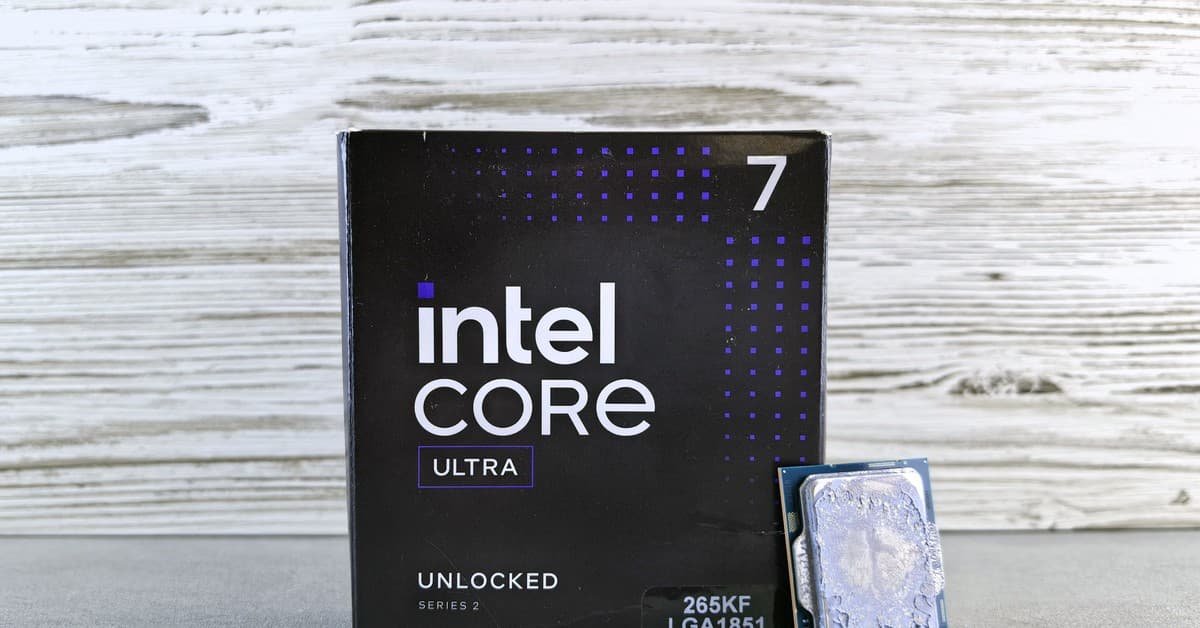
The Intel Core Ultra 7 270K Plus and Core Ultra 5 250K Plus, reviewed by TechRadar, present a dilemma similar to their predecessors in the Core Ultra 200S line. On paper, these processors boast impressive specs, particularly in multi-core performance, rivalling high-end AMD Ryzen processors like the Threadripper at a lower price point. But their gaming performance lags behind, making them less desirable for gamers despite their value proposition.
The primary appeal of these processors lies in their enhanced Arrow Lake architecture, featuring additional E-cores and faster boost clock speeds. The Core Ultra 7 270K Plus, priced at $299.99, matches the Core Ultra 9 285K in core count (24 total cores) but at a slower boost speed (5.5GHz vs. 5.7GHz) and nearly half the price. The Core Ultra 5 250K Plus ($219.99) increases its core count to 18 (6 performance + 12 efficient) from the 245K's 6p+8e configuration. Both support up to 7200MT/s DDR5 RAM, a significant upgrade from the baseline Arrow Lake-S chips.
Intel's 270K Plus: Overkill or Overdue?
Key enhancements include:
- Additional E-cores: 270K Plus (16 efficient cores), 250K Plus (12 efficient cores)
- Faster boost clock speeds: 5.5GHz for 270K Plus, unspecified increase for 250K Plus
- Expanded L3 cache (though not comparable to AMD Ryzen 3D V-Cache)
- Support for up to 7200MT/s DDR5 RAM
These upgrades position the processors favorably for non-gaming use cases, especially considering their lower prices. But the value diminishes for gamers due to subpar performance in gaming benchmarks.
Intel's New Ultra Chips: 20% Gains or Snake Oil?
In synthetic benchmarks like Cinebench R23, both processors excel. The 270K Plus nearly ties the Core Ultra 9 285K in multi-core performance and comes within 4% in single-core performance. Against AMD, the 270K Plus outperforms the Ryzen 7 9800X3D in multi-core by 83% and single-core by 9%, and slightly edges the Ryzen 9 9950X3D in multi-core. The 250K Plus shows a 25% multi-core and 6% single-core improvement over the 245K, and significantly outperforms its Ryzen 7 3D V-Cache competitors.
Gaming performance tells a different story. In Cyberpunk 2077 (1080p, Ultra, no RT/DLSS), the 250K Plus ties the Ryzen 5 9600X, but underperforms in Total War: Warhammer 3 by 16%. The 270K Plus shows mixed results, outperforming the Ryzen 7 9700X in Cyberpunk 2077 but underperforming the Ryzen 7 9800X3D and even the Ryzen 5 9600X in other benchmarks.
Value analysis reveals a disconnect between overall performance-per-dollar and gaming performance-per-dollar. While the 270K Plus offers 11% better overall value than the Ryzen 7 9700X, it delivers 14.5% lower gaming value. The 250K Plus fares slightly better but still lags behind the Ryzen 5 9600X in gaming value despite being the third-best in its generation for gaming performance-per-dollar.
Intel’s 270K versus AMD’s 7845: The Power Battle
AMD processors significantly outperform Intel in power efficiency, with the Ryzen 5 9600X and 9700X capping at 88W, compared to 163.5W for the 250K Plus and nearly 268W for the 270K Plus. Thermals also favor AMD, with the 270K Plus reaching a high of 90C, outdone only by the 250K Plus’s more moderate 69C.
"For non-gamers, these processors are absolutely the case; but for anyone who only wants to play games, the value proposition falls off," highlighting the processors' dual identity as powerful yet gaming-compromised options.
Verdict
Ultimately, the Intel Core Ultra 7 270K Plus and Core Ultra 5 250K Plus are phenomenal for creative work and multi-core tasks at their price points. But gamers should look elsewhere due to the processors' inability to compete with AMD’s offerings in gaming performance, despite their overall value. The review score of 6 reflects this dual nature, weighing strong productivity performance against weaker gaming capabilities.