About Life Is Strange Adaptation
Don't Nod's Life Is Strange, known for its impactful player choices leading to multiple endings, presented Kusama with a compelling challenge. Despite not being a gamer, she immersed herself in the project by watching playthroughs to grasp how player decisions influence the story's development.
"I'm not a gamer, but I did watch playthroughs to see how the story could develop with certain choices,"
Karyn Kusama
Kusama's initial skepticism towards video game adaptations dissolved upon encountering Life Is Strange. She confessed, "absolutely nothing appealed to me about doing a video game adaptation before I learned about Life Is Strange." The game's unique time-travel mechanic, allowing players to rewind time by just five minutes, intrigued her.
"It was such a cool game, and such an interesting set of questions,"
Karyn Kusama
Balancing Fidelity and Originality
Karyn Kusama, a director acclaimed for setting strong tones in TV series like Yellowjackets and The Terror (with Season 3 premiering on May 7), has embarked on a new challenge: directing the first two episodes of Prime Video’s Life Is Strange adaptation, based on the critically acclaimed game by Don't Nod. This project marks a departure from her usual genre, driven by a unique attraction to the game's core elements.
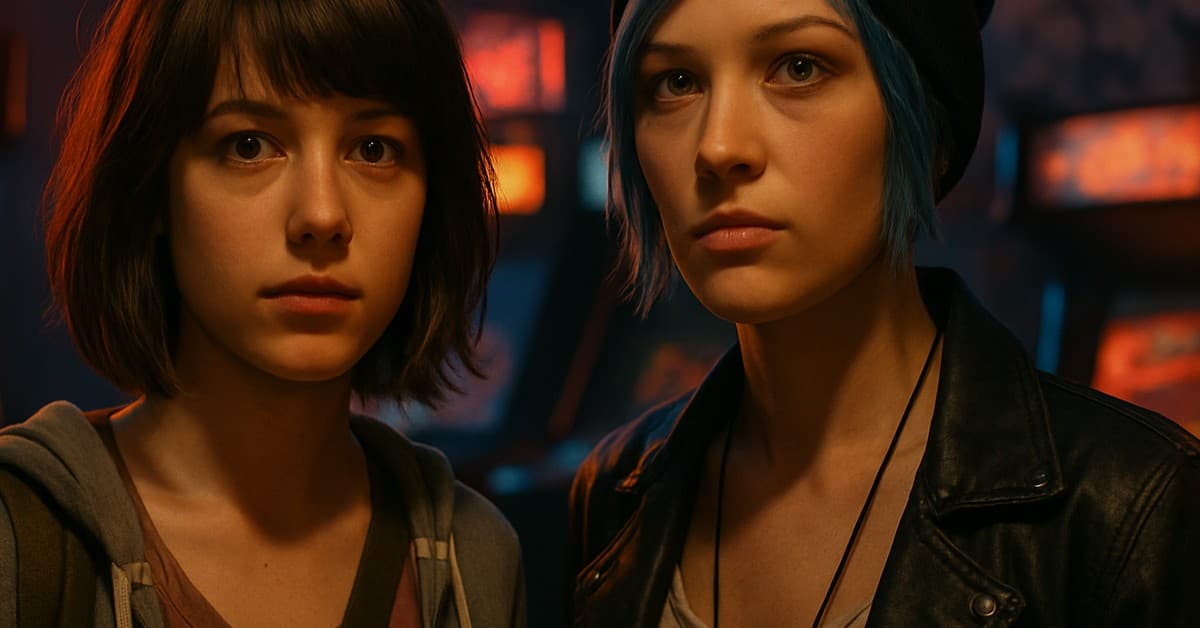
The adaptation promises to retain the game's signature time-bending narrative and Max's time-travel abilities, while exploring character depth for both gamers and non-gamers alike. As Kusama noted, "It's a fantastic adaptation of the game," highlighting her excitement about the time-travel aspects and the humanization of characters. The story follows Max (played by Tatum Grace Hopkins), a photography student who discovers her ability to rewind time, and her reunion with childhood friend Chloe (Maisy Stella) to investigate a disappearance, mirroring the game's premise.
"More than anything, I wanted to figure out how to honor what people love about the game while making it accessible to all the people like me who don’t generally game as a habit or as a hobby."
Karyn Kusama
The inclusion of the game's time-travel abilities and the dynamic between Max and Chloe suggests that key gameplay elements will be preserved. For players, this means the core identity of Life Is Strange will remain intact, even as the narrative is adapted for linear storytelling. Kusama's direction of the first two episodes sets the stage for how the series will navigate these challenges, potentially influencing the overall reception of the adaptation.
What This Means for Viewers and Gamers
Kusama's involvement and her thoughtful approach bode well for both fans of the game and new viewers. By focusing on the human aspects of Max and Chloe's relationship and the universal appeal of time travel, the series has the potential to attract a broad audience. Gamers can anticipate a faithful representation of the game's essence, while non-gamers will find an engaging, character-driven narrative. The success of this balance will be crucial, especially given the mixed reception of video game adaptations in the past.
Given Kusama's track record with complex, emotionally charged storytelling, there's reason to be optimistic about the adaptation's quality. Her admission of watching playthroughs to understand fan attachment to the game's choices suggests a genuine effort to cater to the existing fanbase. As the release date approaches, fans of Life Is Strange and Kusama's previous work will eagerly await the premiere to see how this beloved game translates to the screen.
Key Takeaways
- Karyn Kusama directs the first two episodes of Prime Video's Life Is Strange adaptation.
- The series stars Tatum Grace Hopkins as Max and Maisy Stella as Chloe, retaining the game's core characters and time-travel mechanic.
- Kusama watched game playthroughs to understand the narrative's player-driven development.
- The adaptation aims to balance game fidelity with broad, non-gamer appeal.
As the Life Is Strange adaptation progresses, attention will focus on how Kusama's vision unfolds, particularly in maintaining the game's emotional depth and player choice implications in a linear format. With its unique blend of time manipulation and character-driven storytelling, the series has the potential to resonate with both gamers and newcomers alike, making it one of the most anticipated video game adaptations in recent memory.