
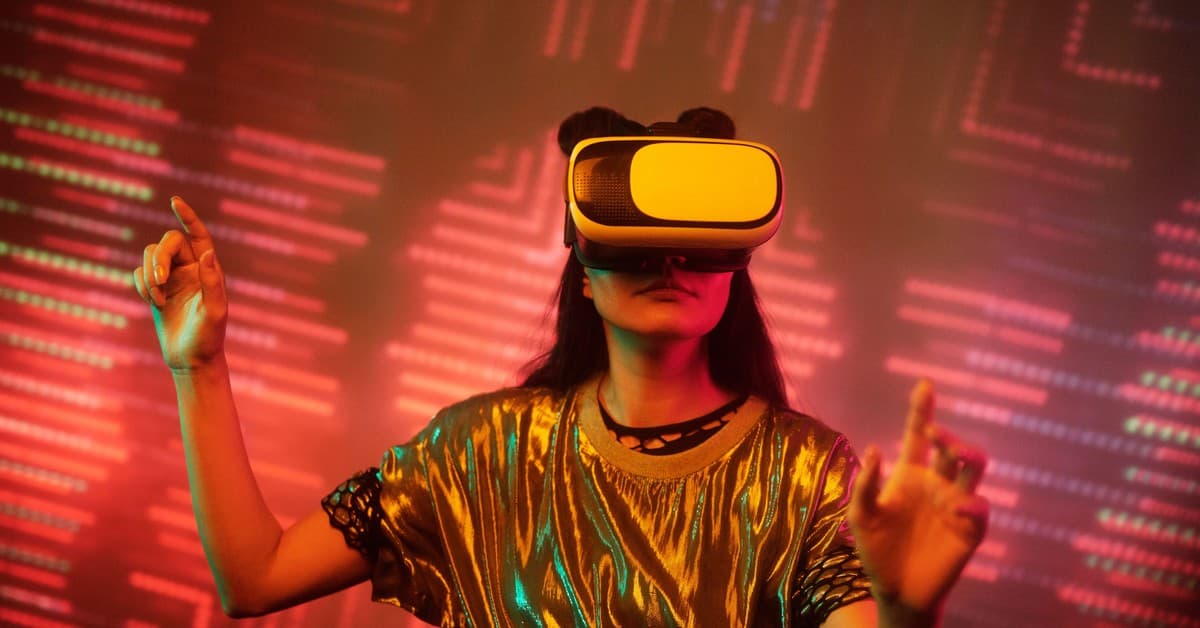
Meta is reportedly working on a premium set of VR glasses with a target price of roughly $1,300, positioning the device as a high-end portal for streaming Xbox games through the cloud. The information comes from a report by GameSpot, which cites sources familiar with the company's hardware roadmap. Unlike the Quest line, these glasses would not function as a standalone headset with onboard processing; instead, they would act as a wireless display that beams Xbox Game Pass titles directly from Microsoft's servers to the wearer's eyes. For players who have been waiting for a lightweight way to take their Game Pass library on the go, the concept is compelling — but the price tag immediately reframes the conversation.
The device is described as a pair of glasses rather than a bulky headset, suggesting a form factor closer to the Ray-Ban Meta smart glasses than the Quest 3. That distinction matters because it implies a radically different use case: this is not a mixed-reality computer you wear around the house, but a portable monitor for cloud gaming that happens to sit on your face. The glasses would connect wirelessly to the internet, pulling Xbox games via Xbox Cloud Gaming, meaning a stable, high-speed connection becomes a hard requirement rather than a nice-to-have. For anyone who has tried cloud gaming on a hotel Wi-Fi network or a congested coffee shop hotspot, the practical limitations are immediately obvious.
According to the reporting, the glasses would rely entirely on cloud streaming rather than local rendering, which means the heavy lifting happens in Microsoft's data centers and the glasses simply decode the video feed. This approach allows for a much slimmer profile since there is no need for a mobile system-on-chip, active cooling, or a large battery capable of powering native VR experiences. The trade-off is total dependence on network quality — latency, bitrate stability, and data caps all become factors that the hardware itself cannot mitigate. Players accustomed to the Quest's standalone library, where games run locally and work on an airplane, would face a fundamentally different set of constraints.
Microsoft would likely hook the glasses into its Xbox Cloud Gaming platform, which already runs on browsers, phones, tablets and a handful of smart TVs. Adding a specialized head‑mounted screen to that mix feels logical for the tech giant; it widens the pool of hardware that Game Pass can reach without forcing people to buy an Xbox console. At the same time, Meta sees the deal as a chance to roll out a high‑end device that flaunts its optics and display know‑how without building its own game library from scratch. Both firms stand to profit if the headset can actually deliver console‑grade play in a pair of glasses.
A $1,300 price point places these glasses in a category of their own — well above the Quest 3's $499 launch price and even above Apple's Vision Pro at $3,499 when considered as a single-purpose device. For that money, a player could buy a Quest 3, a mid-range gaming laptop, and still have budget left for a year of Game Pass Ultimate. The value proposition hinges entirely on whether the form factor — true glasses, not a headset — justifies a 2.6x premium over Meta's own flagship mixed-reality device. Early adopters with disposable income might say yes; the broader market almost certainly will not.
There is also the question of what happens when the internet cuts out. A standalone headset lets you keep playing downloaded games offline; a cloud-only glasses device becomes an expensive paperweight the moment your connection drops. That fragility is a significant drawback for a device marketed as portable. Players who travel frequently or commute on subways will find the use case severely limited compared to a Steam Deck, a ROG Ally, or even a phone with a controller clip. The glasses solve the screen-size problem for cloud gaming, but they introduce a connectivity dependency that no amount of optical engineering can fix.
If Meta and Microsoft bring this to market as described, it will serve as a fascinating proof of concept for cloud-first wearable displays — but it will not be a mass-market product at $1,300. The real significance lies in what it signals: both companies are betting that the future of Xbox gaming includes dedicated wearable hardware, and they are willing to experiment with form factors that prioritize portability over self-sufficiency. For the average Game Pass subscriber, the smarter play remains a Quest 3 or a handheld PC, both of which offer local play, broader software libraries, and offline capability at a fraction of the cost. The glasses may eventually matter when the price drops below $500 and 5G or Wi-Fi 7 makes cloud streaming genuinely reliable everywhere. Until then, they are a luxury experiment, not a practical alternative.
Key Takeaways
- Meta is reportedly developing premium VR glasses priced around $1,300 for streaming Xbox games via the cloud
- The glasses would function as a wireless display only, with no standalone processing or local game storage
- Xbox Cloud Gaming would be the sole content source, requiring a constant high-speed internet connection
- The device represents a cloud-first wearable experiment rather than a mass-market consumer product at launch
Meta has not commented publicly on the report, and no release window has been mentioned. The project could still change significantly or be shelved entirely before any official reveal. For now, the glasses remain a rumor — an expensive one — but they illustrate how seriously both companies are taking the intersection of cloud gaming and wearable displays. The next Quest hardware event or Xbox showcase will be the place to watch for any confirmation.