Star Wars: Galactic Racer arrives in 2026 as the first dedicated Star Wars racing game since the PlayStation 2 era, and developer Fuse Games has built something that feels both familiar and genuinely fresh. The game adopts a run-based roguelite structure with no mid-race restarts, a design choice that injects genuine tension into every corner and straightaway — you live with your mistakes, and the racing feels consequential in a way that rewind-heavy arcade racers rarely achieve. For players who have waited twenty years for a successor to Episode I: Racer, this is the resurrection the genre needed, even if it stumbles in sustaining momentum across a full campaign.
Quick Facts — Star Wars: Galactic Racer
| Developer | Fuse Games |
|---|---|
| Platform(s) | Microsoft Windows, Xbox Series X and Series S |
| Release Date | 2026-10-06 |
| Genre | racing video game |
| Score | 8 |
The campaign unfolds across three acts set after Return of the Jedi, casting you as Shade, a faceless racer climbing the Galactic Racing League ladder to dethrone the arrogant champion Kestar Bool. Between races, you explore fully realized paddocks in third-person, talking to mechanics and rivals. It's a clever narrative wrapper for a roguelite loop, and the authentic podracing sequences that punctuate the story land with the weight of a Top Gun: Maverick F-14 reveal or Bond retrieving his DB5 in Skyfall. The sound design alone — the scream of podracer engines, the crackle of energy binders — justifies the price of admission for Star Wars purists.
Here's a thinking process:
The garage branches into four vehicle types. You’ll find landspeeders, speeder bikes, skim speeders, and the classic podracers waiting to be built. Landspeeders are basically hovering cars; they’re sturdy, easy to handle, and my favorite when I need a steady pace. Speeder bikes shed some shell for raw speed, while skim speeders can lift off the ground to carve tight gaps. Every class feels distinct. Customization lets you dial in power‑ups, tweak parts, and stack perks, so each vehicle can morph to the racing style you love. The gadget system adds a second layer: before every lap you fire a button combo to set up your options. Those combos mirror real pre‑flight checks, culminating in a throttle rev that gives the engines a breathing start and makes the whole grid feel alive.
Upgrades arrive in random drops and via Hibi’s rotating stock mechanic, so your build can improve or suffer depending on luck as well as skill. The autopilot gadget is a reliable lifesaver on the most dangerous track sections. The roguelite format forces a full reset between tours – your speeder is dismantled. You can rebuild its exterior and baseline stats, but the unique upgrades that gave it personality disappear unless you get them again. For players who enjoy crafting a machine over just completing a campaign and who become attached to its quirks, this reset
Here's a thinking process:
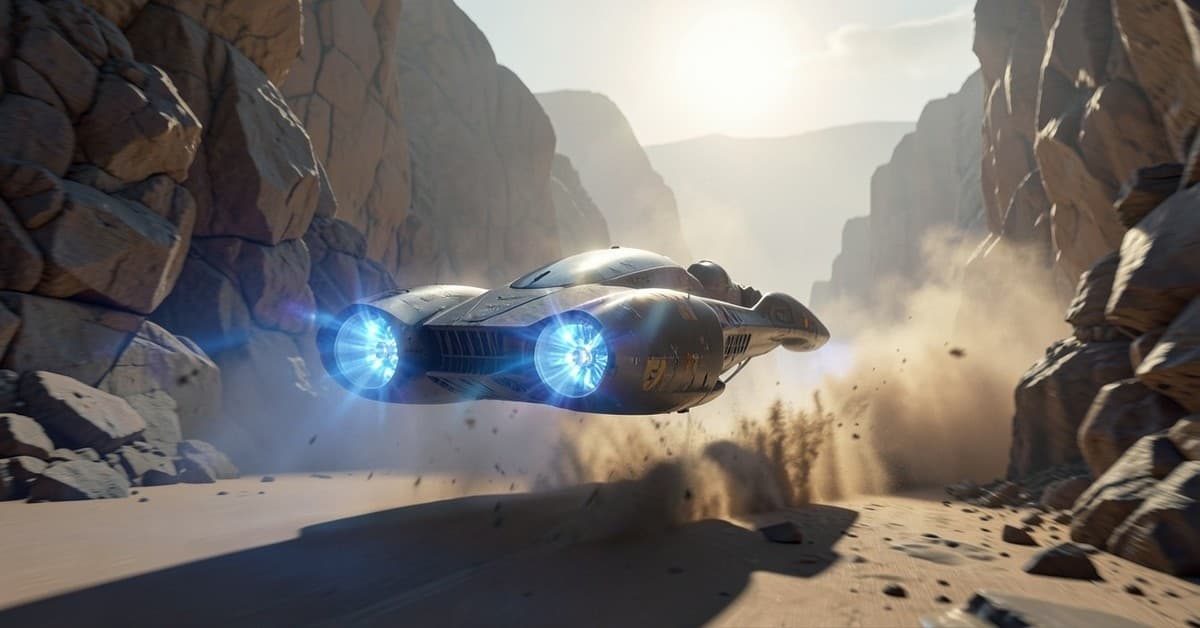
The planet roster — Jakku, Crait, Lantaana, Sentinel I — delivers exceptional environmental variety. Jakku's war wreckage graveyard shifts from open dune blasts to cramped tunnels inside half-destroyed capital ships. Crait's salt flats whip up red mineral clouds under your repulsors. Lantaana weaves dense forest with lava tubes. Sentinel I forces precision driving over acidic pools on narrow causeways. Every track asks questions of your build and driving, and the procedural shuffling, reverse layouts, and branching championship paths keep individual runs feeling distinct — at least for the first few tours.
The audio design deserves particular praise. Podracer engines retain their iconic, throaty scream from Episode I: Racer, while the newer vehicle classes get their own distinctive audio signatures. Takedowns trigger a slow-motion camera that lingers on the spectacle of speeders spearing into obstacles and shattering into thousands of shards — a clear Burnout DNA marker that makes sense given Fuse Games' founders' roots at Criterion. The game runs cleanly on Xbox Series X|S and Windows, targeting high frame rates that make the speed readable even in chaotic multi-class fields.
Here's a thinking process:
The fundamental problem is planet count. Four primary worlds simply isn't enough to sustain a roguelite campaign that demands repeated runs. Track shuffling, reverse layouts, and branching event orders help, but the backdrops remain identical — you're racing the same canyons, the same salt flats, the same acidic causeways on tour five that you raced on tour one. The fatigue sets in faster than the procedural variety can mask it. Two or three additional planets would have dramatically extended the campaign's freshness window.
The vehicle scrapping mechanic compounds this. Losing a build you've tuned over hours to a dice roll between tours feels punitive rather than challenging, especially when Hibi's randomized stock may not offer the upgrades that suited your style. The game acknowledges this by granting stat points based on your previous speeder's upgrade level, but the resulting machine never behaves identically. For a genre built on mastery and consistency, this friction between roguelite philosophy and racing game expectations is the review's central tension — and the source of its most frustrating moments.
Pros
- Tense, meaningful roguelite campaign with no mid-race restarts
- Excellent track design across varied Star Wars planets
- Deep vehicle customization across four distinct classes
- Authentic podracing representation with superb sound design
- Explorable paddocks build a living world between races
- Clever gadget priming sequences add pre-race occasion
Cons
- Insufficient planet roster leads to repetitive backdrops across runs
- Vehicle scrapping between tours prevents long-term attachment
- Randomized upgrade drops feel like dice rolls rather than progression
- No splitscreen multiplayer despite 12-player online support
The Bad Gamer Take
Fuse Games’ Star Wars: Galactic Racer slashes the arcade‑style safety net with a no‑rewind roguelite that feels both nostalgic and brutal. They will tighten the campaign pacing in upcoming patches because early playtests revealed that the length of each act stretches player endurance. WATCH how the next update trims act length and balances the penalty system.
Star Wars: Galactic Racer is the best Star Wars racing game in twenty years, and it's not particularly close. Fuse Games has built a credible, customizable, and genuinely tense racer that respects the franchise's vehicular legacy while pushing the genre into roguelite territory. The paddock exploration, gadget priming, and procedural championship structure all feel like ideas that should become genre standards. But the planet count is a self-inflicted wound — a game this good at making you want to run another tour deserves a galaxy big enough to keep those tours surprising. If you can tolerate seeing Jakku's wreckage for the tenth time, the racing underneath is exceptional. If you need variety to stay invested, the repetition may wear you down before you reach Kestar Bool.
Sources
The fact that these gadgets are primed just prior to race starts with a series of specific button presses, like pre-flight checks, is a very clever touch that gives waiting on the grid a tangible sense of occasion.
Frequently asked questions
What is the setting of Star Wars: Galactic Racer?
Galactic Racer is set in the aftermath of Return of the Jedi, where the art of podracing is a distant relic of a bygone era.
What vehicle classes are available in Star Wars: Galactic Racer?
The bulk of the Galactic Racing League garage consists of landspeeders, speeder bikes, and a new vehicle type called skim speeders.
Does Star Wars: Galactic Racer allow mid-race restarts?
Galactic Racer’s main hook is its run-based, roguelite-inspired campaign, which comes with a strict philosophy of no mid-race restarts.
What happens when you fail a tour in Star Wars: Galactic Racer?
Failing at any point means you’ll have to start a whole new one over again.
Can you save and come back later in Star Wars: Galactic Racer?
Yes, you can still pause and, yes, you can still save and come back later.