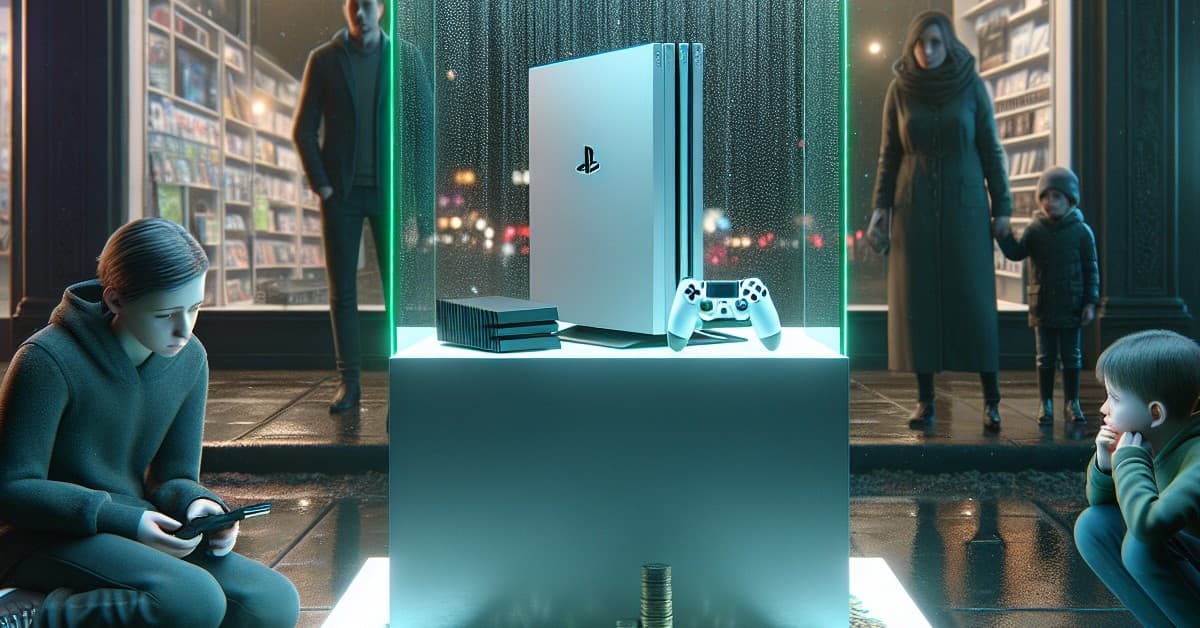
Mid-Gen Prices Are Rising, Not Falling
Consoles used to get cheaper halfway through a generation. Instead, we’re staring at a $900 PS5 Pro, a $650 disc-based PS5, and an Xbox Series X that now climbs to $650 if you want an optical drive. That’s not a blip. It’s a reversal of the basic console contract that made this hobby grow.
For decades, the rhythm was simple: launch at a premium, cut costs as components got cheaper, expand the audience, then reset with a new box. Prices fell while libraries swelled, and the bulk of sales landed in the back half. That loop broke this generation, thanks to a messy mix of policy shifts, AI-hungry data centers chasing the same chips, and old-fashioned pricing power from platform holders.
Microsoft raised hardware prices twice last year. The “more affordable” Xbox Series S now starts at $400, while the disc-less Series X sits at $600 and the model with a Blu-ray drive hits $650. Sony followed a similar path. The PS5 now starts at $600 for the all-digital unit, climbs to $650 with a drive, and tops out at $900 with PS5 Pro. None of this is normal for year four of a generation.
Nintendo isn’t escaping this trend either. The new Switch successor launches at $450, even as the original Switch’s $300 debut would be roughly $400 in today’s dollars. PC players don’t get a break: GPU prices are trending up, and tighter supplies of storage and RAM push builds higher still. Wherever you look, the entry fee keeps rising.
Why This Squeeze Matters
Families used to tell excited kids, “Wait for the price to drop.” That safety valve is gone. When the baseline is $600, the question becomes simple: who’s joining the hobby next? Many parents will prioritize a phone, not a console, because a phone feels like a need, not a want.
That funnel pushes younger players toward mobile-first ecosystems, where something like Roblox becomes the default on-ramp. Roblox has a role and can be a solid learning tool, but it shouldn’t be the only reliable gateway for new players. If traditional gaming keeps pricing people out, publishers lose the broad, diverse audiences that console and PC libraries cultivate best.
What Platform Holders Can Actually Do
The burden sits with Sony, Microsoft, and Nintendo to bend costs down over time. Nintendo has a clear path: build a Switch 2 Lite that trims $100 by shrinking the screen, cutting the dock, and using a smaller battery. That single move would put new hardware back in reach for far more households.
It’s tougher for Sony and Microsoft, where higher-end silicon sets a stubborn floor. The likely outcome is a longer cross-generation overlap. Expect PS5 to become the de facto budget PlayStation when PS6 lands, with most games targeting both for years. Microsoft is already telegraphing a split: its next-gen Project Helix is pitched as “very premium, very high end,” which implies Series X slides into the entry role. That approach keeps people inside the ecosystem, but it forces developers to serve aging hardware longer.
Slower Progress May Be the New Normal
With extended overlap, technical leaps arrive more slowly as studios support older boxes well past their usual sunset. Budgets aren’t shrinking either; chasing 4K/60 with bigger assets and longer schedules keeps costs high. If we’re destined for gentler progress, it should be because technology has matured, not because sticker shock boxed out the audience.
There’s still room to course-correct. Aggressive promos during holidays, modular add-ons priced fairly, refurbished programs with warranties, and honest, sustained price cuts late in the cycle would signal that platform holders value growth over short-term margins. If hardware keeps climbing and never comes down, the tent won’t get bigger, and the next wave of players will build habits somewhere else. Console makers can see that future from here; the smart move is to lower the drawbridge before the crowd stops waiting outside.