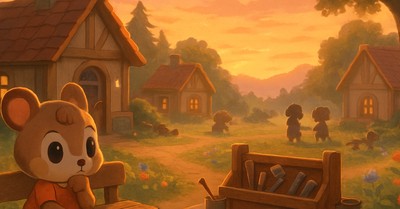

Ubisoft has reportedly cancelled Alterra, the unannounced life simulation game Ubisoft Montreal had been building for nearly three years. Insider Gaming says the team was told on Tuesday, April 21st, and the project mixed aspects of Animal Crossing with Minecraft's voxel building. That matters because players who like cozy life sims with construction systems may have just lost one of Ubisoft's more unusual experiments before it ever surfaced publicly.
The report says staff working on Alterra can move to other Ubisoft projects, and no immediate layoffs have followed. Insider Gaming also says it remains unclear how unnamed support studios that worked on the game might be affected. For players, that suggests Ubisoft has cut the project itself, not the people around it — at least for now.
About Alterra
Alterra was an unannounced life simulation game in development at Ubisoft Montreal. According to the report, Patrick Redding headed the project and Fabien Lhéraud served as lead producer. Those names matter because they point to a team with real pedigree, even if Ubisoft never fully introduced the game to the public.
Redding previously served as creative director on Gotham Knights, and he also led the campaign for 2013's Splinter Cell: Blacklist. The report says he was also a story designer on Far Cry 2. That background helps explain why Alterra sounded more ambitious than a simple farming or decorating sim; Ubisoft had put experienced hands on a project that tried to mix social play with voxel building.
Why Ubisoft Pulled The Plug
When IGN asked about the report, a Ubisoft spokesperson did not address Alterra directly. Instead, the company pointed to its broader project review process and said:
As part of our portfolio management approach and evolving creative house-led model, we continuously assess projects at every stage of development to ensure alignment with our strategic priorities, quality ambitions, and long-term market potential. Projects that no longer meet these expectations may be discontinued.
That statement gives Ubisoft room to cancel projects without naming them, and it fits the company's current habit of trimming work that no longer matches its priorities. For players, the practical effect is obvious: even a game that has spent nearly three years in development can disappear if it doesn't fit the publisher's long-term plan. It's a cold message, but it's also a clear one.
According to the report, the cancellation has not triggered any immediate layoffs. Ubisoft has instead made the team available for transfer to other games the publisher is currently making. That softens the blow for developers, though it leaves support studios in limbo because Insider Gaming says their status remains unclear.
What This Means For Players
Alterra's cancellation is disappointing because the pitch had a real hook. A life simulation game that blends Animal Crossing with Minecraft's voxel building could have given players a slower, more creative alternative to the usual live-service churn. Instead, Ubisoft has once again shown that internal portfolio decisions can kill a project long before players get a chance to judge it for themselves.
Last month, Ubisoft's cuts already hit Red Storm, where the studio was told it would no longer make games and 105 staff were laid off. Alterra now joins that run of cuts and shutterings, which suggests Ubisoft is still tightening its slate hard. For players, that means fewer surprises from the publisher and more evidence that even in-progress games can vanish if the business case changes.
Key Takeaways
- Ubisoft reportedly cancelled Alterra after nearly three years of development.
- Insider Gaming says the team was told on Tuesday, April 21st.
- The game mixed aspects of Animal Crossing with Minecraft's voxel building.
- Ubisoft said projects that no longer fit its strategic priorities may be discontinued.
- No immediate layoffs reportedly followed the cancellation, though support studios may be affected.
What happens next will depend on whether Ubisoft reshuffles more teams or keeps cutting projects behind the scenes. For now, Alterra is another reminder that even a promising idea with a clear hook can disappear quietly when a publisher changes course.