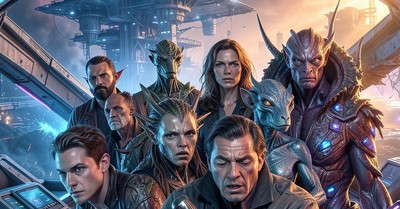

At last year’s Game Awards 2026, the announcement of Star Wars: Fate of the Old Republic by Arcanaut Studios, with none other than Mass Effect director Casey Hudson at the helm, sent ripples through the gaming community. What was equally surprising was the funding source behind this ambitious project: a $100 million private investment from GreaterThan Group, founded by NetEase alum Simon Zhu. This move is part of Zhu’s strategy to support projects previously abandoned by NetEase, including Hudson’s former venture, Humanoid Origin, and David Vonderhaar’s BulletFarm, reflecting a broader trend of rescuing promising titles from funding uncertainties.
The game’s development philosophy stands out for its rejection of current industry trends. Notably, Star Wars: Fate of the Old Republic will not utilize Generative AI, a decision rooted in Hudson’s personal stance on the technology.
"I just find AI to be creatively soulless,"
Casey Hudson, Mass Effect director
shared in an interview with Bloomberg, further expressing skepticism about its utility in the game development process. This approach contrasts sharply with the growing reliance on AI in game development, where it's often used for content generation, dialogue writing, or even entire game creation. Hudson's stance suggests a commitment to human-driven creativity, emphasizing the value of personal touch over automated solutions.
About Star Wars: Fate of the Old Republic
Developed by Arcanaut Studios and led by the visionary director Casey Hudson, Star Wars: Fate of the Old Republic promises a unique gaming experience within the Star Wars universe. Backed by a substantial yet targeted $100 million investment from GreaterThan Group, the studio adopts a lean development approach, intentionally avoiding the bloated team sizes that often characterize AAA game productions. This strategy is a deliberate response to the challenges faced by Hudson's previous project, Humanoid Origin, which suffered from over-reliance on large teams and external funding.
The decision to keep the team lean aligns with Hudson’s broader philosophy on game development, as evidenced by his comment,
"Bigger isn’t necessarily better."
Casey Hudson, Mass Effect director
This mantra extends to the game’s anticipated playtime, which will clock in at less than 100 hours, a deliberate choice to ensure players can fully experience and complete the game without the daunting commitment required by titles like Crimson Desert. Unlike Crimson Desert, which launched with an overwhelming amount of content, Hudson aims for a more focused narrative and gameplay loop, suggesting that Star Wars: Fate of the Old Republic will prioritize depth over breadth.
Focusing on People, Not AI or Excessive Funding
The rejection of Generative AI and the emphasis on a lean team are not isolated decisions but part of a broader development ethos shared among the GreaterThan Group’s supported studios. David Vonderhaar, of BulletFarm, echoes this sentiment, highlighting the importance of people over capital in determining a game’s success.
"Money doesn’t make it good. People make it good."
David Vonderhaar, BulletFarm
This approach is particularly notable given the current gaming landscape, where the allure of AI-driven development and massive budgets often dominates headlines. By contrast, Arcanaut Studios and its counterparts are pioneering a model that values intimacy and human creativity, suggesting that the future of gaming might not lie solely in technological advancements but in a balanced approach that leverages the best of both human ingenuity and strategic technological integration.
What This Means for Players
The development strategy of Star Wars: Fate of the Old Republic signals a promising shift for players weary of bloated, unfinished, or soullessly generated content. By opting for a lean, AI-free approach, Arcanaut Studios commits to delivering a polished, immersive Star Wars experience tailored for completion and enjoyment rather than endless grind or superficial depth. While the lack of AI might limit certain aspects of content generation, Hudson's team believes this trade-off is worth it for the sake of authenticity and player satisfaction.
Furthermore, the game’s less-than-100-hour gameplay promise is a beacon for gamers seeking meaningful, consumable experiences in an era of overwhelming game lengths. This strategic decision could set a precedent for the industry, encouraging a rethink of what constitutes a satisfying gameplay experience. Players can expect a tightly wound narrative and carefully crafted gameplay mechanics, designed to be fully explored without requiring an excessive time commitment.
Looking Ahead
With a release slated for before 2030, Star Wars: Fate of the Old Republic is poised to make a significant impact on the gaming landscape. As the development progresses, keen eyes will be on how successfully Arcanaut Studios navigates its chosen path, potentially paving the way for a new standard in game development that prioritizes creativity, focus, and the human touch. The success of this title could influence a wider industry shift, encouraging more studios to reconsider their reliance on AI and massive teams.
For now, the gaming community waits with bated breath for more insights into this promising Star Wars adventure, hopeful that the studio’s visionary approach will yield a title that not only lives up to the Star Wars legacy but also redefines the boundaries of modern game development.
Key Takeaways
- Star Wars: Fate of the Old Republic avoids using Generative AI in its development.
- Backed by a $100 million private investment from GreaterThan Group.
- Adopts a lean development approach to ensure a focused, less-than-100-hour gameplay experience.
- Scheduled for release before 2030.