
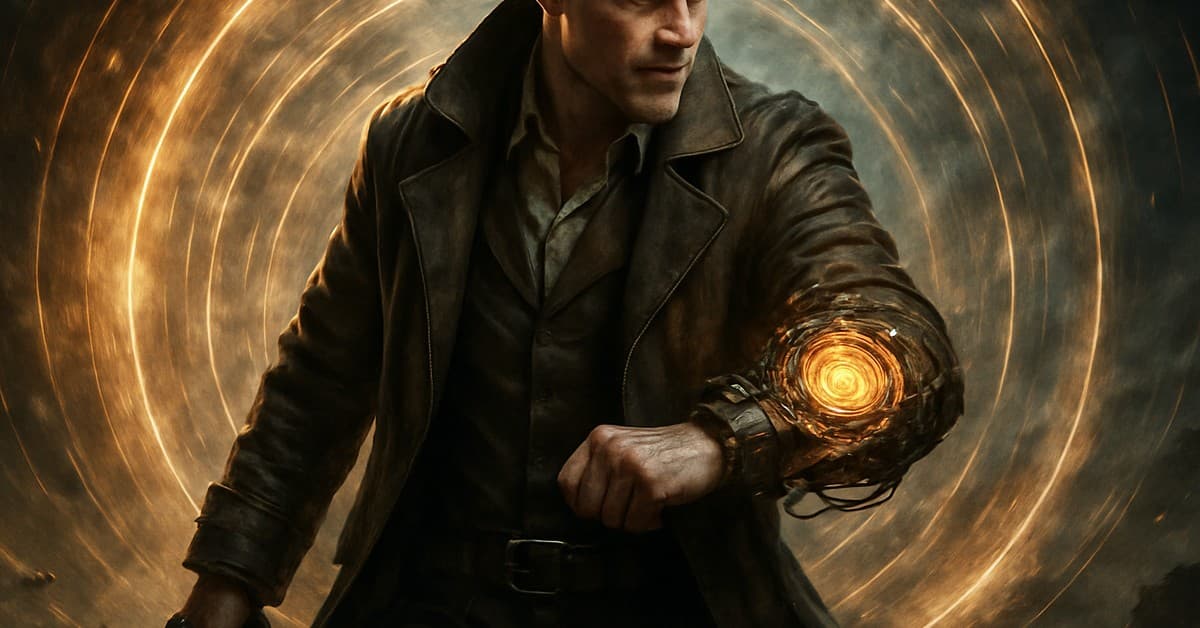
Fallout co-creator Tim Cain recently delved into the archives of his career, sharing with his YouTube audience a fascinating proposal for a game that never saw the light of day: Time Walker, a first-person time-travel RPG of unprecedented ambition. Conceived alongside fellow RPG veteran Jason Anderson at Troika, Time Walker promised a gameplay experience that was as daring as it was complex, allowing players to traverse through time, alter history, and face the consequences of their actions in a deeply interconnected narrative.
Quick Facts — Time Walker
| Developer | Troika |
|---|---|
| Platform(s) | Xbox |
| Genre | First-person RPG |
The core premise of Time Walker revolved around the player's role as a "temporal agent" tasked with ensuring the existence of their reality amidst the interference of enemy agents bent on rewriting history. With a staggering 15 different time periods to explore, players would embark on missions that not only included the assassination of historical figures but also more nuanced interventions, such as giving a specific doll to a young girl on her birthday, illustrating the butterfly effect in action. Cain humorously introduced the game's key features, stating,
"Feature bullets, these are great. One, visit 15 different time periods. Two, meet interesting historical figures. Three, kill them."
About Time Walker and Its Developers
Time Walker was the brainchild of Tim Cain and Jason Anderson, both renowned for their work on seminal RPGs like Fallout and Vampire: The Masquerade – Bloodlines. Although the game was intended for release on the Xbox, it never progressed beyond the proposal stage. Interestingly, Jason Anderson is currently involved with InXile as the principal designer on Clockwork Revolution, another first-person time-traveling RPG, though the extent of Time Walker's influence on this project remains speculative.
The game's design was set to invert traditional RPG progression. Instead of growing stronger with powerful items, the game would become easier as the timeline destabilized, granting access to anachronistic, high-tech gear. Conversely, restoring temporal order would revert the player's arsenal to more standard, period-appropriate weaponry, emphasizing the delicate balance between progression and the game's central time-manipulation mechanic.
- Time Travel Across 15 Eras: Players would navigate through vastly different historical settings, from ancient civilizations to potentially futuristic landscapes, each with its challenges and opportunities for altering the course of history. For example, assassinating a pharaoh in ancient Egypt or preventing the invention of time travel would significantly impact the timeline's stability. - Assassination of Historical Figures: This feature wasn't just about eliminating targets; it was about understanding the ripple effects of such actions on the broader timeline, potentially leading to paradoxes that players would need to resolve or exploit. - Paradox Creation: A unique aspect allowing players to create temporal paradoxes, such as preventing the invention of time travel, which would pose interesting narrative and gameplay challenges, including the risk of the player's reality "poofing out of existence" if contradictions became too severe. - Open-Ended Skill Tree: Inspired by CRPGs, this system would offer multiple solutions to each mission, encouraging replayability and strategic depth. Players could specialize in stealth for silent assassinations or focus on combat for more direct approaches. - Online Multiplayer: Though details are scarce, the inclusion of online multiplayer suggested a innovative approach to cooperative or competitive time manipulation, potentially allowing players to work together to stabilize the timeline or compete to alter history in their favor.
What This Means for Players and the Industry
The proposal for Time Walker highlights the visionary thinking prevalent in the early 2000s gaming industry, particularly among veterans like Tim Cain and Jason Anderson. For players, Time Walker promised an experience that blended deep RPG elements with the limitless possibilities of time travel, offering a level of complexity and replay value that was ahead of its time. The game's failure to materialize leaves a "what if" in the minds of gamers, especially considering the current market's appetite for innovative, narrative-driven RPGs.
The parallel with Clockwork Revolution, though intriguing, serves as a reminder of the ephemeral nature of game development proposals. Time Walker's ambitious design, including its dynamic progression system and the risks of temporal instability, would have appealed to fans of strategic depth and narrative experimentation. Its absence from the gaming landscape is a reminder of the challenges faced by innovative projects in securing development and publication.
Legacy and Contemporary Relevance
Though Time Walker never came to fruition, its concept resonates strongly with modern gaming trends. The success of time-travel narratives in gaming and other media underscores the enduring appeal of Cain's proposal. For enthusiasts of RPGs and time-travel fiction, Time Walker stands as a fascinating footnote in gaming history, a glimpse into what could have been a landmark title in the genre.
As the gaming industry continues to evolve, with more developers embracing complex, narrative-driven experiences, Time Walker serves as a precursor to the ambitions of contemporary game design. Its influence, though indirect, can be seen in the thematic and mechanical explorations of more recent titles, emphasizing the lasting impact of innovative ideas, even those that never see the light of day.
Conclusion and Looking Forward
Tim Cain's sharing of Time Walker is more than a nostalgic glance into the past; it's a window into the evolutionary process of game design and the constant pursuit of innovation within the industry. While we can only speculate on how Time Walker would have been received, its reveal sparks an interesting dialogue about the games that could have been and how they might influence future developments. As the industry moves forward, embracing complex narratives and gameplay mechanics, the legacy of proposals like Time Walker reminds us of the power of visionary thinking in shaping the future of gaming.
Key Takeaways
- Time Walker was a proposed first-person time-travel RPG by Tim Cain and Jason Anderson.
- Featured travel through 15 different time periods and the ability to assassinate historical figures.
- Included paradox creation, an open-ended skill tree, and online multiplayer.
- Never developed beyond the proposal stage, intended for the Xbox.
- Jason Anderson is now working on Clockwork Revolution, a thematically similar game.