
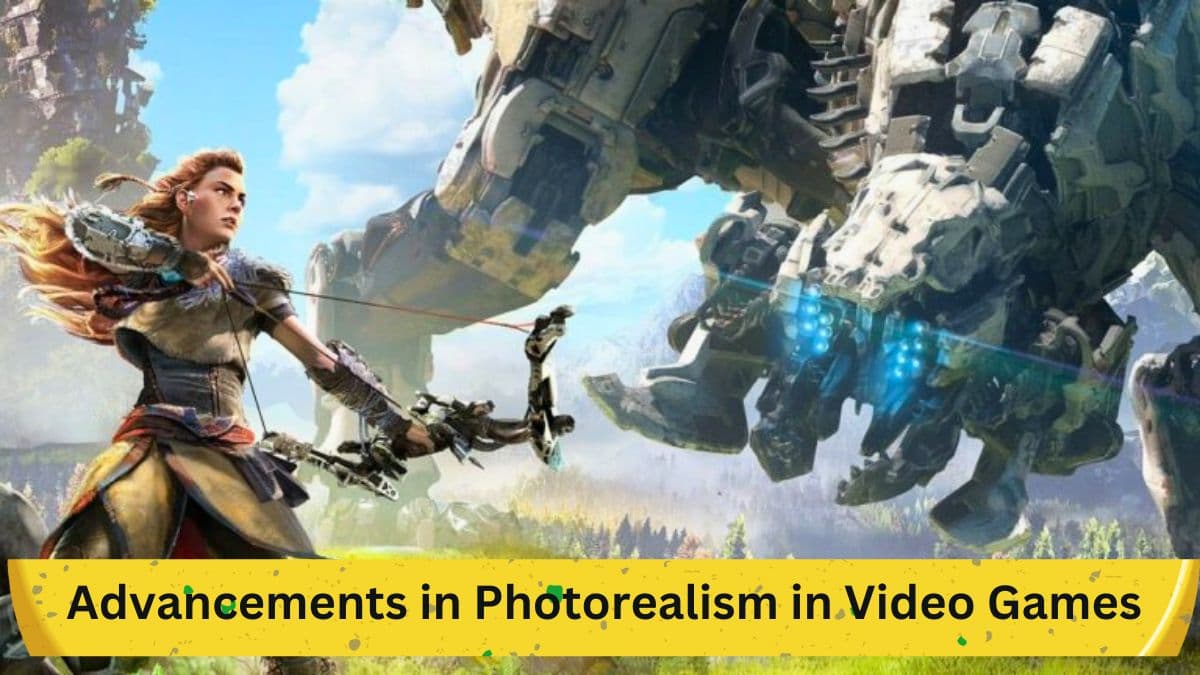
In the sphere of video game development, Unreal Engine has been a constant driver of innovation. With the recent introduction of Unreal Engine 5, a new standard for photorealistic graphics in games is set. This article delves into the features that make such realism possible and explores how advancements in Unreal Engine are democratizing the game development process.
Unreal Engine: The Pioneer
Unreal Engine first made its mark in 1998 with the game Unreal, a first-person shooter that set the industry alight with advanced visual effects, more detailed textures, and smarter NPCs (Non-Playable Characters). UnrealScript, a scripting language introduced alongside, enabled developers to bring creative game design to the fore.
Though revolutionary in its time, the original Unreal Engine pales in comparison to its later versions in terms of photorealistic capabilities. Subsequent iterations of the engine have powered a multitude of titles, including Tom Clancy's Splinter Cell: Chaos Theory (Unreal Engine 2), Batman: Arkham Knight (Unreal Engine 3), and Observer (Unreal Engine 4).
Breakthrough Features in Unreal Engine 5
Nanite: Rethinking Object Rendering
One significant feature in Unreal Engine 5 that elevates the graphical quality is Nanite. This system is designed to display extremely high-fidelity visuals while optimizing performance. Objects in a game world are composed of tiny triangles that require computational resources to render. To manage this, game developers often use the "Level of Detail" (LOD) strategy, whereby less detailed versions of objects are shown as the player moves farther away from them. Nanite automates this process, dynamically adjusting the resolution of 3D models based on the player's position, thus eliminating manual pre-configuration.
Lumen: Realistic Lighting
For a game to be photorealistic, proper lighting is crucial. Unreal Engine 5 employs a technology called Lumen to solve this challenge. Lumen automatically calculates how light from various sources would naturally illuminate an environment in real-time. This feature eliminates the need for the traditionally manual and static process of lighting configuration.
Procedural Content Generation
Another noteworthy development in Unreal Engine 5 is its refined procedural content generation. This technology allows the game engine to populate a virtual world with objects based on parameters set by the developers. The automation of this process saves substantial time and resources, making the task of level editing more efficient.
Democratizing Game Development
One of the most significant impacts of Unreal Engine 5 is its role in leveling the playing field for small game studios and independent developers. While big-budget studios like Electronic Arts and Ubisoft have long been capable of creating photorealistic digital worlds, the sophistication and automation provided by Unreal Engine are now making it easier for smaller teams to compete. According to a YouGov survey, indie games have gained increasing popularity among American gamers from 2021 to 2022.
The Relevance Beyond Gaming
The benefits of Unreal Engine extend beyond the realm of gaming. The technology has found applications in the film industry as well. While big-budget films will continue to set the standard for computer graphics, Unreal Engine is enabling independent filmmakers to create compelling visuals that were nearly unattainable a decade ago.
Conclusion
Unreal Engine 5 has pushed the envelope in video game graphics, bringing us closer than ever to a photorealistic future. The engine not only introduces breakthrough features like Nanite and Lumen but also streamlines the development process, making it easier for smaller studios and independent developers to produce high-quality digital worlds. With the boundaries of realism continuously being pushed, the future of video game development is set to be as exciting as it is promising.


