Computing has come a long way since the first computer was invented in the 1940. From the room-sized mainframes of the past to the ultra-powerful smartphones of today, computing technology has transformed the way we live, work, and communicate.
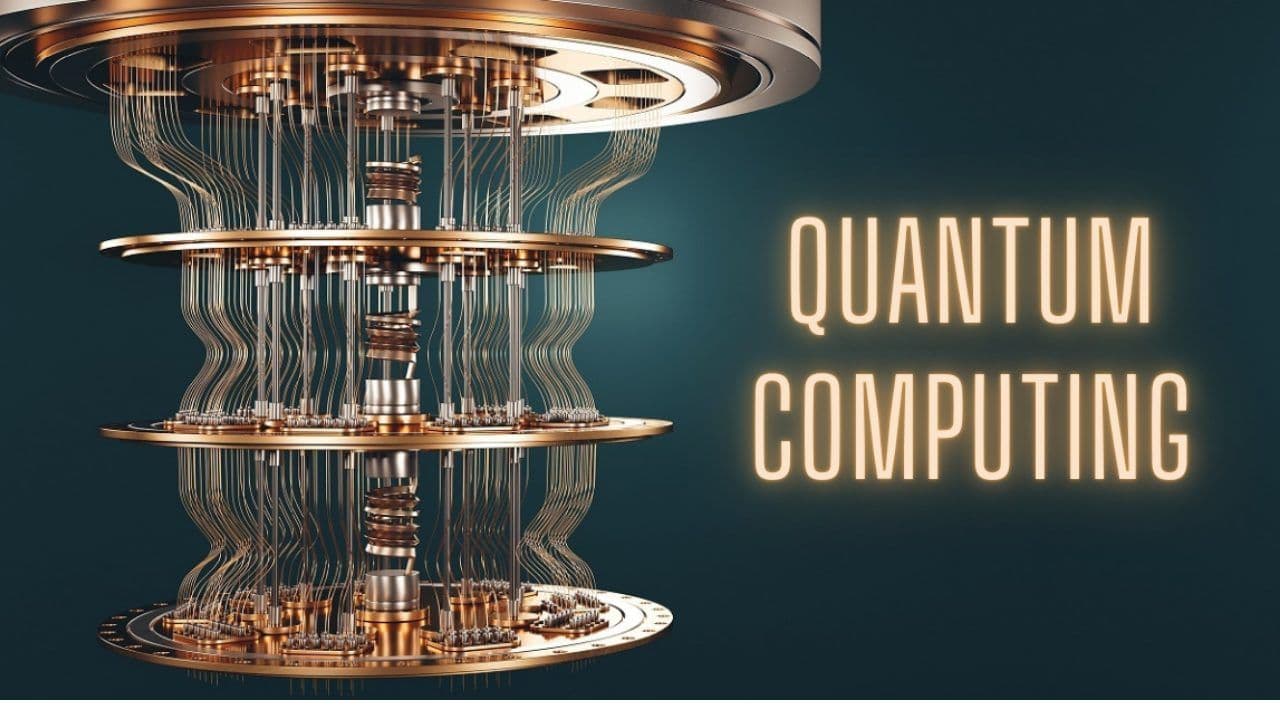
But there is a new era of computing on the horizon, and it's powered by quantum mechanics. Quantum computing promises to revolutionize computing by harnessing the power of quantum mechanics to solve problems that are currently impossible with classical computers.
What is Quantum Computing?
Quantum computing is a type of computing that uses quantum mechanics to process information. Classical computers use binary digits (bits) to store and process information, which can either be 0 or 1. Quantum computers, on the other hand, use quantum bits (qubits), which can exist in multiple states at the same time.
This property of qubits, called superposition, allows quantum computers to perform certain computations exponentially faster than classical computers. Quantum computers can also take advantage of entanglement, a phenomenon where the state of one qubit is dependent on the state of another, to perform certain computations even faster.
Breakthrough Research: A New Milestone
While quantum computing is still in its infancy, breakthrough research is bringing us closer to realizing its potential. Recently, a team of researchers from the University of Chicago and Argonne National Laboratory made a significant breakthrough in quantum computing.
The team was able to create a stable, two-dimensional array of qubits, which is a major step towards building a practical quantum computer. The array was made up of 64 qubits, which is a significant increase from previous experiments that used only a few qubits.
The researchers were able to create the qubit array using a material called "silicon carbide," which is a semiconductor material commonly used in the electronics industry. The qubits were created by implanting tiny defects into the material, which can trap and store electrons in a way that can be used to encode quantum information.
Future Applications of Quantum Computing
The potential applications of quantum computing are vast and varied. Some of the most promising applications include:
Cryptography: Quantum computers are capable of breaking many of the encryption algorithms that are currently used to secure online communications. However, they can also be used to create new encryption algorithms that are more secure than current ones.
Drug Design: Quantum computing can be used to simulate the behavior of molecules, which could greatly accelerate the drug discovery process.
Optimization: Many optimization problems, such as finding the shortest route between two points, are extremely difficult to solve with classical computers. Quantum computing can potentially solve these problems much faster.
Machine Learning: Quantum computing could be used to develop more powerful machine learning algorithms that can handle large and complex datasets.
Challenges and Limitations
Despite the promising potential of quantum computing, there are still many challenges and limitations that must be overcome. One of the biggest challenges is building a practical quantum computer that can perform useful computations.
Current quantum computers are still very small and can only perform simple computations. Building a practical quantum computer with enough qubits to perform useful computations is a major engineering challenge. Another challenge is dealing with the effects of decoherence, which is the loss of quantum information due to interactions with the environment.
Another limitation of quantum computing is that not all problems can be solved faster with a quantum computer. Quantum computers are particularly good at solving certain types of problems, such as optimization and simulation, but they may not be any faster for other types of problems, such as basic arithmetic.
Final Thoughts: Quantum Computing is the Future
Quantum computing is still in its early stages, but breakthrough research is bringing us closer to realizing its potential. The recent milestone achieved by the team at the University of Chicago and Argonne National Laboratory is a significant step towards building a practical quantum computer.
The potential applications of quantum computing are vast and varied, and the technology has the potential to revolutionize computing and open up new possibilities in technology. However, there are still many challenges and limitations that must be overcome before quantum computing becomes a reality.
In conclusion, quantum computing is the future of computing, and breakthrough research is bringing us closer to realising its potential. The possibilities for quantum computing are endless, and the technology has the potential to revolutionise the way we live, work, and communicate. While there are still challenges and limitations that must be overcome, the future of computing is looking brighter than ever before.