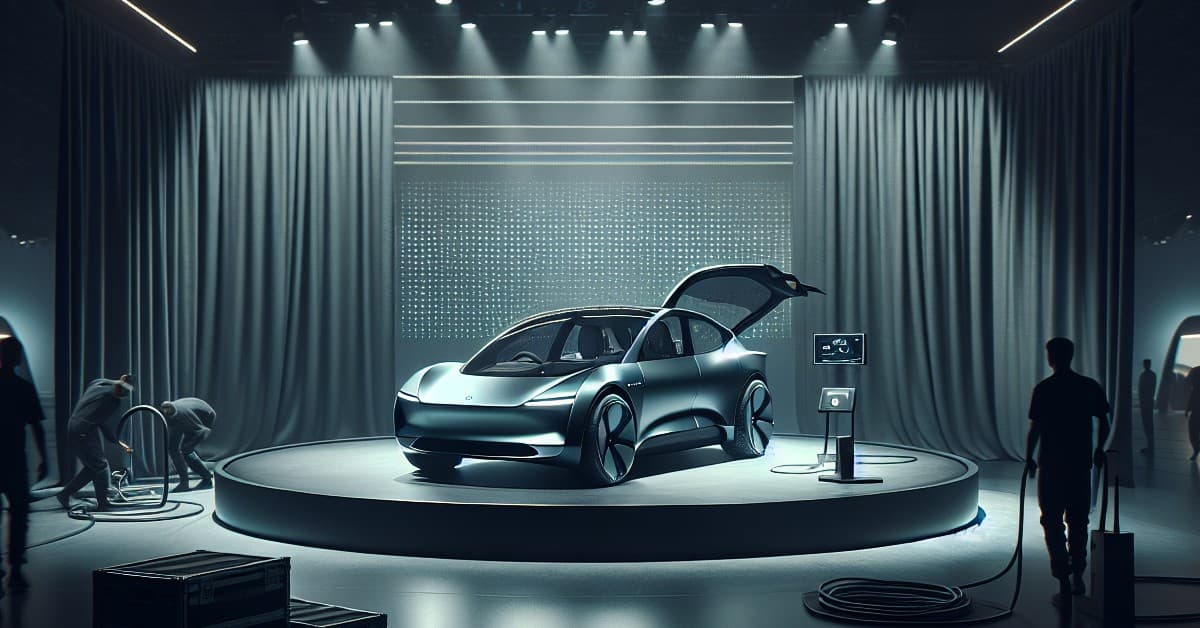
Sony And Honda Pull The Plug On Afeela 1
Sony just canceled a car that could've streamed your PS5 library to passengers. The Remote Play-enabled Afeela 1, a high-profile EV collaboration between Sony and Honda, has been axed before it ever hit the road.
Announced in a joint statement, the companies said their decision follows a major rethink of Honda's electric strategy and shifting EV market conditions. In their words: "As a result of Honda's reassessment of its automobile electrification strategy announced on March 12, 2026 and factoring the changes to the EV market, the underlying assumptions of [Sony Honda Mobility's] business operations... were fundamentally altered, resulting in the announcement by [Sony Honda Mobility] today to discontinue the development and launch of its first model, Afeela 1, and its second model."
What Afeela 1 Was Promising
Afeela 1 was set to be the first car from the Sony-Honda joint venture, Sony Honda Mobility (SHM), which was formed to build modern EVs. Its gaming hook was simple but novel: passengers could stream PS4 and PS5 games via PlayStation Remote Play while on the move, as long as a console was running back at home.
That approach would have leaned on Sony’s ecosystem rather than loading a car with full gaming hardware. For fans, it dangled the idea of long trips filled with real console games instead of the kind of basic time-wasters typically found on in-car screens.
Why It Was Canceled
Honda's latest strategy update appears to have upended SHM's original plan. The companies explicitly cite market headwinds and a change in the technologies and assets Honda would provide. The result: both Afeela 1 and a second planned model are off the slate. The statement spells it out: SHM will "discontinue the development and launch of its first model, Afeela 1, and its second model."
That doesn't mean the partnership is dead. Sony and Honda say they’ll keep working on "future business plans," adding they will "[take] into account the initial purpose of the JV establishment as well as the latest EV market environment." Translation: the JV remains, but its roadmap is being redrawn to better fit where the EV business is right now.
The timing lands amid a broader run of cancellations around Sony, from internal studio shake-ups to scaled-back live-service bets. Scrapping a showcase EV doesn't carry the same creative fallout, but it underscores how cautious big players have become when projects drift from core priorities or stable margins.
What It Means For In-Car Gaming
In-vehicle gaming isn’t new, though the implementations vary. BMW said in 2022 it would add casual mobile-style games to its cars, played with a smartphone as the controller. Tesla took a bigger swing the same year by rolling out in-car Steam integration, then backed off about 18 months later.
Afeela 1 sat somewhere else on the spectrum. Instead of running games natively, it would have piggybacked on PlayStation Remote Play, using your existing PS4 or PS5 at home. That reduces hardware complexity in the car, but it also ties the experience to a console and a stable connection back at your place. Practical? For some passengers, sure. Universal? Probably not.
For Sony, the idea was brand-tight and relatively low-risk on the software side: extend the PlayStation experience to another screen without building a new platform. For Honda, it promised a flashy differentiator in a crowded EV market. Once that market cooled and costs got reevaluated, the math seems to have changed.
SHM’s survival suggests the door isn’t closed on car-tech experiments that complement gaming. If the duo returns with a simpler interface that plays nice with phones, tablets, or cloud services, it could still give riders something worthwhile without betting a whole model on it.
Afeela 1’s cancellation won’t stop automakers from chasing entertainment features, but it does reset expectations. If PlayStation shows up in a future cabin, expect a lighter touch—features that are easier to deploy across trims and regions, and less exposed to market whiplash. I’ll be watching what SHM proposes next, because a smarter, leaner take on in-car gaming could still find the right road.