Project Canceled, Reservations Refunded
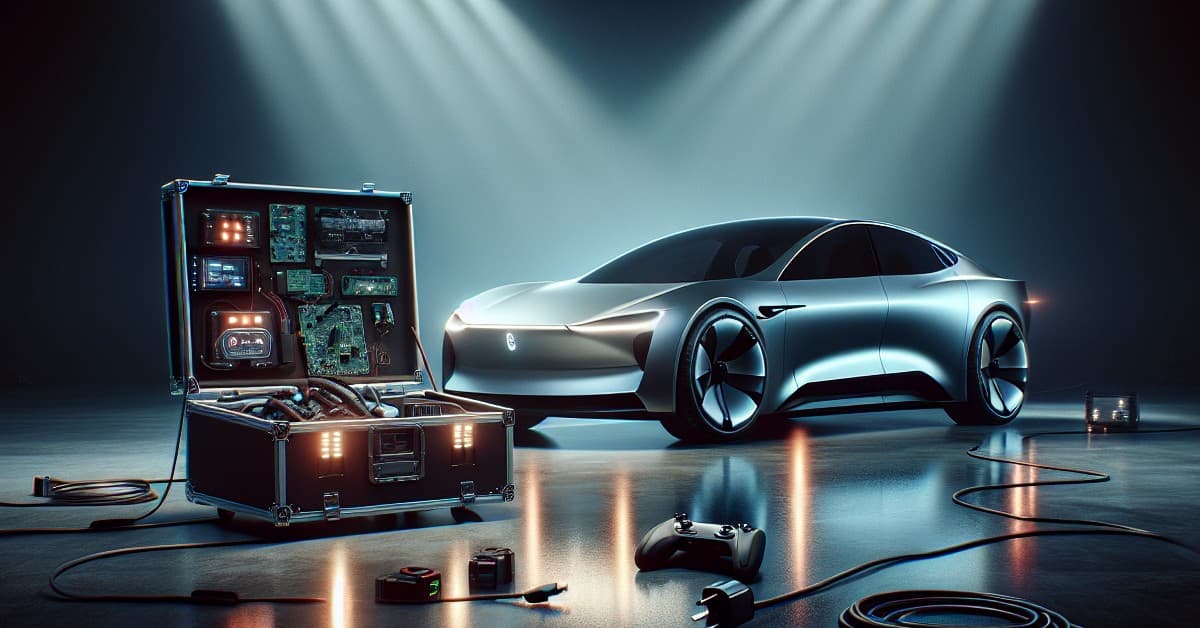
The PlayStation-in-the-backseat car just hit a dead end. Sony Honda Mobility (SHM) has canceled the Afeela 1 and a second Afeela model that had been in development, and will refund reservation fees to anyone who registered interest.
In a statement, the joint venture said it had "decided to discontinue the development and launch of its first model, Afeela 1, and its second model of Afeela vehicles that had been under development" after internal discussions. The decision comes less than two years after SHM pitched Afeela as a showcase for Sony tech inside a Honda-built EV, with passenger screens and the promise of backseat PlayStation gaming.
How many cars the companies expected to sell was always a question mark. The proposition hinged on entertainment and software rather than performance specs or a disruptive price, and early reaction to the December reveal focused more on the novelty of in-car PS5 streaming than the vehicle itself.
What SHM Says Changed
SHM traced the reversal to Honda’s updated electrification plans. "As a result of Honda's reassessment of its automobile electrification strategy announced on March 12, 2026, SHM will not be able to utilize certain technologies and assets that were originally planned to be provided by Honda at the time of SHM’s initial business planning," the statement reads. "In light of this change, SHM has determined that it does not have a viable path forward to bring the models to market as originally planned."
That’s a surprising twist for a project that was already fully electric. SHM originally framed its mission as combining the "technologies, expertise, and development capabilities of Sony and Honda" to ship "high value-added mobility products" alongside related services. Pull those Honda-provided assets and the math, apparently, no longer works.
Adding to the confusion, the SHM web page hosting today’s statement still links to Afeela purchase options, listing a "late 2026" launch window and a starting price of $102,900, with another model penciled in for 2027. Those pages remain live at the time of writing, despite the program’s cancelation.
The Gaming Pitch Was Remote Play Only
The flashiest idea behind Afeela was gaming on the move, but the pitch always came with caveats. The backseat screens would have supported Remote Play—streaming PS4 or PS5 games from your console at home—rather than native gameplay in the car. That means you’d need your console powered on and connected, and a solid internet connection. Sony recommended a "stable connection of at 15Mbps... for a smooth Remote Play experience." As with any streaming setup, latency and coverage would vary by location and network conditions.
SHM did get a version of the car onto an actual PlayStation platform—just not the one it planned. A prototype Afeela was added to Gran Turismo 7, letting players drive the concept virtually. Naturally, you can’t hop in the back of the digital car and stream more PS5 games while you tour Trial Mountain.
Broader Sony Shake-Ups
Today’s news follows turbulence elsewhere in PlayStation’s orbit. Reports yesterday said Sony closed Dark Outlaw Games, a studio contracted for an unannounced first-party project, alongside layoffs in mobile. It’s the company’s third studio shutdown in 18 months, after Firewalk Studios in late 2024 and Bluepoint Games just last month.
Against that backdrop, a moonshot like Afeela was always going to face tough questions. Building a car—especially a six-figure EV—demands long timelines, stable partners, and deep pockets. Without guaranteed volume or a breakthrough feature beyond in-car streaming, the project’s risk profile only grew as Honda reworked its EV roadmap.
So what comes next for PlayStation in cars? Software integrations feel far likelier than another ground-up vehicle. Expect Sony to keep pushing Remote Play and entertainment apps where they make sense, whether that’s on tablets, handhelds, or dashboards that don’t require a new badge. For now, the only place you’ll drive an Afeela is in Gran Turismo 7—and that might be as close as the concept ever gets to the road.