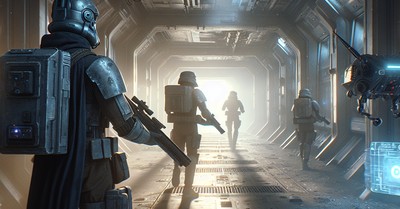
Permadeath With Purpose
Bit Reactor didn’t just debate whether named heroes could die in Star Wars: Zero Company—they fought over it. Narrative lead Aaron Contreras says "there were some fights" inside the studio about letting story-critical operators fall for good. In the end, the team kept permadeath, and Contreras admits "it was good that I did" lose that argument. Co-founder Greg Foertsch put the reasoning bluntly: "Star Wars is about loss."
Zero Company is a tactics game with clear XCOM DNA, and that extends to the stakes. Missions can cost you rogue padawans, veteran clone troopers, and even plucky astromechs. That intensity initially worried the writing team. Contreras questioned "how much do we want to limit the impact that a character like [Umbaran sniper] Luco Bronc can have in the story when they can catch a blaster bolt in the face really early on and then they're gone forever." It’s a fair concern when the campaign leans on authored characters and ongoing relationships.
Plot Armor—But Only At First
The compromise lands in a place that respects both the narrative and the tactics layer. Bit Reactor gives its fully-authored squadmates—like Luco or clone consigliere Trick—just enough early protection to establish them. Their introductions are "woven in the critical path of the story," Contreras explains. Once they’re part of your squad, though, "they're very vulnerable, and it's up to you to keep them alive and make sure they're part of the team." From there, the game trusts your decisions and your aim.
That design pushes responsibility onto players without papering over the fiction. These aren’t invincible action figures. They’ll take the same risks as your rank-and-file recruits, and careless positioning or a bad roll can erase a fan favorite. If you’ve ever felt a pit in your stomach watching a beloved operator bleed out on a grid-based battlefield, you know exactly what Bit Reactor is going for here.
Writing Around Who Lives And Dies
Leaning into fragility forced the narrative team to rethink structure, and it sounds like it paid off. Contreras says the story formed "quite naturally" once they accepted the rule set, with "a lot of conditional conversations and conditional content in the game based on who's there and the choices you've made." That means the campaign flexes to reflect your roster, not the other way around.
It also raised the floor for custom soldiers. "Frankly, it was absolutely the right decision," Contreras adds, because it made it easier to support "parity between our authored operators and our custom operators—the ones that the player creates out of whole cloth—because even those operators have their own personalities and backgrounds and specializations." In other words, the trooper you design isn’t condemned to feel like filler simply because they weren’t introduced in a cutscene.
Bit Reactor wants both paths to feel legitimate. "If you want to have a Star Wars story-driven experience with a cast of really well-realized, authored characters that we've poured a lot of love into, it's there for you," Contreras says. "But if you want to roll with your own team, you can absolutely do that as well, and we spared no expense to make that a satisfying experience." However you build your squad, the script has room for them.
Why It Fits Star Wars
For Foertsch, permadeath isn’t just a tactics flourish; it’s a thematic anchor. "It was something that we feel pretty strongly about. Star Wars is about loss," he says, recalling being "four years old, watching Obi Wan Kenobi die." The team even hopes the system nudges players away from quick-loading and towards living with consequences: "not save scum, but to push through the loss to what's on the other side of the experience, to feel it." That’s a bold stance in a genre built on optimization, but it tracks with decades of Star Wars storytelling where sacrifice drives change.
More importantly, it reframes tension. Every door breach, every risky flank, every last-shot gamble carries narrative weight because it could cost you a voice in future scenes. When a character survives, it’s not just another successful roll—it’s a thread preserved, a relationship that can grow in later missions. When they don’t, the story acknowledges the hole they leave behind.
That’s the bet Bit Reactor is making: if Zero Company can make loss meaningful without feeling cheap, the campaign could stick with players long after the credits. Will fans protect Luco and Trick at all costs, or accept a messier, more personal canon? Either way, this approach points to a tactics game confident enough to let stories end as well as begin.