
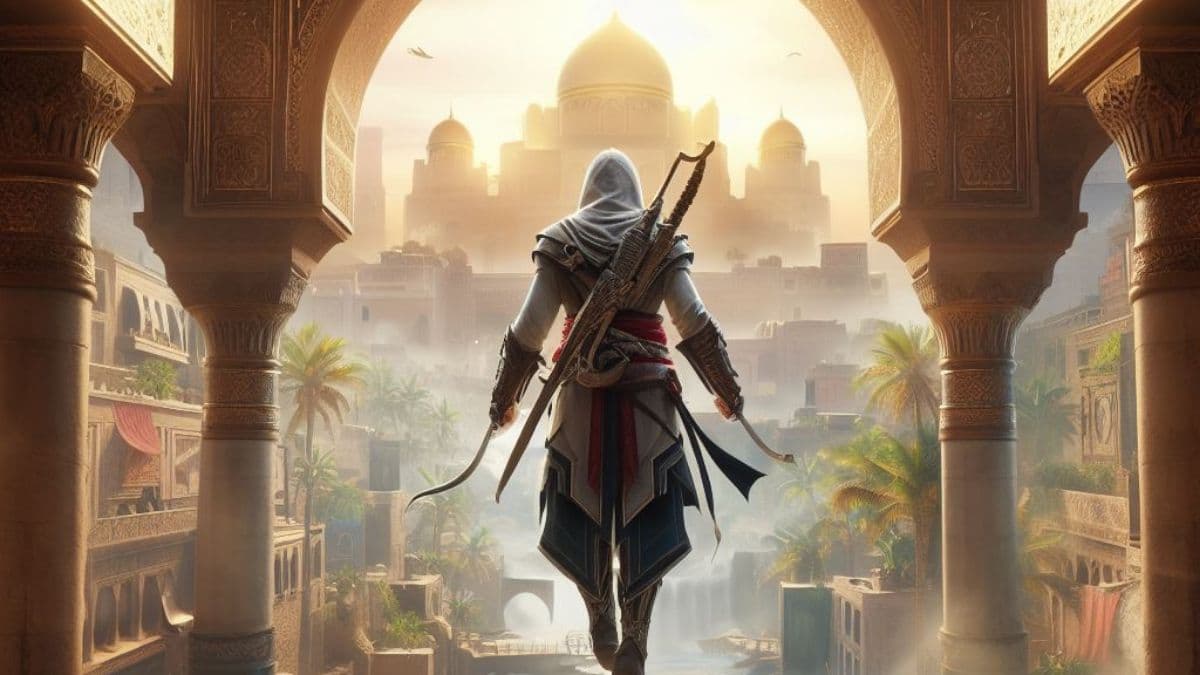
The Assassin’s Creed franchise has long been a subject of both adoration and critique among gamers. The franchise’s attempt to blend history with action-packed gameplay has been its defining feature, yet recent titles have complicated this core element. Assassin’s Creed: Mirage for the Sony PlayStation 5 marks a return to a more focused approach. This review will delve into various aspects of the game including its narrative, historical context, gameplay mechanics, and overall impact on the series.
The Promise of Classic Gameplay
Ubisoft’s promotional materials for Assassin’s Creed: Mirage promised a “return to classic” Assassin’s Creed gameplay. For longtime fans of the series, this was a breath of fresh air. The game takes inspiration from older titles, such as Assassin’s Creed: Liberation, with its more linear and focused design. Gone are the overwhelming side quests and bloated open-world elements that plagued recent entries. Instead, Assassin’s Creed: Mirage offers a straightforward experience, allowing players to immerse themselves in a historically-rich environment modeled after old Baghdad.
The Historical Context: More than Just a Backdrop
One of the game’s strongest features is its historical setting. Set in ancient Baghdad, the game encourages players to explore the rich history and culture of the Middle East. Given the current geopolitical climate, this approach serves a dual purpose. Not only does it educate players about a less explored part of the world, but it also fosters empathy and understanding.
As players progress through the game, they unlock historical notes and information. Each note offers valuable insights and is accompanied by images that are properly referenced to actual museums. Although not a substitute for formal education, the game provides a substantial amount of historical context that enriches the player’s experience.
Narrative Shortcomings: A Story Left Untold
Despite its historical accuracy and compelling setting, Assassin’s Creed: Mirage falls short in terms of narrative. Players find themselves following a series of plot points rather than a cohesive story. The relationship between the main characters, Basim and Nehal, had the potential for a compelling narrative but remains underdeveloped. These shortcomings highlight Ubisoft’s difficulty in balancing the story within the constraints of streamlined gameplay.
Gameplay: A Welcome Return to Basics
Assassin’s Creed: Mirage takes a minimalist approach when it comes to gameplay mechanics. Absent are the convoluted skill systems and experience levels that muddled recent titles. Players are returned to the basic mechanics of scouting locations, bypassing or assassinating guards, and collecting keys or objects to progress. While the game’s simplified mechanics may appear dated to some, they allow for a more focused and engaging gameplay experience.
Combat sequences are generally satisfying. They involve a balance of attack, parry, and riposte, forcing players to be alert. However, when faced with multiple combatants, the precision of the combat system falters. This remains an area in which the game could improve.
City Exploration: A Labyrinth of History
Navigating the labyrinthine streets of Baghdad proves to be a satisfying experience. The game’s design complements the parkour gameplay that the series is known for. Players can utilize an eagle to get a bird’s-eye view of the city and identify key areas to explore. This function adds another layer to the game’s explorative elements, making city traversal both engaging and intuitive.
Final Thoughts
Assassin’s Creed: Mirage serves as a significant milestone for the franchise, signaling a return to its classic roots. While it falls short in narrative depth, the game excels in providing a focused, historically-rich experience. It serves as an example of how video games can educate and foster understanding among its audience, particularly in a time when such qualities are sorely needed. Ubisoft has taken a step in the right direction with this title, and it will be interesting to see how future entries build upon this foundation.


