
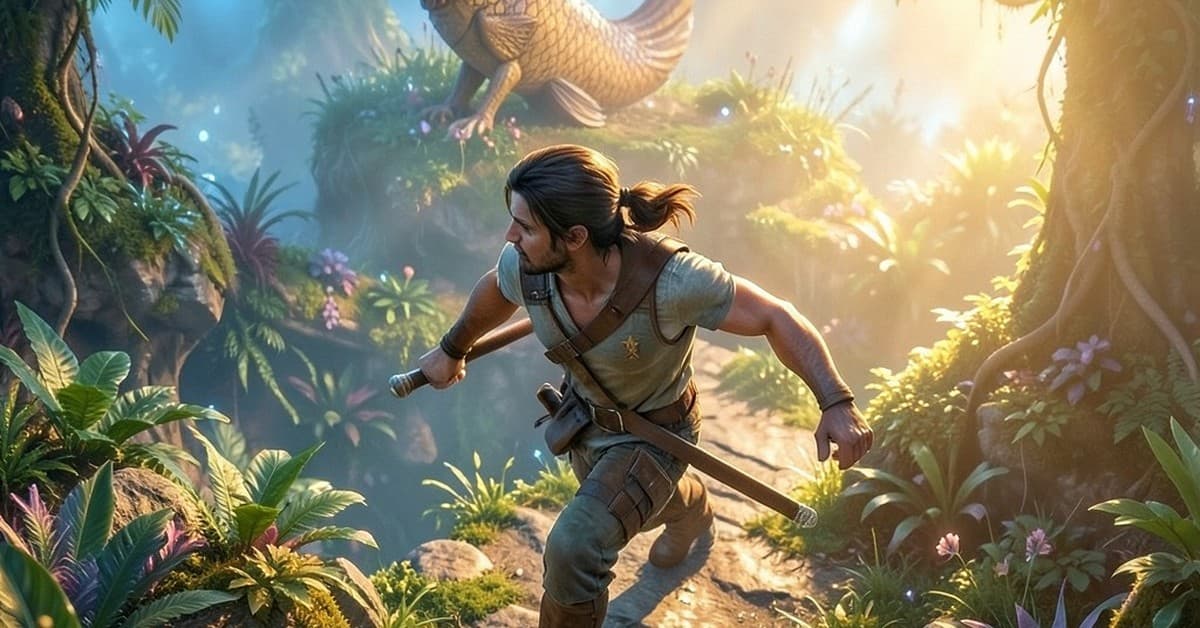
Takashi Tezuka's recent retirement from Nintendo marks the end of an era for a developer who, despite initial indifference to video games, revolutionized the industry. His most enduring legacy, The Legend of Zelda: Link's Awakening for the Game Boy, stands as a testament to innovative game design that challenged the very foundations of the Zelda series. Released in 1993, this title dared to omit the Triforce, Hyrule, and notably, Princess Zelda, setting a precedent for creative freedom within the franchise.
Quick Facts — The Legend of Zelda: Link's Awakening
| Developer | Nintendo |
|---|---|
| Platform(s) | Game Boy |
| Genre | Action RPG |
Tezuka's entry into the gaming world was unconventional; fresh from art school and more influenced by art and film than by the burgeoning video game scene, he joined Nintendo with little knowledge of iconic titles like Pac-Man. Yet, this outsider perspective became his strength, evident in his work on Super Mario Bros. and Super Mario World. However, it was with Link's Awakening that Tezuka's vision truly reshaped the Zelda series, influencing even Ocarina of Time. The game's success can be attributed to its unique character behaviors, a direct result of Tezuka's insistence on distinct and somewhat unsettling interactions, mirroring the quirky, suspenseful vibe of David Lynch's Twin Peaks.
About The Legend of Zelda: Link's Awakening
Developed and published by Nintendo for the Game Boy, Link's Awakening was initially conceived as a direct port of the SNES's A Link to the Past. However, through clandestine experiments with the Game Boy's capabilities, the project evolved into something entirely new. Tezuka's directive to remove core Zelda elements (the Triforce, Hyrule, and Zelda) was a gamble that paid off, offering a fresh, compact narrative focused on repairing a fractured reality on Koholint Island.
This bold move was inspired by Tezuka's diverse influences, including his background in art and film, which encouraged a more experimental approach. Unlike A Link to the Past, which played it safe with traditional fantasy elements, Link's Awakening innovated by focusing on character depth and an unsettling atmosphere, akin to the small-town mysteries of Twin Peaks.
Innovations and Player Experience
Several key features of Link's Awakening revolutionized the player experience and the series as a whole:
- No Triforce, No Hyrule, No Zelda: This trio's absence forced a narrative and gameplay shift, focusing on the mystery of Koholint Island and the player's direct interactions with its bizarre, endearing characters.
- Unique Character Behaviors: Inspired by Twin Peaks, the island's residents exhibited off-kilter, suspicious behaviors, keeping players engaged and cautious. For example, the character of Owl, with his cryptic messages, added to the game's mystique.
- Compact yet Deep Scope: Designed with the Game Boy's limitations in mind, Link's Awakening proved that depth and complexity could thrive in a smaller, more intimate setting.
- Influence on Future Titles: Ocarina of Time and subsequent games drew from Link's Awakening's innovative spirit, incorporating more character-driven stories and unconventional narratives.
"At the time, Twin Peaks was rather popular,"
Takashi Tezuka
highlighting the show's influence on Link's Awakening's motif. "The drama was all about a small number of characters in a small town… So when it came to Link's Awakening, I wanted to make something that, while it would be small enough in scope to easily understand, it would have deep and distinctive characteristics." This approach not only defined Link's Awakening but also paved the way for more experimental storytelling in the series.
Legacy and Impact
"Tezuka-san, you broadened what was permissible for Zelda without even realising it,"noted Satoru Iwata, acknowledging the game's pivotal role in the series' evolution.
Tezuka's humble response, "I guess I did. Well, I’m glad I could contribute," belies the profound impact of Link's Awakening. By challenging the status quo, Tezuka ensured the Zelda series would never be confined by its own mythology, inspiring a legacy seen in characters like Tingle and in the narrative depths of Ocarina of Time and beyond.
The influence of Link's Awakening can also be seen in how it shifted the series towards more personal, character-driven stories. The game's success demonstrated that the Zelda franchise could thrive without relying on its traditional high fantasy setting, opening doors for more innovative titles like Majora's Mask.
What This Means for Players
Takashi Tezuka's retirement serves as a reminder of Link's Awakening's enduring influence on the gaming landscape. For players, this legacy means a continued emphasis on innovation within beloved franchises, proving that even the most sacred elements can be reimagined for the better. As the gaming world looks to the future, Tezuka's fearless approach to Link's Awakening remains a beacon for developers seeking to reinvent without overthinking.
Link's Awakening's impact is not just historical; it continues to inspire modern game development. Its blend of tight design, immersive storytelling, and the courage to defy expectations is a blueprint for contemporary titles aiming to leave their mark. Players can look forward to seeing elements of Tezuka's vision in upcoming games, a testament to the lasting impact of his work.
Quotes Highlighting Tezuka's Impact
"At the time, Twin Peaks was rather popular,"
Takashi Tezuka
"Tezuka-san, you broadened what was permissible for Zelda without even realising it,"
Satoru Iwata
"I guess I did. Well, I’m glad I could contribute,"
Takashi Tezuka
Key Takeaways
Key Takeaways
- Takashi Tezuka's Link's Awakening revolutionized the Zelda series by omitting core elements (Triforce, Hyrule, Zelda).
- The game was inspired by Twin Peaks and Tezuka's art and film background.
- Link's Awakening's influence is seen in subsequent Zelda titles, including Ocarina of Time.
- Tezuka's approach broadened the permissible within the Zelda franchise, as acknowledged by Satoru Iwata.
As the gaming community bids farewell to Tezuka's active involvement with Nintendo, The Legend of Zelda: Link's Awakening stands as a timeless reminder of the power of innovative design and the legacy of a developer who dared to reimagine the unimaginable.