
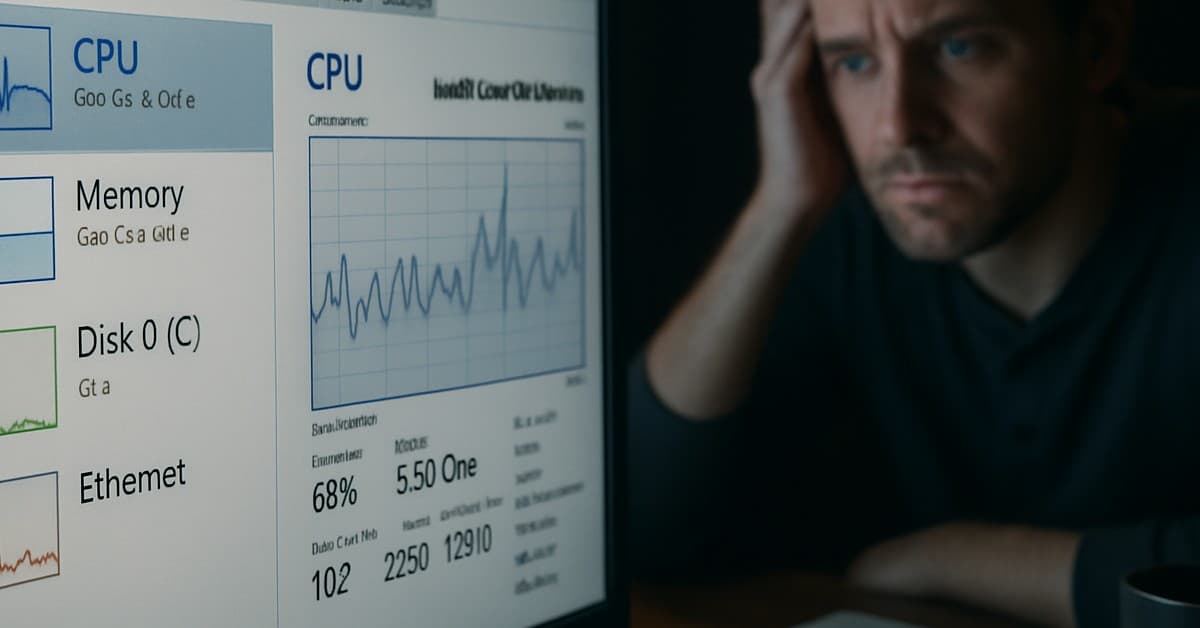
About Windows Task Manager
Windows Task Manager is a performance monitoring tool available on PC platforms. It provides insights into resource usage and system performance, allowing users to track running processes and their impact on CPU utilization. Despite its utility, many users have expressed concerns about the accuracy of CPU usage statistics displayed by the tool.
Task Manager's CPU Utilization Calculations
Last month, Microsoft announced a significant change to Windows Task Manager's calculation methods for CPU utilization. The update aims to enhance the accuracy of the CPU workload displayed across the Processes, Performance, and Users pages. According to the announcement, Task Manager will now employ standard metrics to ensure consistency in reporting, aligning with industry standards and third-party tools.
Dave Plummer, the original creator of Task Manager, elaborated on the challenges associated with its CPU usage reporting. He noted that the tool averages CPU utilization over time, causing discrepancies in the values shown. For instance, if a process uses CPU resources for only 100 milliseconds, the Task Manager may display a low average due to how the data is aggregated across the refresh window. This method can lead to misunderstandings about how much processing power is actually being utilized at any given moment.
Understanding the Limitations
Plummer pointed out that the CPU utilization figure in Task Manager is more reflective of past activity rather than real-time usage. "The CPU number in Task Manager is a moving little obituary for the immediate past," he explained, emphasizing that the refresh intervals and averaging can dilute the representation of CPU spikes. This means that users might see rounded zeros or low average usage even when significant processing occurs.
He compared modern CPU usage reporting to measuring how full a freeway is rather than the number of cars that traveled on it. This analogy highlights the complexity of current processors, which utilize dynamic frequency scaling and other optimizations that complicate straightforward reporting. The old Task Manager's methods worked well in simpler hardware environments, but today's technology demands a more nuanced approach.
What This Means for Users
While Task Manager serves its purpose, Plummer acknowledges that it sacrifices precision for usability. He stated, "Task Manager's approach was cheap, fairly robust, and understandable enough for normal humans, which actually matters because a performance tool that requires a graduate seminar before breakfast has already lost the room." This comment underscores the importance of keeping performance tools accessible to average users, even if that means compromising on accuracy.
Lastly, Plummer mentioned that Windows can feel inadequate for some users, particularly those who prefer Linux for its performance monitoring capabilities. He proposed creating a separate Windows mode for power users to allow more precise control over system performance, which could help retain users transitioning to alternative operating systems. Whether Microsoft will implement such changes remains to be seen, but users can anticipate ongoing improvements to Task Manager in future updates.