
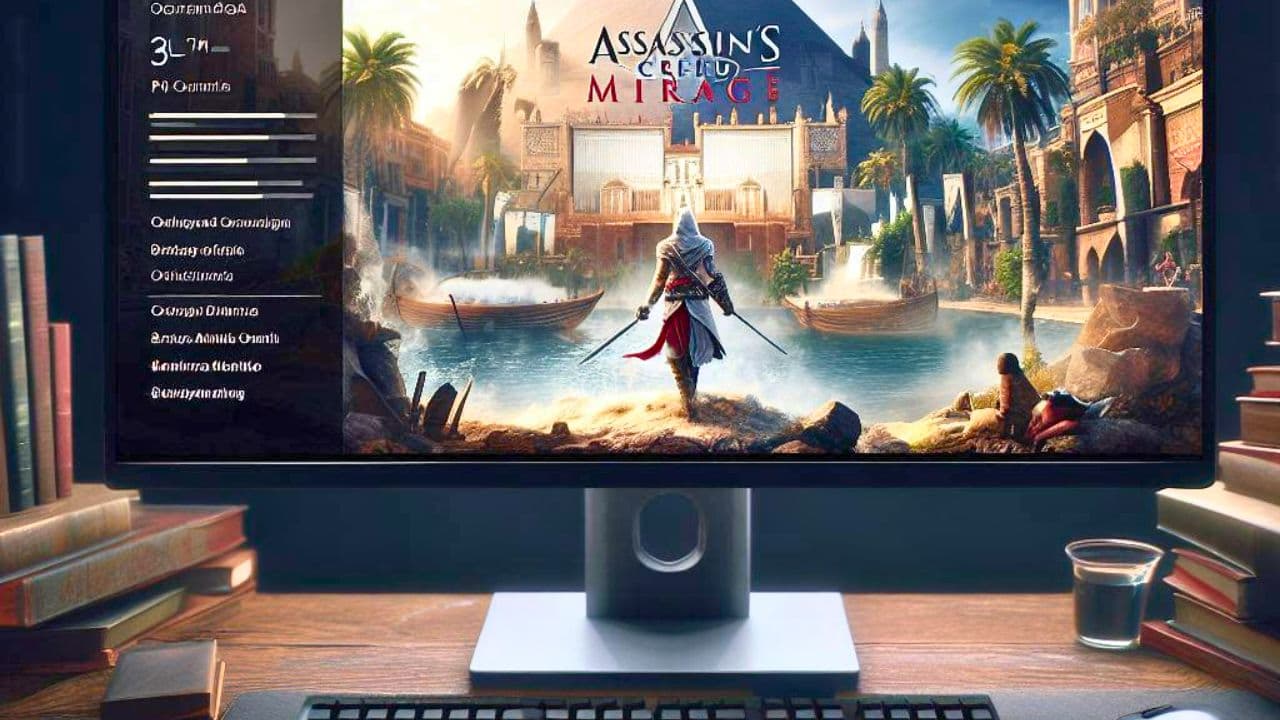
The much-awaited release of Assassin's Creed Mirage is upon us, and early reviews are hinting at a commendable return to the franchise's origins. However, the game's unique focus on Arabic culture and heritage sets it apart in the series, representing a significant shift in the game's narrative and design.
A Unique Linguistic Approach
One of the standout features of Assassin's Creed Mirage is Ubisoft's decision to record the game's performances in Arabic, reflective of its 9th Century Baghdad setting. While the Assassin's Creed franchise has traversed diverse locations ranging from Europe to Africa, the protagonists have typically spoken in English. Although players retain the option for English dialogue, the developers encourage an immersion in the "authentic" Arabic experience.
Echoing Authenticity in Character and Dialogue
The use of genuine Arabic dialogue was not just a cursory decision. Ubisoft's approach aimed to correct a longstanding issue where Arabic characters in Western media are often portrayed speaking in broken or inaccurate Arabic. Mohammed Al Imam from Ubisoft emphasizes the importance of linguistic authenticity, noting that discrepancies can be jarring for native speakers. To this end, Ubisoft ensured that only fluent Arabic speakers performed the Arabic lines.
Diving Deeper: Translations and Cultural Nuances
Translating idioms and culturally specific phrases poses a unique challenge. This is evident in the game's nuanced translations, where literal translations were eschewed in favor of contextually accurate and culturally resonant phrases. Such attention to detail reinforces the game's dedication to authenticity.
Recreating Historical Ambience
Ubisoft's commitment to recreating an authentic historical world is evident not only in the language but also in the game's setting. By consulting historical experts, Ubisoft has sought to faithfully replicate the cultural and architectural richness of 9th Century Baghdad.
Reimagining Iraq's Golden Age
For players like Ameer, an engineering student from Baghdad, the game's portrayal of Iraq is a refreshing change from modern narratives centered on conflict. He emphasizes Iraq's pivotal role during its golden age, citing its contributions to science, literature, and arts. Mohammed echoes this sentiment, underlining the importance of accurate and positive representation in media.
Critics' Take on the Game
Preliminary reviews for Assassin's Creed Mirage have largely been positive. Prominent gaming platforms like Polygon, IGN, and Eurogamer have lauded Mirage's focused approach. However, some critics feel that the return to an older style has brought back certain issues from earlier games in the series. Regardless of these critiques, the excitement and anticipation among fans remain palpable.
A Wider Impact on Gaming Culture
Ameer envisions the game inspiring budding game developers in the Middle East, fostering a surge in localized game development. He is hopeful for a future where diverse narratives from across the globe take center stage in mainstream gaming.
Ubisoft: Controversies Outside the Gaming Realm
As Assassin's Creed Mirage makes waves in the gaming world, Ubisoft faces challenges outside the realm of gaming. Recent reports highlight the arrest of five ex-Ubisoft employees over sexual harassment allegations dating back to a 2020 investigation.
Conclusion
Assassin's Creed Mirage represents more than just another installment in a beloved gaming franchise. It stands as a testament to the power of representation, highlighting the importance of cultural authenticity in storytelling. While it remains to be seen how the game will be received in the long run, its initial impact underscores the evolving dynamics of the global gaming industry.


