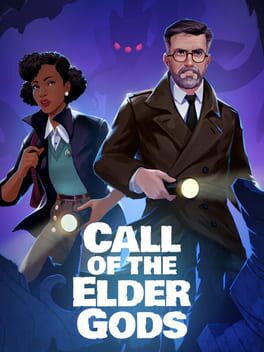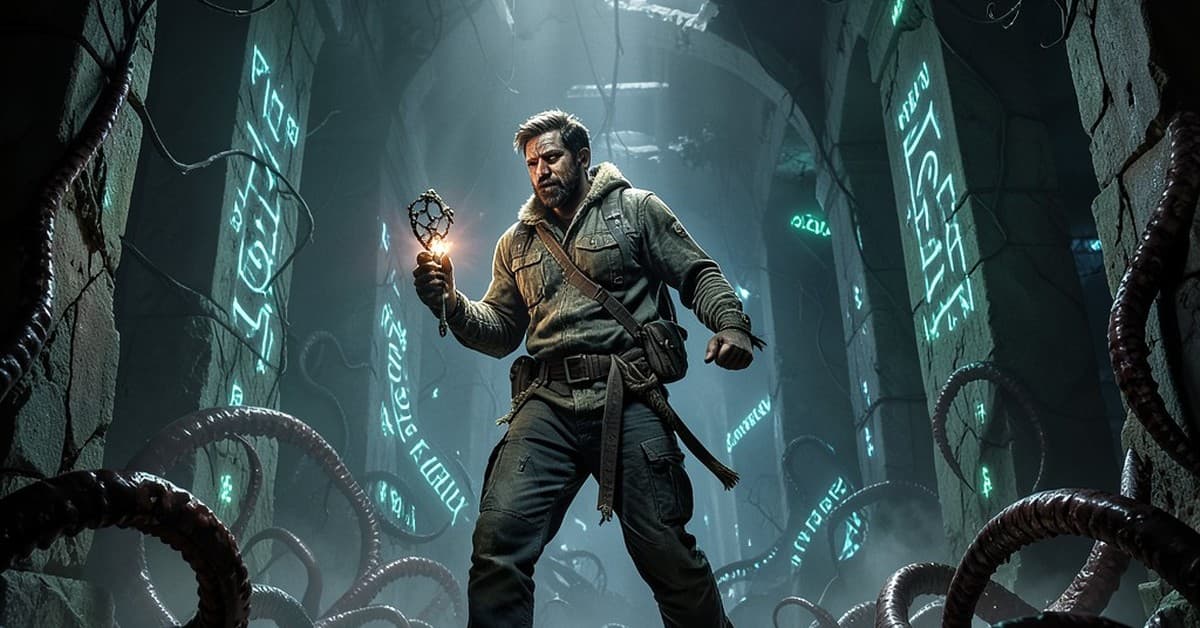
Professor Harry Everhart's ominous visions and university student Evangeline Drayton's bizarre dreams intertwine in Call of the Elder Gods, a first-person adventure that challenges players to solve intricate puzzles while navigating a Lovecraftian narrative. Developed by Out of the Blue and published by Kwalee, this game is available on PS5, Xbox Series X/S, Switch 2, and PC as of May 12, 2026, with a rating of Everyone 10+.
Quick Facts — Call of the Elder Gods
| Developer | Out of the Blue |
|---|---|
| Publisher | Kwalee |
| Platform(s) | PS5, Xbox Series X/S, Switch 2, PC |
| Release Date | May 12, 2026 |
| Genre | First-person adventure, Puzzle |
| Rating | Everyone 10+ |
| Score | 8 |
The core of the game, much like its predecessor Call of the Sea (2020), lies in its environmental puzzles that demand observational and deductive skills, often requiring out-of-the-box thinking. A notable addition is the tandem puzzle system, where players switch between Evangeline and Harry to overcome challenges, such as coordinating actions to evade supernatural threats in a snow-covered facility or a storm-battered mansion. For example, in one puzzle, Harry must carefully manipulate environmental hazards while Evangeline navigates through a surreal, otherworldly location, highlighting the need for coordinated gameplay.
Gameplay Mechanics and Puzzle Depth
The game shines with its varied locales, from the Australian desert to surreal, non-terrestrial locations, each presenting unique puzzle opportunities. Puzzles range from deciphering otherworldly musical notes to uncovering cult information, showcasing the game's ability to craft multi-layered, logical challenges. However, the journal system, crucial for tracking clues, sometimes falls short with vague notes, leading to frustrating guesswork, as seen in a particularly perplexing cable-to-socket-matching exercise.
The penalty-free hint system is a welcome feature, providing gentle nudges that can escalate to full solutions, aiding in moments of frustration without undermining the puzzle's integrity. However, the overwhelming presentation of clues at times hampers the experience, with certain useful clues not being recorded in the journal for easy reference, forcing players to revisit locations.
Narrative and Character Development
Lasting roughly seven hours, the story, narrated by Norah Everhart, offers a decently entertaining mystery with unexpected twists. The emotional core, rooted in the protagonists' losses, is compelling, yet both Evangeline and Harry lack memorability. The villains are even less impactful, with a major foe's fate feeling anticlimactic. Strong voice performances elevate the narrative, despite modest character models and illustrated cinematics.
Criticisms and Final Verdict
Criticisms include vague journal notes, overwhelming clue presentation, and underdeveloped leads and villains. Despite these, Call of the Elder Gods remains an entertaining puzzle game wrapped in an adequately engaging Lovecraft-inspired story. As the reviewer aptly puts it,
"it's okay to embrace this game's insanity-inducing madness with open arms."
With a review score of 8, this game is recommended for puzzle enthusiasts looking for a challenging, if somewhat flawed, experience. While it may not surpass other narrative-puzzle contemporaries, its unique puzzles and engaging story make it a worthwhile adventure.
Key Takeaways
- Release Date and Platforms: May 12, 2026, on PS5, Xbox Series X/S, Switch 2, and PC
- Gameplay Highlights: Environmental puzzles, Tandem puzzles, Penalty-free hint system
- Narrative: Roughly 7-hour Lovecraft-inspired story with narration by Norah Everhart
Key Takeaways
- Call of the Elder Gods combines environmental and tandem puzzles in a Lovecraftian setting.
- The game features a 7-hour story with a unique narrative voice.
- Despite flaws, it's an entertaining puzzle experience with a useful hint system.
Pros
- Challenging and varied puzzle design
- Penalty-free hint system for balanced difficulty
- Engaging Lovecraft-inspired narrative with strong voice performances
Cons
- Vague journal notes and overwhelming clue presentation
- Underdeveloped main characters and villains
- Anticlimactic villain fate