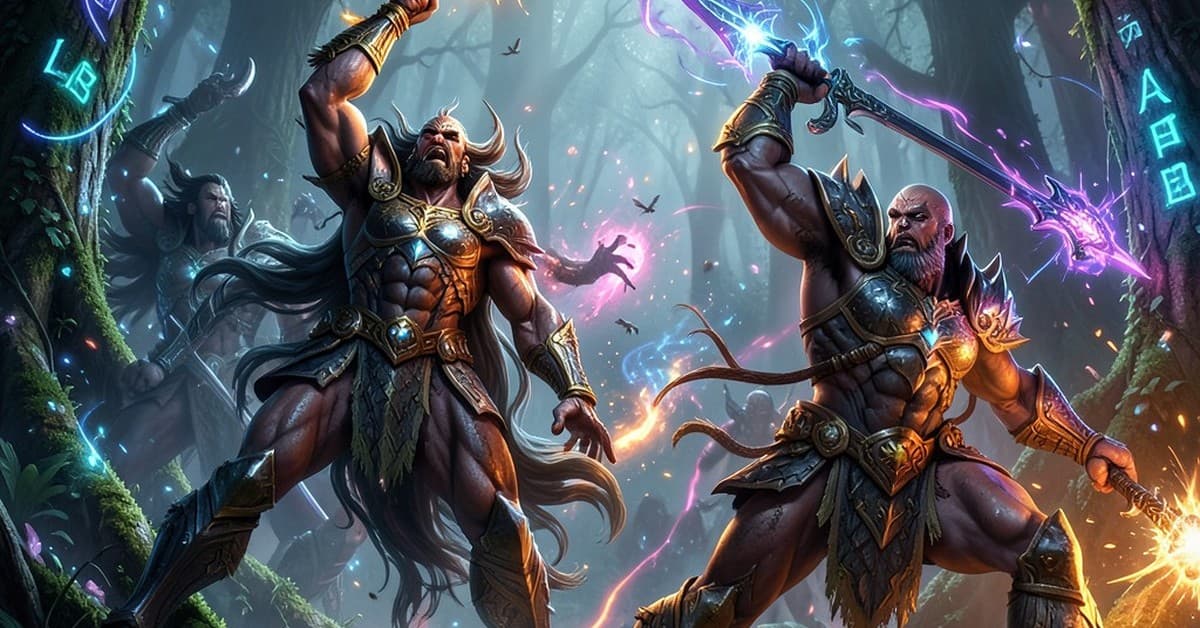
Demigod, developed by Gas Powered Games and published by Stardock, is a fantasy strategy game that embodies a gloriously bombastic approach to gameplay, as evident in its introductory cutscene, described by Graham Smith as "gloriously bombastic". Released on April 14, 2009, for PC, this title blends elements of strategy and action roleplaying, setting it apart from traditional RTS games through its focus on character growth and itemization, rather than base-building.
Quick Facts — Demigod
| Developer | Gas Powered Games |
|---|---|
| Publisher | Stardock |
| Platform(s) | PC |
| Release Date | April 14, 2009 |
| Genre | Fantasy Strategy, Action Roleplaying |
| Score | 81 |
| Price | $40 / £25 |
At its core, Demigod pits players against each other in skirmishes or tournaments, featuring eight playable demigods divided into two classes: Assassins and Generals. Each demigod boasts unique attributes and playstyles, from the immediately appealing Rook, an anthropomorphic castle with a penchant for growth, to Regulus, an angelic sniper whose potential unfolds with skill upgrades and item purchases. The game's lack of a tutorial and hint system, however, hampers the initial learning experience, forcing players to discover character nuances through trial and error.
Gameplay and Mechanics
Demigod's gameplay is centered around the experience points system and skill trees, allowing for deep character customization. Players can capture flags on one of the eight symmetrical maps, each adorned with fantastical elements like waterfalls or gigantic statues. The action unfolds with a mix of direct combat for Assassins and minion management for Generals, though the latter can sometimes lead to confusing, attritional matches, especially in Conquest and Fortress modes where direct assaults on defensive turrets dominate.
A key aspect of Demigod is its character growth through items and skills. For example, Regulus, upon unlocking a specific skill, gains the ability to grow wings, significantly enhancing his mobility and combat effectiveness. This depth in character development encourages strategic item purchases and skill tree investments, making each demigod feel uniquely powerful. Yet, the game's failure to clearly explain these mechanics upfront can overwhelm new players.
Visuals, Audio, and Performance
Visually, Demigod adopts a "Video Game Beige" palette, lending a seriousness to its fantastical world, though this aesthetic may not resonate as strongly with modern audiences. The game's beauty lies in its imaginative environments and demigod designs, drawing comparisons to the monumental creatures of Shadow of the Colossus and the whimsy of Miyazaki films. Audio design, while not extensively highlighted, supports the game's bombastic feel, with demigods delivering occasional lines that add to their character, such as Regulus's humorous remark about needing wings.
Performance-wise, Demigod requires modest specs for its time (2GHz CPU, 1GB RAM, 128MB 3D card) but is marred by patchy netcode, making online matches frustratingly unreliable. This technical flaw, despite the game's engaging offline components, detracts from the overall experience, especially in competitive play.
Criticisms and Flaws
Demigod's most significant criticisms include its poor onboarding process for new players, with no tutorial or hint system to guide through its complex mechanics. Matches can also become attritional, particularly against static defensive targets, reducing the excitement of what could be dynamic battles. Furthermore, the game's netcode issues severely impact the online experience, a crucial aspect for a game of its type.
Despite these flaws, Demigod's imaginative gameworld and the delight in discovering each demigod's unique capabilities save it from being a mere footnote in the strategy genre. As Graham Smith notes, the game is "beautifully imaginative but messy and poorly explained", a sentiment that encapsulates both its charm and its shortcomings.
Verdict
Demigod earns a review score of 81, reflecting its innovative approach to strategy and RPG elements, despite its technical and explanatory shortcomings. For fans of fantasy strategy and those intrigued by the roots of the MOBA genre (predating League of Legends), Demigod is a worthwhile experience, provided one is willing to overlook its flaws. However, the lack of clear guidance and occasional frustration in gameplay may deter casual players.
In conclusion, Demigod stands as a gloriously bombastic, if flawed, gem in the realm of fantasy strategy games. Its unique blend of character growth and strategic combat, coupled with its imaginative world, makes it a memorable title for those who delve into its depths.
Key Takeaways
- Demigod combines strategy with action RPG elements, focusing on character growth over base-building.
- Features 8 playable demigods across 2 classes, with unique playstyles and growth paths.
- Lacks a tutorial and clear explanations for its mechanics, leading to a steep learning curve.
- Technical issues, particularly with netcode, impact online play.
Pros
- Gloriously imaginative gameworld and demigod designs.
- Deep character customization through skills and items.
- Engaging blend of strategy and RPG elements.
Cons
- Poor onboarding process for new players.
- Attritional gameplay in certain modes.
- Patchy netcode hampers online experience.